
Handcarved masks with real wall presence
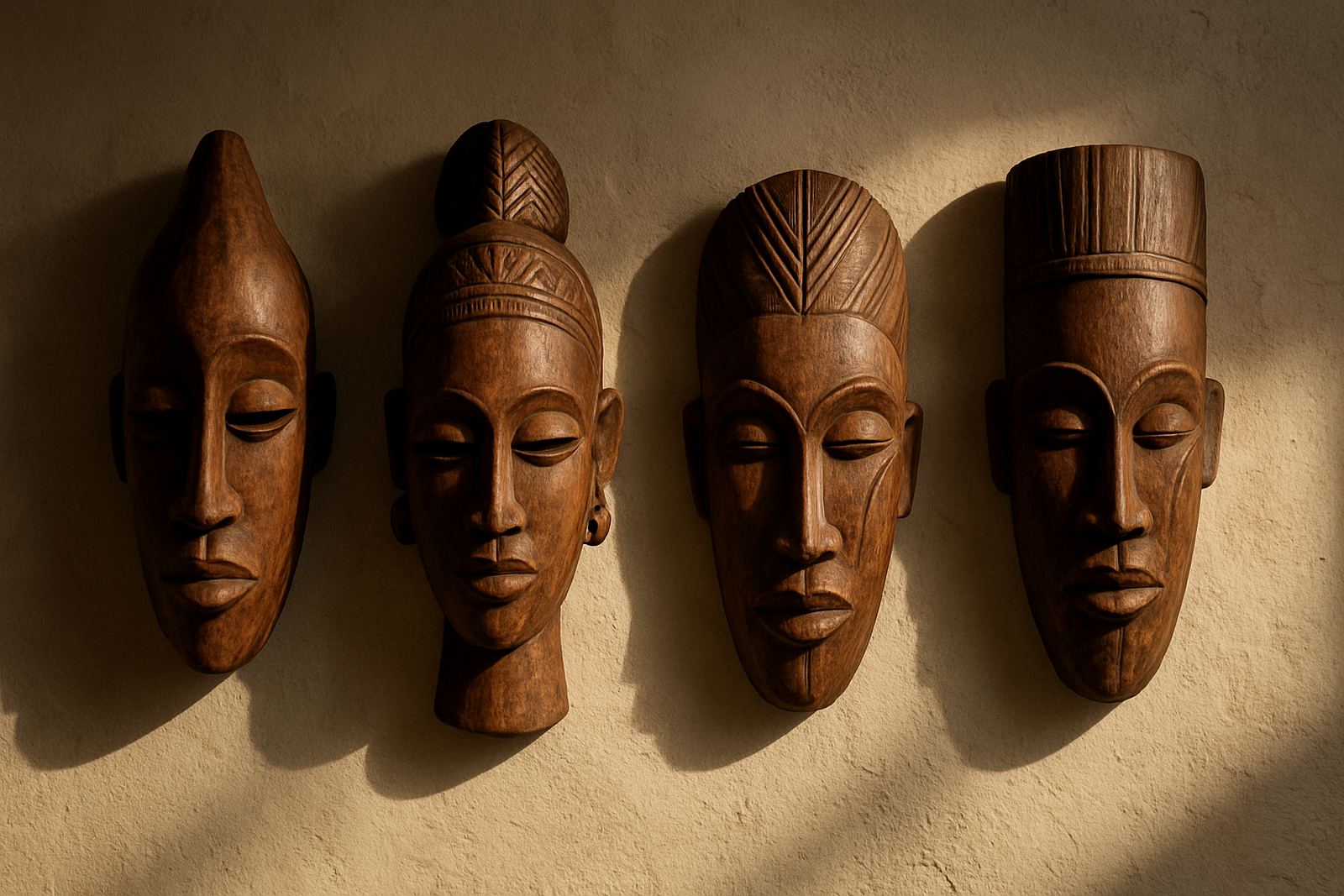
Our handcarved masks are decorative pieces chosen for their form, surface detail and visual impact. They are made by artisans working in different parts of Africa, using timber, natural dyes, painted finishes, fibre accents and other traditional materials where appropriate. Some are smooth and polished, others are rougher and more textured, with visible tool marks that are part of the character of the piece.
These are not mass-made wall ornaments. A mask may be shaped as a face, an ancestral symbol, a stylised animal or a ceremonial inspired form, depending on the maker and the source region. Sizes vary, so you can choose a single statement piece for a hallway or a grouped set for a feature wall. In homes, guest houses and offices they work well because they bring warmth and something personal to the room without needing power, gas or special setup.
Because each mask is handmade, slight differences in carving, colour and proportions should be expected. That is part of the appeal. If you are matching a set or styling a large space, we recommend choosing pieces from the same maker or from a closely related collection so the tone stays consistent.
Sizes, finishes and ordering options
We can source individual masks or build a grouped selection for retail, hospitality and interior projects. Standard sizes depend on the maker, but most pieces fall within a practical range for wall styling. Smaller masks suit shelf displays and narrow passages, while larger pieces make more sense above sideboards, in double-volume entrances or in reception areas with enough wall width to give the piece breathing room.
- Small: about 20 to 35 cm high
- Medium: about 36 to 55 cm high
- Large: about 56 to 90 cm high
- Oversized feature pieces can be arranged on request
Finishes may include natural wood, blackened tones, ochre, whitewash, clay pigments, bead detail or mixed media additions. Some masks are meant to be seen in their raw carved state, while others are painted or treated for stronger contrast. If you are buying for a restaurant, lodge or corporate lobby, we can help with custom curation so the range works as a set and does not feel too busy on the wall.
Where handcarved masks work best in a room
These pieces suit spaces that need a strong focal point and a bit of texture. They do especially well on plain plaster walls, painted brick, timber panelling and concrete surfaces. In Johannesburg apartments and older homes, a single mask can soften hard finishes. In coastal areas like Cape Town and Gqeberha, they add warmth against cooler light and neutral interiors. In Durban, where humidity can be higher, it helps to keep them away from direct damp walls and poorly ventilated corners.
Handcarved masks are commonly used in:
- Entrance halls and passage walls
- Living rooms and lounge feature walls
- Guest houses, lodges and safari style interiors
- Restaurant dining rooms and bar areas
- Private collections and study spaces
If you are styling a room with other artisan goods, keep the mask as the main visual point and let the rest of the decor stay quieter. One large piece or a tight group of three usually works better than scattering smaller items across every wall. That keeps the story clear and prevents the room from feeling crowded.
Mounting, wall care and no special utilities needed
Most handcarved masks are light enough for standard wall hanging, but the fixing method should always suit the weight and the wall type. On plastered brick or concrete, proper wall plugs and screws are usually enough. On lighter partition walls, use fixings rated for the load and check that the hanging point sits level. If the piece is large or unusually heavy, we suggest a second support point or a picture rail system. For heritage buildings or rental units in municipal controlled spaces, always check with the landlord before drilling.
No power or gas connection is needed. That makes these pieces easy to place in areas where cable runs would be awkward or where load-shedding affects display lighting. If you want to light the mask, use a nearby wall light or a low heat fitting and keep direct heat off painted or fibre elements. Avoid installing above fireplaces, stoves or in areas with strong steam exposure.
- Wipe dust with a dry or slightly damp soft cloth
- Do not soak the surface or use harsh cleaners
- Keep out of direct weather and prolonged sun where possible
- In coastal homes, inspect for moisture damage every few months
Care, servicing and long term display
Care depends on the materials used by the maker. Untreated timber may need a light oil or wax once or twice a year, but only if that is appropriate for the finish. Painted or stained masks usually need less maintenance, though dust and humidity can still affect the surface over time. If the piece includes beads, fibre, shell or fabric, treat those details gently and avoid pulling or rubbing them during cleaning.
For hospitality clients or wholesale orders, we can assist with seasonal editing, sample loans and replacement sourcing if you need to refresh a display after an installation period. That is useful for lodges, retailers and venues that rotate stock or redecorate after peak season. If a mask arrives with minor movement in a detachable element, it can often be secured during unpacking before it is put on the wall.
We also recommend checking the back of the piece before hanging. Some masks are fitted with a loop, others with a wire, and some need a separate mounting strip. Make sure the hanging point is centred and that the wall can carry the load. A poorly fixed piece can tilt over time, especially in rooms with temperature swings or frequent door movement.
What to confirm before ordering brass candleholders
Because every mask is handmade, it helps to confirm the practical details before ordering. If you are buying for a home, a collection or a commercial space, start with wall size, colour palette and the amount of texture you want in the room. Then confirm whether you need one piece, a pair or a grouped set. For export orders, packing and shipping method should be confirmed early so there are no surprises at dispatch.
Useful checks before ordering include:
- Exact height and width of the wall space
- Preferred colour range and finish
- Whether the piece is natural, painted or mixed media
- Hanging method and weight
- Whether you need provenance cards for gifting or resale
- Courier destination, especially for Cape Town, Durban, Pretoria, Gqeberha or international delivery
If you are placing a bulk order, ask for packing by unit and confirm whether you need export packing, gift packing or retail ready presentation. For buyers in Maboneng, Sandton, Midrand, Soweto and across Johannesburg, collection consultations can help with final selection. For customers outside Gauteng, courier coordination is arranged once the order is confirmed and packed correctly for transit.
Key facts
| Product type | Decorative handcarved wall masks |
|---|---|
| Typical size range | About 20 cm to 90 cm high, depending on maker |
| Materials | Carved timber, paint, fibre, beadwork, shell or mixed media |
| Use case | Home decor, hospitality styling, retail display, collections |
| Power or gas needed | None |
| Care level | Low to moderate, depending on finish and surface detail |