What Felted Cushions Are And Why They Work
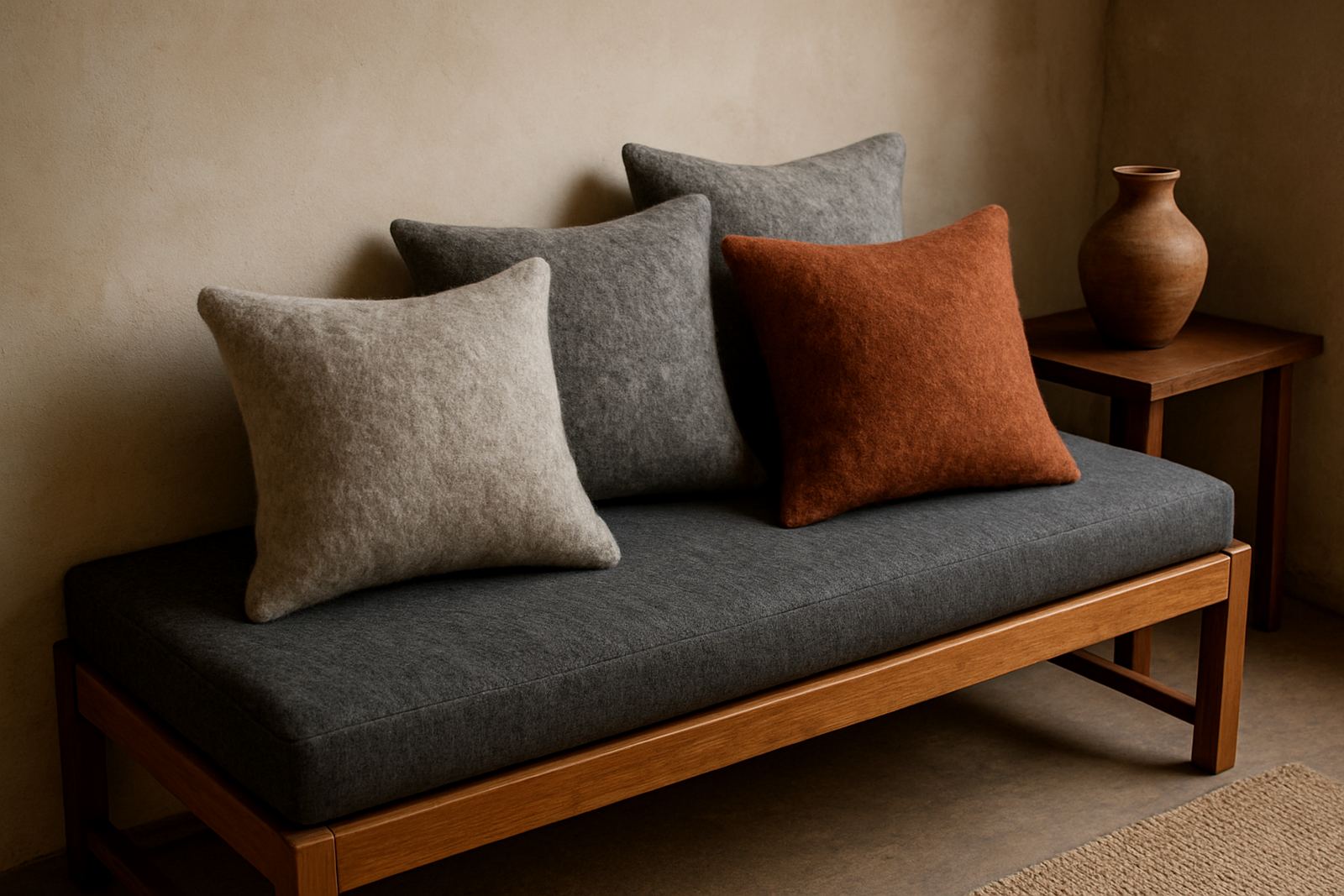
Felted cushions are made from wool fibres that have been matted and shaped into a dense textile surface. The result is a cushion that feels soft but holds its form well, with a slightly nubby finish that adds depth to sofas, occasional chairs, beds and reading corners. In homes that get strong afternoon sun, coastal humidity or cold winter mornings, wool gives a comfortable, lived-in feel without looking flat or overworked.
These cushions suit relaxed interiors where texture matters as much as colour. They sit well with timber, linen, painted plaster, rattan and natural stone, and they work in both contemporary and more traditional rooms. Because the felted surface catches light differently from woven cloth, the cushion can act as a quiet feature piece or a support colour in a layered scheme.
We curate felted cushions from makers across the continent, with attention to stitch quality, filling density and finishing. Some are plain and minimal, others use stitched detail, panels or small appliqué elements. The point is not perfection in a factory sense, but a clean handmade finish that still holds up in daily use.
Sizes, Filling Options And Finish Details
Most felted cushions are available in standard domestic sizes, with a few makers offering custom proportions for hospitality or retail projects. Common dimensions include 45 x 45 cm, 50 x 50 cm, 40 x 60 cm lumbar and 60 x 60 cm feature cushions. Thickness usually ranges from 8 cm to 15 cm depending on the fill and the firmness required.
Filling options vary by maker and may include feather inner, fibre inner, or a removable inner paired with a felted outer cover. Feather inners give a softer slouch, while fibre inners hold a more structured shape. If you are styling a guesthouse, lodge lounge or showroom and want a neater line, a firmer insert is usually the better choice.
- Standard sizes: 45 x 45 cm, 50 x 50 cm, 40 x 60 cm and 60 x 60 cm
- Shape options: square, lumbar and occasionally bolsters or irregular sculptural forms
- Closure types: hidden zip, envelope opening or stitched seam depending on the maker
- Finish options: plain felt, stitched edging, panel work, appliqué or mixed-texture detailing
- Best use: one statement cushion or layered with linen and cotton pieces
Colour can differ slightly from batch to batch because felted wool absorbs dye and light in a natural way. That variation is part of the appeal, though it is worth checking if you need a matched set for a long sofa or a hospitality room with repeated units.
Where Felted Cushions Suit Best
These cushions work especially well in spaces that need warmth without visual clutter. They are a good fit for living rooms, bedrooms, study corners, covered patios and boutique guest spaces. In open-plan homes they help break up hard lines from tiles, concrete floors and leather seating. On beds they add a soft accent behind sleeping pillows, while on armchairs they create a more comfortable, inviting finish.
For commercial interiors, felted cushions suit lodges, boutique hotels, reception areas, wellness rooms and curated retail spaces. They can be used to soften waiting areas or to bring a more tactile note into neutral schemes. If your venue gets frequent turnover, ask for firmer inners and stronger seam finishing so the cushions keep their shape longer under daily handling.
- Good for homes with neutral or earthy colour palettes
- Useful in spaces that need texture without shiny fabric
- Suitable for hospitality projects where comfort and presentation both matter
- Works with timber, cane, steel, plaster and stone finishes
- Can be mixed with flat weave cushions for contrast
They are less suited to very wet or exposed outdoor conditions, since wool likes dry storage and regular airing. A covered terrace is fine if the cushions are brought in during rain and stored properly after use.
Installation, Use And Room Conditions
Felted cushions need no installation in the technical sense, but they do need the right placement and handling. Put them where they can breathe, and avoid keeping them pressed against damp walls or on surfaces that stay wet. In coastal areas, where humidity can build up quickly, it helps to air the cushions regularly and keep them out of direct sea spray. In Johannesburg winters, a wool cushion is useful because it adds warmth without adding bulk.
There are no power or gas requirements for the product itself. For project buyers, the only practical checks relate to room conditions and use patterns. If the cushions are going into a hospitality or retail environment, confirm whether they will be used on fixed seating, loose furniture or display benches, because that affects the fill choice and whether removable covers are needed for cleaning. If the room runs air conditioning or heating often, wool remains stable, but it still benefits from a little rotation to avoid uneven wear.
We also recommend measuring the seat depth or bed width before ordering. A cushion that is too small can disappear visually, while one that is too large can crowd the furniture and make the room feel untidy. Good proportion matters more than buying the biggest size available.
Care, Cleaning And Long-Term Servicing
Wool felt is durable when treated properly, but it needs gentler care than synthetic fabric. Regular light vacuuming with a soft brush attachment will remove dust and crumbs. If the cushion gets marked, spot clean with a damp cloth and mild soap, then blot dry rather than rubbing. Do not machine wash unless the maker specifically confirms that the outer cover can handle it. Heat and aggressive agitation can cause shrinkage or change the felt surface.
For homes with children, pets or regular entertaining, it helps to rotate cushions every few weeks so the wear stays even. If the insert is removable, shake it out and re-fluff it to keep the shape. In humid conditions, air the cushions in a shaded spot every so often to prevent stale smells. Never leave them packed in plastic for long periods. That is the quickest way to trap moisture, and it can spoil the wool.
- Vacuum lightly with a soft brush attachment
- Spot clean quickly, then dry flat in the shade
- Rotate and re-fluff regularly to maintain shape
- Store in a breathable bag, not sealed plastic
- Avoid bleach, tumble drying and harsh stain removers
If a cushion is for hospitality or retail use, ask about spare inners or extra covers so you can swap items during cleaning cycles. That keeps the setting presentable without overworking one piece.
What To Check Before Ordering
Before you place an order, check the exact dimensions, fill type, closure style and colour variation tolerance. It also helps to confirm whether the cushion is supplied as a complete piece or as a cover only. If you are buying for a project, ask for a sample loan or a single test piece first, especially when matching to existing upholstery or wall colour. Even small changes in wool tone can be noticeable in natural light.
For wholesale or bulk orders, ask about lead times, packing method and courier handling. Felted cushions should be packed so the corners keep their shape and the surface does not get flattened in transit. If the order is going to Cape Town, Durban, Pretoria, Gqeberha or further afield, collection timing and courier coordination need to be clear before dispatch. It saves unnecessary back and forth.
- Confirm size, fill and whether the inner is included
- Check if the closure is zip, envelope or stitched
- Ask about colour variation and batch matching
- Measure furniture before placing a custom order
- Request packing details for courier or export delivery
For gift orders, hospitality styling or retail wholesale, we can also help with provenance cards, gift packing and seasonal editing. That way the cushions arrive ready for use, display or resale, with less admin for your team.
Key facts
| Product type | Felted wool cushion |
|---|---|
| Common sizes | 45 x 45 cm, 50 x 50 cm, 40 x 60 cm, 60 x 60 cm |
| Fill options | Feather inner, fibre inner, or cover only where available |
| Closure | Hidden zip, envelope opening or stitched seam |
| Care | Vacuum lightly, spot clean, air dry in shade |
| Use settings | Living rooms, bedrooms, hospitality spaces, covered patios |