
What Handloom Curtains Are
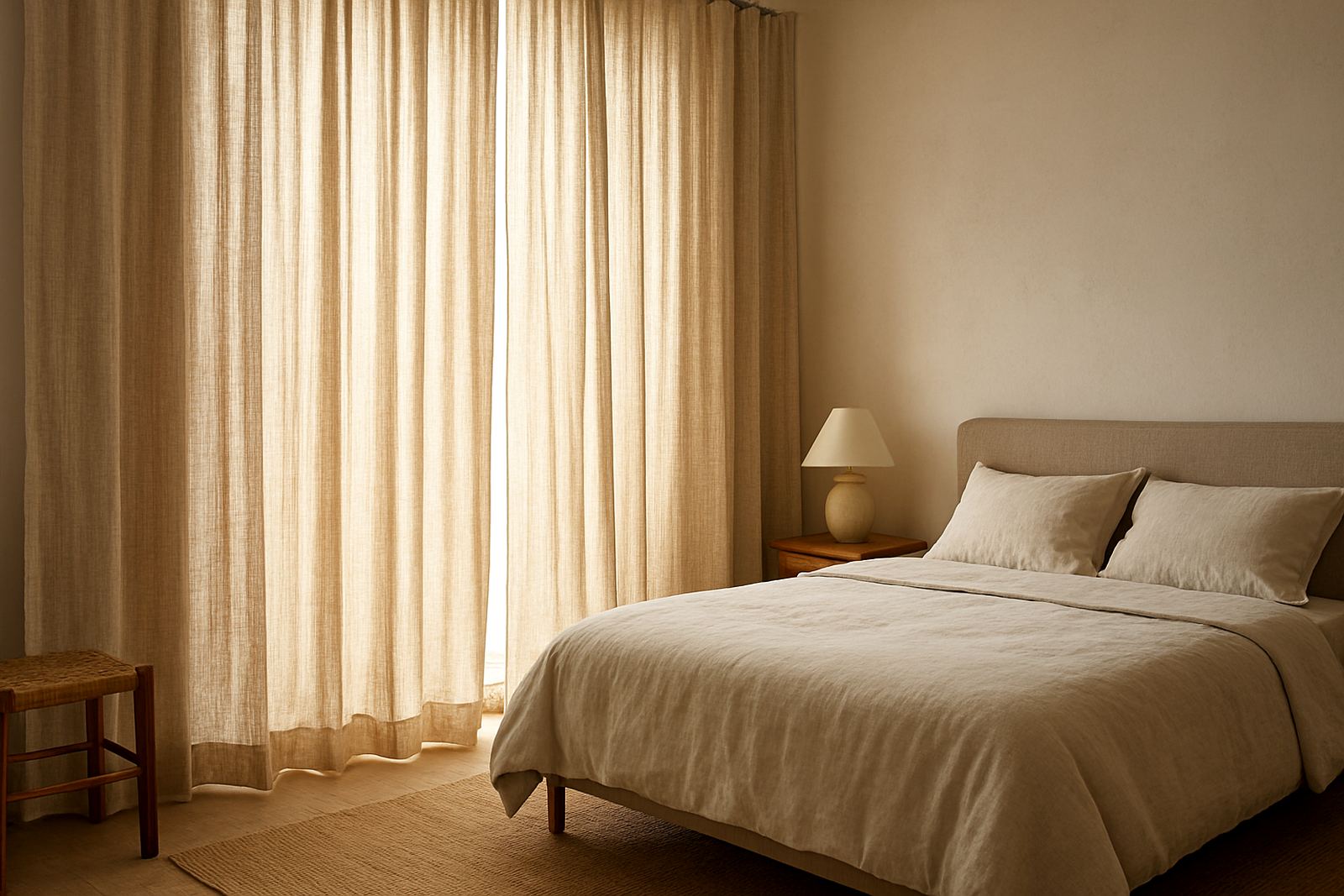
Handloom curtains are woven fabric panels made on manual looms, then finished as hanging curtains for windows, doors, and room dividers. The weave usually carries small variations in tone and texture, which is part of the appeal. Each panel has a more tactile feel than mass-produced sheeting, and it sits well in spaces where you want warmth without heavy visual weight.
These curtains are commonly made in cotton, cotton blend, linen blend, or fibre mixes depending on the maker and the intended use. Some are light enough for a sheer effect, while others are denser and better for privacy. In hospitality spaces they work well in bedrooms, lounge areas, private dining rooms and reception corners where natural daylight still matters.
- Handwoven on manual looms by maker partners across Africa
- Available as single panels, pairs, or custom runs
- Suitable for home use and contract interiors
Sizes, Drop Lengths and Finish Options
We supply handloom curtains in ready sizes and made-to-order lengths. Standard widths often suit 1.2 m to 3 m window spans, while custom lengths can be cut for tall windows, sliding doors, and full-height hospitality installations. If your space has extra-high ceilings, order the drop with enough allowance for the curtain heading and hem.
Finish options may include rod pocket, tab top, eyelet heading, or tape for hooks depending on the maker and the fabric weight. Lined and unlined versions are both possible. A lined curtain gives better light control and helps protect the weave from direct sun, while unlined panels keep the room lighter and more airy.
- Common widths: 1.2 m, 1.5 m, 2 m, 2.5 m and custom
- Common drops: 2.1 m, 2.4 m, 2.7 m and made-to-measure
- Heading types depend on the selected weave and weight
Where They Work Best In South African Spaces
Handloom curtains are a practical fit for South African homes because they soften strong light, especially in west-facing rooms where afternoon sun can be harsh. In coastal areas such as Cape Town, Durban and Gqeberha, a breathable textile is useful where humidity and sea air call for natural fibres that can be aired out regularly. In inland homes and apartments, they help take the edge off dry light and give a room a calmer finish.
They are also useful in guest houses, boutique hotels, wine farms, lodges and serviced apartments where the space needs a crafted look without feeling overdone. In open-plan rooms, they can be used to define a sitting corner or soften a glazed wall. For retail and showroom settings, they work well where the brief calls for texture and privacy without blocking all daylight.
- Homes with large windows and sliding doors
- Hospitality rooms, reception areas and private dining spaces
- Showrooms, studios and quiet consultation areas
Installation, Tracks and What You Need On Site
Installation is straightforward, but the right heading and hardware need to be matched to the weight of the curtain. Lightweight panels can run on a slim rod, while heavier woven curtains work better on a strong track or pole with proper brackets. For full-height curtains, measure from the point of fixing to the finished floor level and allow for the hem and any slight lift off the floor if that is the look you want.
There is no power or gas requirement for the product itself. If the curtains are being fitted in a hospitality or retail environment, the installer should confirm wall type, fixing points, fire regulations if required by the venue, and whether the curtain needs to clear skirting, heaters or aircon units. In older buildings, a quick site check helps avoid uneven hanging and unnecessary rework.
- No electrical or gas connection is needed
- Track, rod and bracket type must suit the fabric weight
- Check wall material, ceiling height and final floor finish before ordering
Care, Cleaning and Service Life
Handloom curtains last longer when they are cared for gently. Most can be vacuumed on a low setting with a brush attachment, or shaken out and aired in a shaded area. Spot cleaning is best for small marks, using a mild detergent and a clean cloth. Full washing depends on the fibre content, so the maker’s care note should always be followed.
Avoid harsh direct sun where possible, especially on naturally dyed or lighter fabrics, as fading can happen over time. In coastal homes, regular airing helps keep the fabric fresh and limits musty smells when humidity rises. If a panel is lined, check the lining every few months for dust and edge wear. A loose hook or fraying hem is usually easy to fix early, rather than waiting until the curtain hangs unevenly.
- Vacuum lightly or air out in shade
- Use gentle spot cleaning only unless the care note says otherwise
- Rehang after cleaning while slightly damp if the fabric allows it
What To Confirm Before Ordering Handloom Curtains
Before ordering, confirm the finished width, drop, heading type and whether you want lining. You should also measure the exact window opening, the space for stacking the curtain when open, and any furniture that sits below the sill. For export orders, it helps to confirm if the destination climate is coastal, dry, or high humidity so the packing and fabric advice can be matched properly.
If you need a hospitality or wholesale quantity, ask for batch consistency across panels so the weave, colour and finish stay close from curtain to curtain. For mixed room sets, it is worth checking if you need matching cushions, runners or table pieces from the same maker group. Our team also helps with provenance cards, sample loans, export packing and courier coordination when the order is going beyond Johannesburg or across borders.
- Confirm exact measurements and hanging style
- Check lining, opacity and colour variation before approval
- Ask about lead time for custom sizes and bulk orders
Key facts
| Product type | Handwoven curtain panels for residential and hospitality use |
|---|---|
| Materials | Cotton, linen blend, cotton blend or fibre mix depending on maker |
| Standard sizes | 1.2 m, 1.5 m, 2 m, 2.5 m widths; 2.1 m, 2.4 m, 2.7 m drops |
| Custom options | Made-to-measure width, drop, lining and heading style |
| Installation | Rod, pole or track depending on fabric weight and fixing point |
| Care | Low-dust vacuuming, shade airing, gentle spot cleaning, maker care note required |