
Knotted Hanging Holders For Everyday Plant Displays
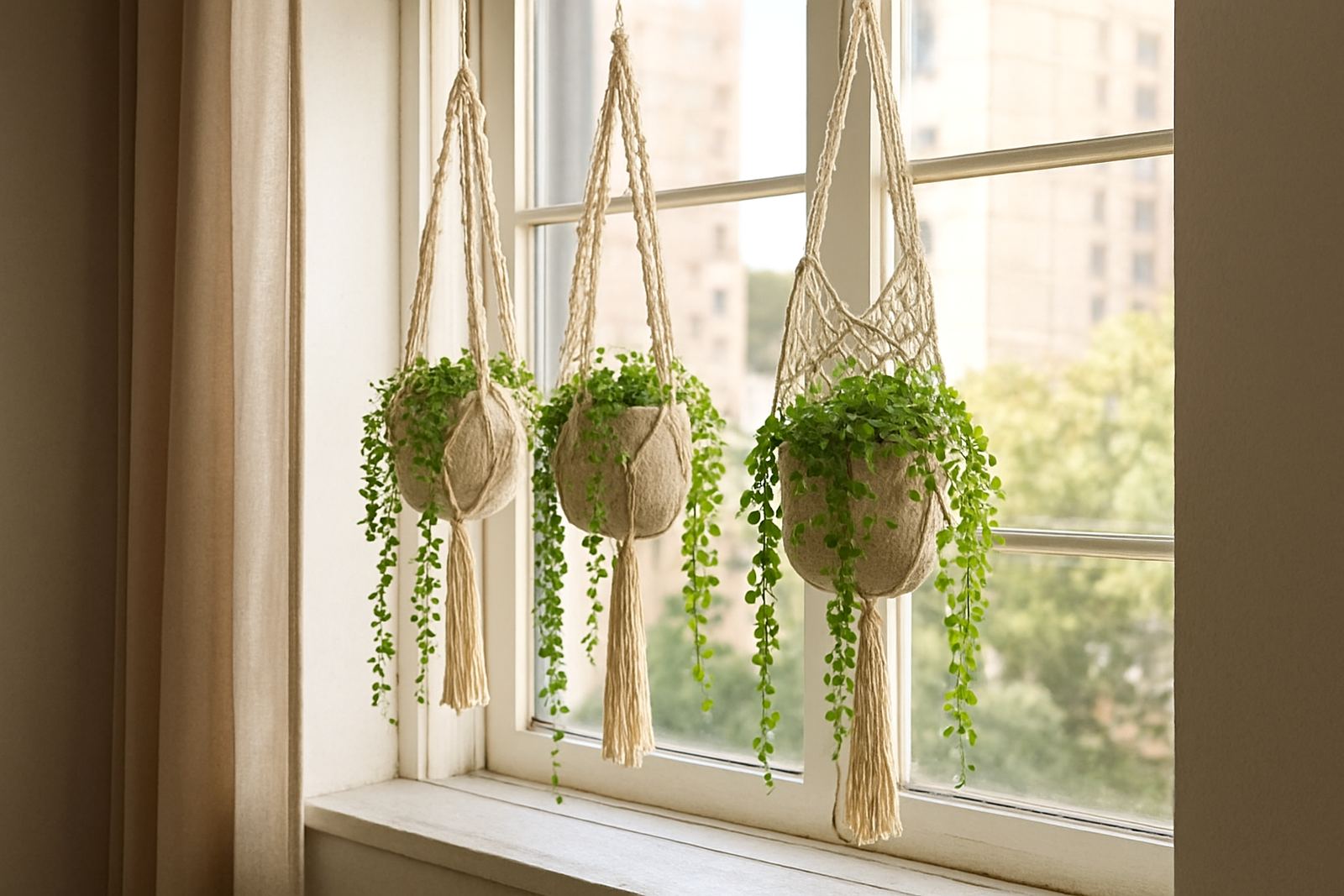
Macrame plant hangers are knotted textile holders made to support a pot from above, rather than resting it on a shelf or stand. They are useful in small apartments, studio flats, offices, cafés and retail spaces where you want greenery without taking up more floor area. In a Johannesburg apartment with limited sunlight, a hanger can move a plant closer to a bright window. In Cape Town or Durban, they also work well on sheltered balconies where salt air and wind mean loose items are best kept clear of the ground.
These hangers are usually made from cord, cotton rope or mixed fibre yarns and finished with loops, knots and a base cradle that holds the pot in place. The look can be simple and plain or more decorative with fringe and patterning. Because each piece is made by hand, small differences in knot tension and length are normal, and they add to the character of the item. For customers buying in sets, it is wise to expect slight variation from one hanger to the next, especially if they are made by different makers.
They do not need electricity, gas or plumbing. That makes them easy to use in load-shedding periods, guest rooms and informal retail displays where you want a display piece that keeps working no matter what the power is doing.
Sizes, Pot Fit And Suspension Options
The right size depends on the pot diameter, the weight of the plant when watered, and the ceiling or hook height. A hanger that is too short can crowd the leaves against the ceiling, while one that is too long may leave the pot hanging too low in a walkway. For most homes we suggest checking both the pot base and the rim, because some planters flare out wider than the opening.
Typical options include single-pot hangers for small indoor plants, longer versions for larger planters, and multi-tier styles for grouped displays. Some designs are better for lightweight pots in nursery containers, while others can handle heavier ceramic planters if the cord is thick enough and the ceiling fixings are solid. If you are fitting into a double-volume entrance or a shop window, measure the drop carefully from the fixing point to the finished height you want.
- Small: suited to 120 mm to 150 mm pots
- Medium: suited to 160 mm to 200 mm pots
- Large: suited to 220 mm to 300 mm pots
- Custom drop length: useful for high ceilings, stairwells and hospitality styling
- Single hanger or grouped set: useful for one feature plant or a row of plants
For export orders or bulk hospitality work, it helps to standardise the pot sizes first, then match the hangers after. That reduces breakage and makes repeat ordering easier.
Where Macrame Hangers Work Best In The Room
These hangers suit rooms that need vertical interest without adding bulky furniture. They work well near bright windows, in corners that need softening, beside bookshelves, above side tables and in covered outdoor areas. In a salon, guest house or café, a hanging plant can break up hard lines and add a calmer feel to the room. In a home, they are useful in kitchens, sunrooms and bedrooms where shelves are already full.
Because the planter hangs free, the plant can get better light and air circulation than it might on a crowded surface. That said, trailing plants should still be checked for growth, and moisture from watering must not drip onto painted walls, wood floors or electrical fittings. In humid coastal areas like Durban or Gqeberha, it is worth leaving a little extra clearance so the pot can dry properly and the cord does not stay damp for too long.
For hospitality and retail spaces, hanging displays are often used to frame mirrors, doorways and service counters. If the installation is over customer walkways, it is best to keep the base of the pot high enough that nobody brushes past it. In municipal buildings or leased spaces, always confirm whether the ceiling point can take the weight before making any permanent fitting.
Installation Checks, Weight Limits And No-Power Setup
Macrame hangers are straightforward to set up, but the fixing point matters more than the knotwork. A hanger should be attached to a proper hook, beam or ceiling fitting that can take the full weight of the pot, soil and water. Wet soil is much heavier than dry soil, so the safe load needs to be judged after watering, not before. If the ceiling is plasterboard, or if you are unsure about the structure, use a qualified installer or building maintenance team.
There is no power or gas requirement, but the surrounding area should still be considered. Keep hangers away from ceiling fans, open windows with strong drafts, air-conditioning vents and stove tops. In homes with children or pets, choose a height that keeps the plant out of reach without making watering awkward. In offices, it is also sensible to avoid hanging directly over printers, plug points or data cabling.
- Check ceiling strength before first use
- Use a hook rated for the full wet weight of the planter
- Leave enough space for leaves to grow and hang freely
- Keep away from heat, steam and direct water splash zones
- Test the drop before placing the final pot inside
If you are ordering for a job in Midrand, Pretoria or Sandton, it helps to send a site photo and note the ceiling height. That makes it easier to plan the correct drop and avoid a hanger that sits too high or too low.
Care, Cleaning And Long-Term Use
Macrame plant hangers are low-maintenance, but they do need basic care to stay neat. Dust can gather in the knots, especially in inner-city spaces or rooms with open windows. A light shake outdoors, a soft brush or a low-suction vacuum attachment can remove most dust. If the cord gets stained from water, soil or fertiliser, wipe it gently with a damp cloth and leave it to dry fully before rehanging the plant.
Avoid soaking the whole hanger unless the maker has confirmed it can be washed. Natural fibres may stretch, shrink or lose shape if they stay wet too long. In coastal towns, keep an eye on metal rings or hooks if they are part of the design, as humidity can mark untreated hardware. If the hanger is used outside, even on a covered stoep, check it more often because sunlight can fade dyes and weaken fibres over time.
For servicing, the most important habit is to inspect the knots every few months. If the planter feels uneven, the cord has frayed, or the base cradle is slipping, stop using it until it is repaired or replaced. A hanger that is not holding the pot evenly should not be left in daily use.
What To Check Before You Order
Before placing an order, measure the pot, the intended hanging height and the space around it. If the hanger is for a gift, ask what size pot the recipient already uses. If it is for retail or wholesale, decide whether you want a consistent range or a mixed set of lengths and colours. Many customers also ask for provenance cards, especially when the hanger is being sold alongside ceramics or other handmade goods.
- Pot diameter and pot height
- Approximate filled weight of the pot
- Required drop from fixing point to planter base
- Indoor or sheltered outdoor use
- Preferred colour, fibre type and finish
- Any need for custom packing, export packing or gift wrapping
For bulk orders, ask about sample loans, collection consultations and courier coordination so the products arrive ready for display. If the hangers are going into a hospitality project or a store refresh, seasonal editing can help match the pieces to the room colours and the type of plant you plan to use. One well measured hanger is easier to live with than three that need adjusting after installation.
Key facts
| Product type | Handmade macrame plant hanger |
|---|---|
| Common materials | Cotton cord, rope, mixed fibre yarns, optional metal ring or wooden bead detail |
| Typical sizes | Small, medium and large to suit pots from 120 mm to 300 mm |
| Use locations | Indoor rooms, covered patios, hospitality spaces and sheltered retail displays |
| Power or gas needed | None |
| Care | Dust regularly, spot clean gently, inspect knots and hanging point often |