

What export packing covers for handmade goods
Export packing is for orders that need more than a standard parcel wrap. We pack items so they can move through collection, sorting, road transfer, air freight and final delivery with less risk of chips, crush marks or moisture damage. That matters for ceramics, woven pieces, dyed textiles, carved decor and mixed orders where one item can affect the full shipment if it shifts inside the carton.
Each pack is planned around the item shape, finish and route. A glazed bowl does not need the same support as a folded textile bundle or a mixed gift set with wood, glass and ceramic in one carton. We also take into account the customer destination, whether that is Cape Town, Durban, Pretoria, Gqeberha or an international address where the parcel may be handled more than once before arrival.
- Protective wrapping for fragile surfaces and edges
- Inner separation for mixed-material orders
- Outer carton selection matched to weight and size
- Labelling for handling, orientation and batch control
- Export-ready packing notes for courier coordination
How we prepare the pack before sealing the carton
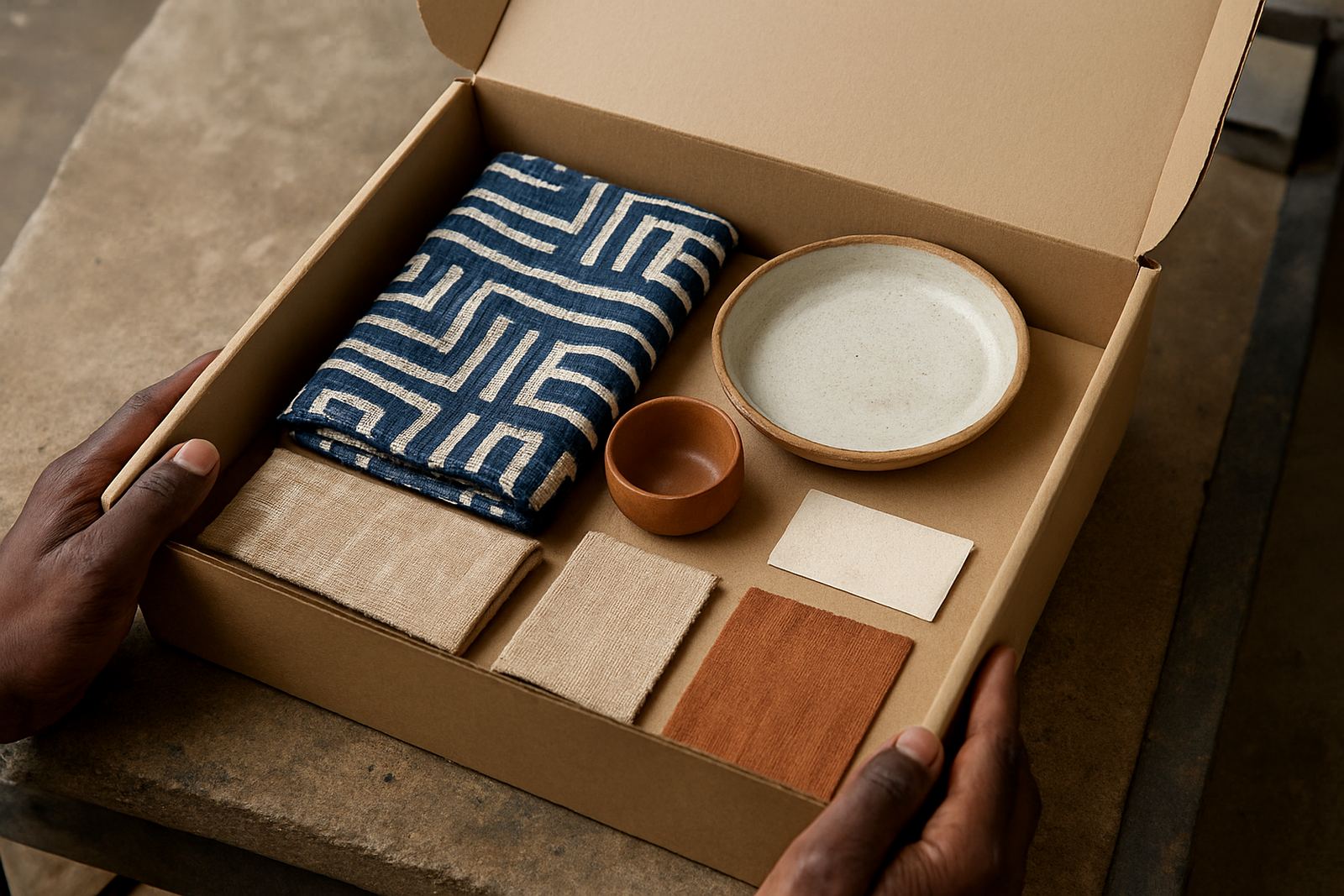
We start with a quick condition check and item count, then group goods by fragility and size. Ceramics are wrapped individually, textiles are folded with clean interleaving where needed, and hard goods are separated with padding so they do not rub together. If an order includes several makers, we keep provenance cards and product notes together so the contents remain easy to verify at handover.
For export movement, the packing format must stay neat and stable. We use cushioning where corners meet, fill voids so nothing can slide, and seal cartons with clear outer marking. When required, we can split a large order into more than one carton rather than force everything into a single box that is too heavy or awkward to carry. That is often the better choice for courier safety and lower breakage risk.
- Single-item wrapping or grouped packing by product type
- Void fill to stop movement inside the box
- Corner and rim protection for brittle items
- Batch separation for wholesale and retail mixed orders
- External carton marking for handling and loading
The packing process from approval to courier handover
Once the order is confirmed, we assess the item list and choose the right packing method. If a product has a high breakage risk or an unusual shape, we may recommend a revised carton plan before sealing. After packing, we check weight, box strength and closure so the parcel is ready for local collection or export dispatch. This is especially useful for customers moving stock between Johannesburg and coastal centres where humidity and handling conditions can vary.
Our process is practical and straightforward. First we assess the order, then we prepare materials, pack and seal, and finally complete the handover notes for courier coordination. Where a shipment needs collection from our Maboneng base, the parcel is set aside for scheduled dispatch. For international orders, we can prepare the pack to suit the courier route and the documents required alongside it.
- Step 1: Order review and packing assessment
- Step 2: Material selection and carton sizing
- Step 3: Protective wrap, padding and sealing
- Step 4: Final weight, label and handover check
- Step 5: Courier collection or dispatch arrangement
Specs we work to for courier-safe export packing
We work to packing specs that suit the item rather than forcing everything into one standard format. For smaller ceramic pieces, a snug inner wrap and a correctly sized outer carton are usually enough. For larger or mixed orders, we may use layered packing, double boxing or division across cartons. The aim is to keep the contents stable and easy to handle, not over-pack them or waste space.
Typical packing dimensions depend on the order, but the practical range for most retail parcels is from small carton sizes up to larger export boxes for bulk or wholesale requests. Heavier orders are kept manageable so they can be moved without strain, and fragile items are positioned away from seams and edges. If the shipment needs to travel by air, road or cross-border courier, we make sure the pack can handle stacking and repeated handling without collapsing. In summer months, we also watch for heat and moisture, especially on natural fibre goods and dyed fabrics.
- Typical carton range: small parcel to large export box, depending on order
- Weight planning: kept within courier handling limits where possible
- Protection method: wrap, cushion, separation and void fill
- Labelling: contents, handling notes and shipment reference
- Finish protection: moisture-aware packing for textiles and mixed goods
Turnaround times and when to book ahead
Most export packing jobs are turned around within 1 to 3 working days after the item list is confirmed and the goods are on hand. Larger wholesale packs, custom gift assortments or multi-carton shipments may need longer, especially where we are coordinating maker stock from different sources. If a parcel is time-sensitive, it helps to book early so the packing window can be aligned with courier collection.
For seasonal periods such as year-end trade, tourism peaks and promotional gifting, we recommend allowing extra time. South African courier networks can get busy, and weather or load-shedding related delays can affect handover timing and depot processing. A little buffer helps keep the shipment on track, particularly if the parcel is going to Durban, Gqeberha or an export route with fixed sailing or flight cut-offs.
Pricing approach and maintenance for stored packed stock
Pricing is based on the number of items, pack complexity, carton size, and any special protection required. A single wrapped ceramic item costs less to prepare than a mixed export order with several fragile pieces, custom inserts and split cartons. We quote according to the actual handling needed, so customers only pay for the pack method that fits the shipment.
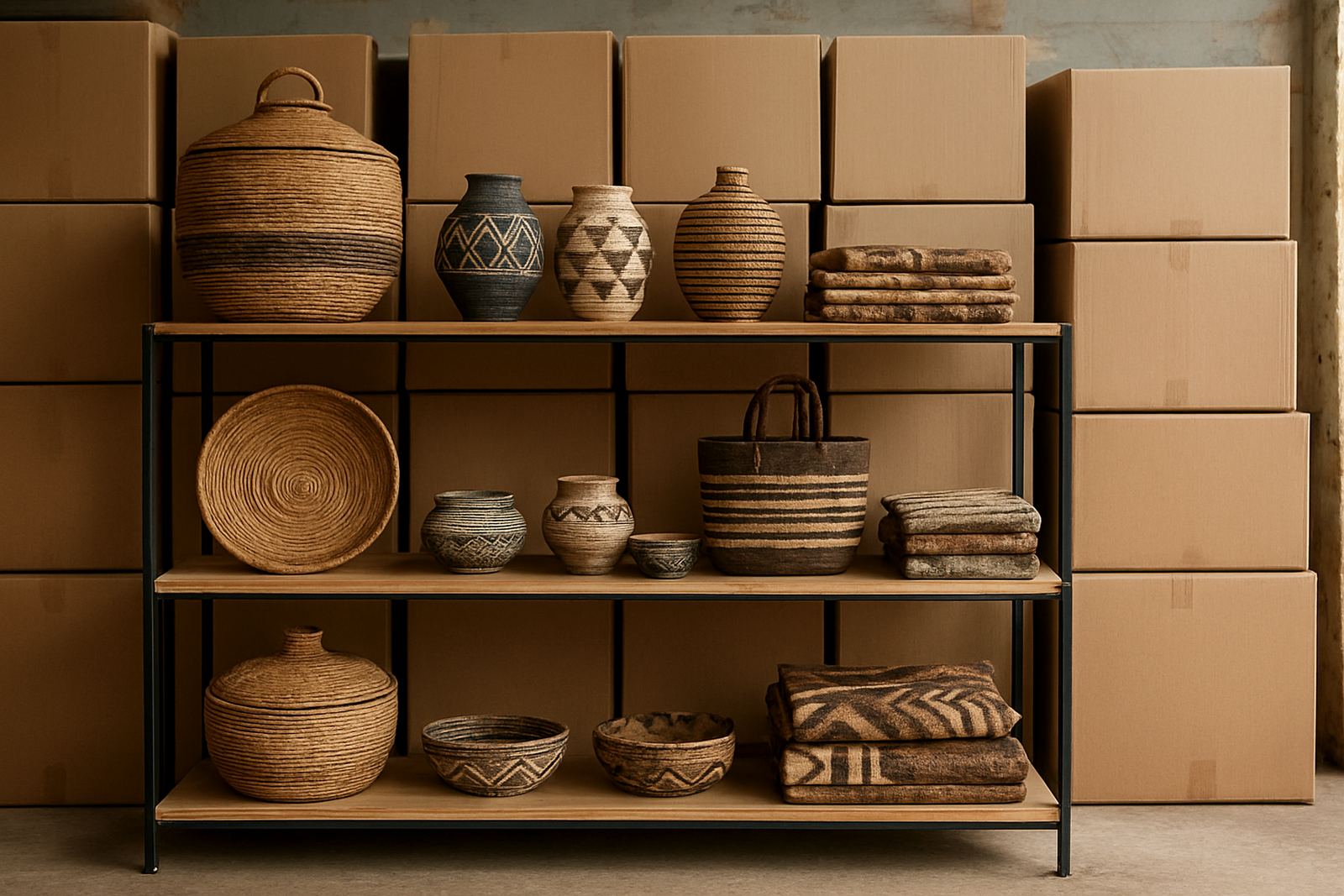
For stock that will be stored after packing, we advise maintenance checks at regular intervals. A packed carton should be inspected every 4 to 8 weeks if it is being held for later dispatch, especially in humid conditions or where the parcel may be moved more than once before collection. If there is any sign of softening, dampness or compression, the outer carton should be replaced and the internal protection reviewed. That is useful for wholesale stock, seasonal ranges and hospitality orders waiting for a booking date.
- Quote based on item count, size, fragility and route
- Better rates for repeat or bulk packing requests
- Optional split-carton planning for heavy orders
- Stored cartons should be checked every 4 to 8 weeks
- Replace outer packing if moisture or crush marks appear
What to send us before we pack your order
To plan the pack properly, send the item list, the destination, any fragile notes and whether the order is retail, wholesale or export. If there are mixed materials or items with sharp edges, tell us upfront. This helps us choose the right protection and avoid last-minute changes at collection time. It also helps when the order is being shipped with provenance cards, gift notes or sample pieces for review.
Customers who need export packing for a repeat route can also ask for the same packing method to be followed each time. That is useful for hospitality styling projects, retailer replenishment and seasonal edits where consistency matters from one dispatch to the next. Once the pack standard is set, the process stays quicker and cleaner for future orders.
Key facts
| Typical turnaround | 1 to 3 working days after order confirmation and stock check |
|---|---|
| Packing range | Single items, mixed orders, wholesale parcels and multi-carton export loads |
| Protection methods | Wrap, separation, void fill, corner support and outer carton sealing |
| Best for | Ceramics, textiles, artisan decor, gift sets and mixed-material shipments |
| Pricing basis | Item count, fragility, carton size, route and special handling needs |
| Maintenance interval | Inspect stored packed stock every 4 to 8 weeks |