
Start with the stem type you want to display
The first decision is not the vase, it is the stems. Fresh flowers need a mouth and body that can hold water safely, while dried grasses, branches and everlasting stems often suit narrower openings and lighter shapes. If you shop without this in mind, a vase can look right on a shelf but fail on the table.
For fresh stems, check that the opening is wide enough for your arrangement but not so wide that stems fall outward. For single stems or a small bunch, a slim neck helps keep the design upright. Dried pieces are less demanding, yet they still need a stable base because many are top-heavy. A tall vase with a small footprint can tip more easily than you expect, especially on smooth tiles or polished wood.
- Fresh flowers: look for a watertight interior and a mouth that supports the stems.
- Dried stems: choose a balanced shape with enough height for long lines.
- Mixed arrangements: aim for a mid-width opening and a heavier base.
- Table use: make sure the height does not block sight lines across the table.
Check the proportions before you fall for the colour
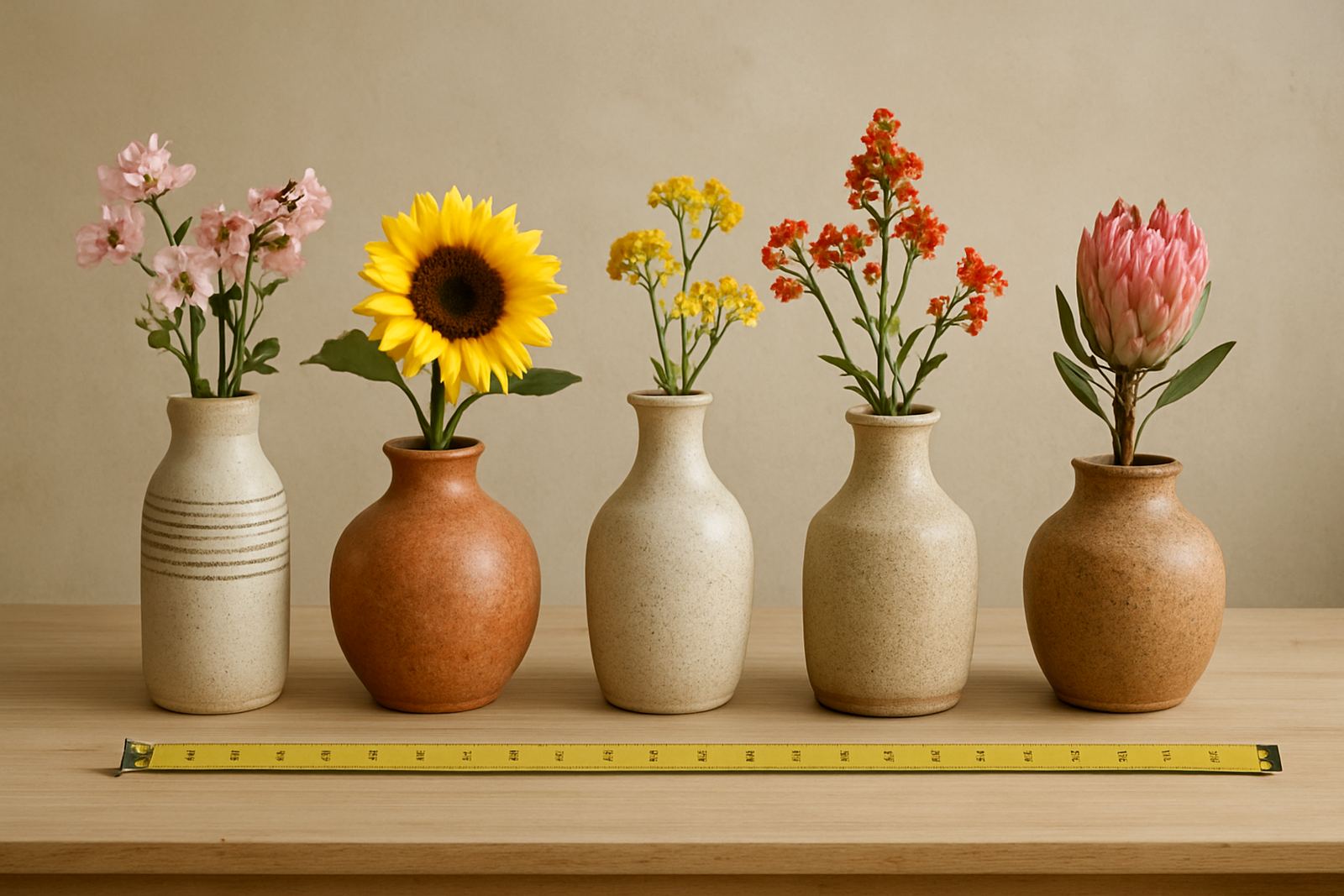
Colour catches the eye, but proportions decide whether the vase will actually work in your home. A vase that is too small can disappear on a sideboard, while one that is too tall may overpower a dining table or shelf. As a simple rule, look at the relationship between height, width and opening before you look at pattern.
A squat vase usually suits short, full arrangements and low coffee tables. A tall vase works well for entry consoles, pedestals and floor placement, but it needs enough weight at the base. Medium-height vases are the easiest to place in apartments and open-plan homes because they can move from a side table to a shelving unit without looking awkward.
- Measure the space first, including shelf height and table depth.
- Leave some breathing room around the vase, not every surface needs to be filled.
- Match the vase height to the stem length, not just to the room.
- For narrow shelves, choose slimmer bodies so the piece does not feel crowded.
Stability matters in busy homes and windy places
Stability is one of the most practical checks, yet it is often skipped. A ceramic vase may feel solid in the hand, but once stems and water are added the balance changes. If you live in a home with children, pets or lots of foot traffic, that matters even more. On balconies or near open windows, a sudden breeze can move a light vase enough to make it wobble.
Pick up the vase and judge the weight distribution. The base should feel secure and slightly heavier than the top for taller shapes. Turn it gently on a flat surface to see whether it rocks. If the vase has a very thin foot or a narrow point of contact, it may need a safer spot away from edges. This is especially useful in compact rooms where people pass close by. A vase can be beautiful and still be the wrong choice for a busy area, no shame in that.
- Press lightly on the rim and base to test balance.
- Set it on a level surface and check for rocking.
- Use heavier pieces for floor placement or tall stems.
- Keep fragile pieces away from high-traffic corners and open windows.
Look closely at glaze, texture and the inside finish
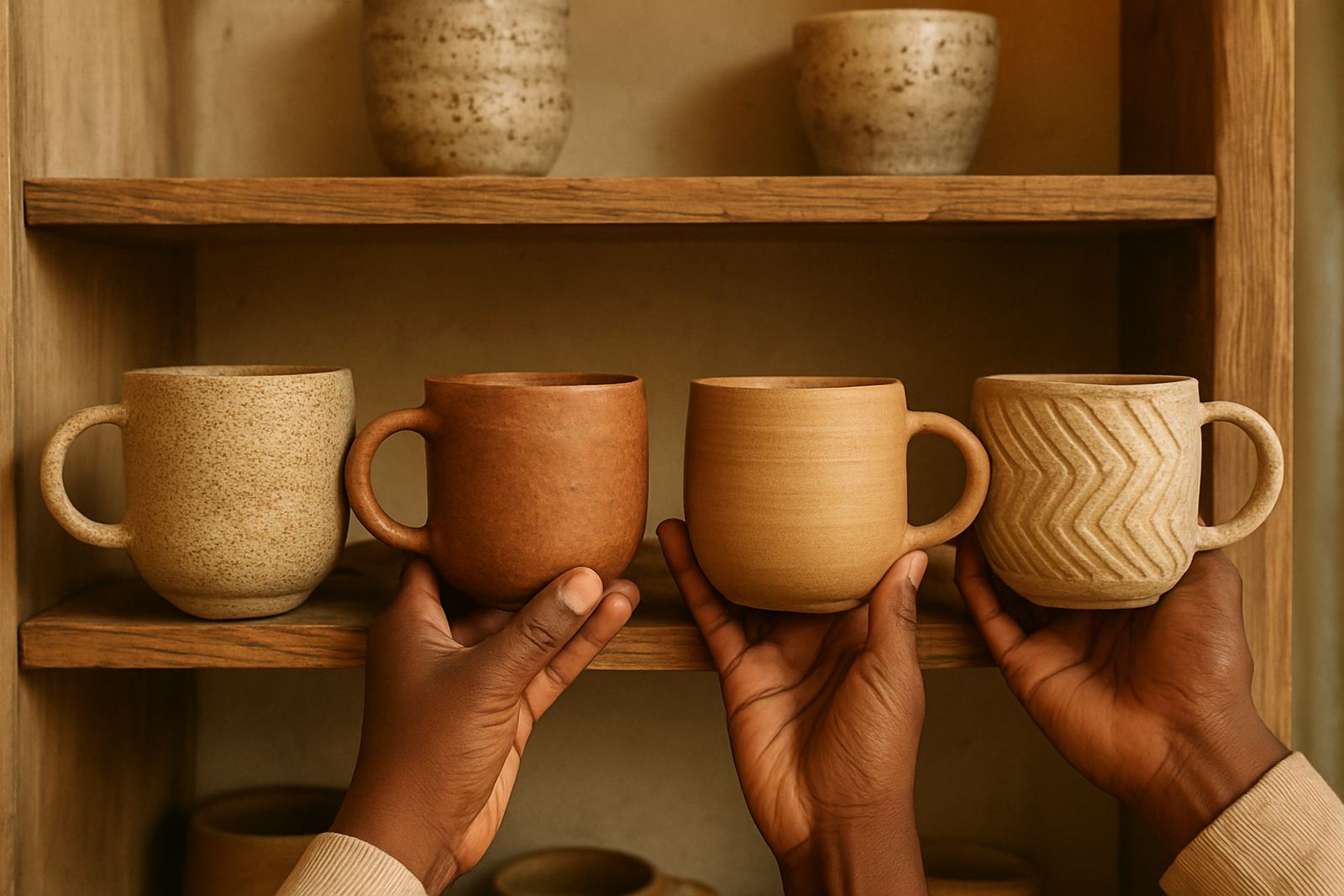
The surface tells you a lot about how the vase will age. A smooth glaze can be easier to wipe clean after fresh water is used, while a textured finish gives more character and can suit a more handmade look. What matters most is that the finish feels even and well made. Tiny variations are normal in hand-finished pieces, but cracks, sharp edges and unstable glazing are warning signs.
Check the inside as carefully as the outside. If you plan to use fresh stems, the interior should be sealed or suited to holding water. Ask whether the piece is intended for flowers or mainly for dry styling. Some ceramic vases are decorative on the outside but not fully watertight, and that can lead to damp marks on shelves or tables. In humid coastal homes, a well-finished interior helps reduce staining and makes upkeep simpler.
Run your hand around the rim and opening. The edge should feel comfortable, not rough or unfinished. If you plan to move the vase often, a smooth base also helps prevent scratches on polished surfaces. It is a small detail, but it saves trouble later.
Match the vase to fresh stems, dried stems or both
Some vases are better at one job than another. If you want one piece that can move between uses, choose a shape that is not too specialised. A medium opening and steady body give you more flexibility through the year, whether you are styling with long branches in winter or lighter flowers in summer.
Fresh stems need water depth and a shape that can support the arrangement without constant adjusting. Dried stems need height, space and a base that will not be knocked over by light movement. If you plan to switch between the two, think about how the vase will look when it is empty as well. Many people forget that a vase can sit on a shelf for weeks without flowers, so the shape must still please the eye on its own.
- For fresh stems: check water holding ability and ease of cleaning.
- For dried stems: prioritise height, weight and visual balance.
- For mixed use: choose a medium body with a stable foot.
- For gifting: pick a shape that works in more than one room.
A quick buying checklist before you place the order
Before you decide, take one last practical look at the piece and the space it will live in. A vase can be a decorative object, a working vessel, or both. The best buy is the one that fits the stems, the surface and the care you are willing to give it. That sounds simple, but it saves a lot of disappointment.
Use this checklist when comparing options. If you are buying for a home, office, guest house or retail setting, this step helps keep the selection focused. It also works well when you are choosing a set of vases, since grouped pieces need to relate to each other without looking too samey.
- Does the opening suit the stems you plan to use?
- Is the base stable enough for the height?
- Will the finish fit the room and be easy to maintain?
- Is the vase suitable for fresh water, dried stems, or both?
- Does the size work on the shelf, table or floor area you have in mind?
- Will it still look good when empty?
If you are unsure, keep the selection practical and ask for a piece that suits your intended use. A vase should make styling easier, not harder, and the right one will do that from day one.