
Start With the Room, Not the Fitting
Before choosing a pendant, measure the room and note what the light must do. A pendant over a dining table is different from one in an entry hall or over a kitchen island. In Maboneng apartments, older homes in Pretoria, and newer homes in Sandton, ceiling heights can vary a lot so this first check matters.
Think about the task first. Do you need a focused pool of light for reading, prep work or a table, or do you want a softer glow for atmosphere? A single pendant can work in a small room, but a wider room often needs a pair or a row so the light does not leave dark corners.
Measure Ceiling Height and Hanging Clearance
Ceiling height changes everything. For standard ceilings, pendants usually need to hang high enough that people can move under them without bumping their heads, but low enough to light the surface below. In a dining room the bottom of the shade should usually sit well above the table top, while still feeling close enough to define the space.
Check the drop length from ceiling to floor, and remember that some fittings include adjustable cable or rod lengths. If your ceiling is high, you may need a longer suspension or a larger shade. In double-volume homes, stairwells or hospitality spaces, this becomes even more important because a tiny fitting can disappear. Also check if the ceiling point can take the weight of the fixture, especially for heavier ceramic or artisan pieces.
Choose Shade Diameter and Number of Lights
Shade size should match the furniture and the room. A pendant that is too small looks lost, while one that is too large can crowd the area below it. As a simple guide, smaller shades suit bedside corners and compact passages, medium shades work well above side tables or a breakfast nook, and larger shades are better for dining tables or open-plan living areas.
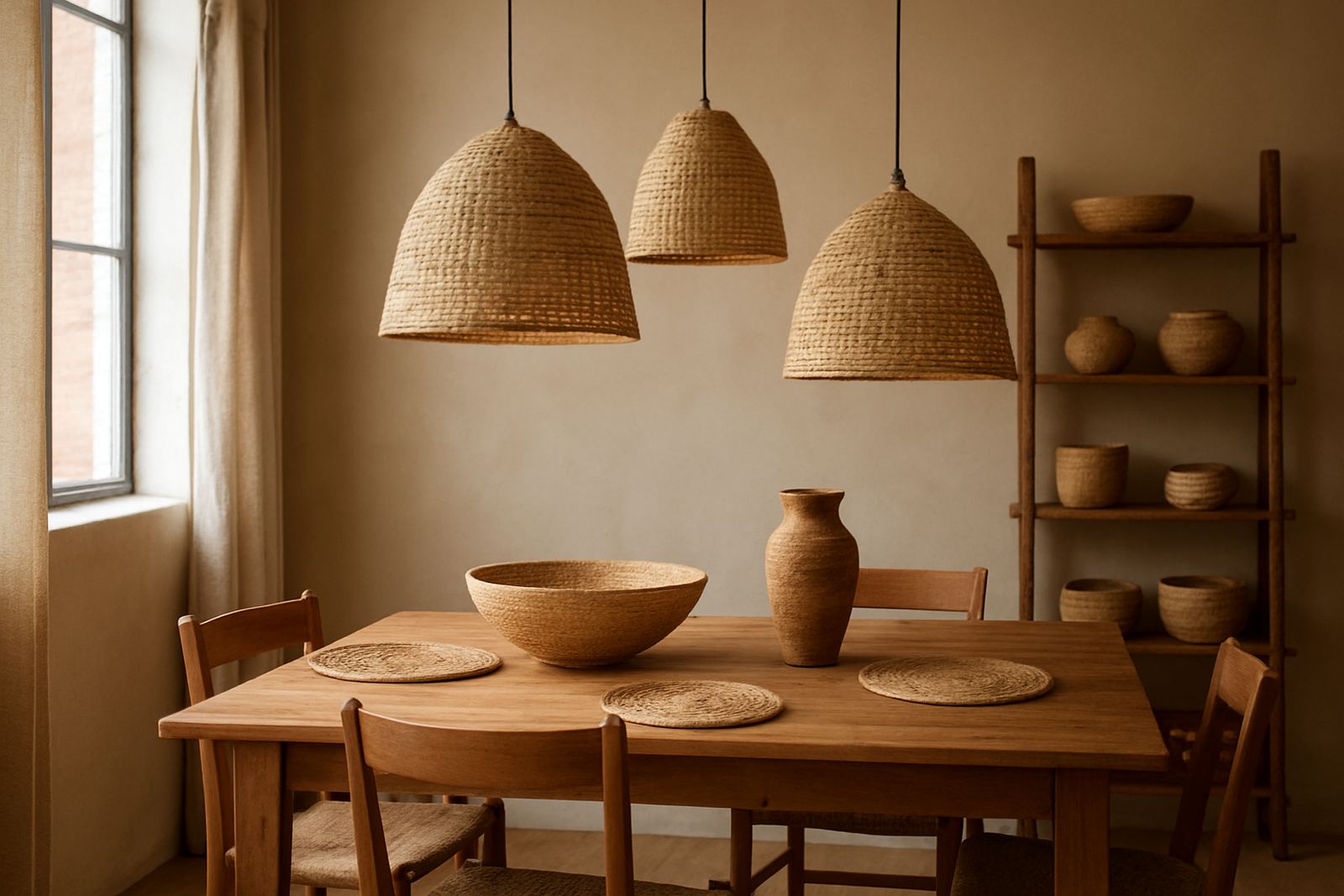
Where one pendant would look too weak, use multiples. Two or three smaller pendants can create better balance over a long table or island than one oversized fitting. Leave enough space between each light so the shades are not bunched together and so the light spreads evenly.
- Match the shade diameter to the table or surface below it
- Use more than one pendant for long or wide surfaces
- Leave clear sightlines so the fitting does not block views across the room
- Check that the size suits the room height as well as the floor area
Check the Wiring Points and Bulb Requirements
Before ordering, confirm where the ceiling wiring point sits and whether it is already in the right position. If it is off-centre, you may need a longer cord or a different layout. In older homes or rental units, the existing point may not line up with the dining table or kitchen island, so measure carefully before buying.
Also check the bulb holder type and the bulb style required. Some pendants are designed for a narrow, focused beam while others need a bulb that throws light more widely. If the room is used during load-shedding, consider a fitting that works well with energy-saving bulbs or low-watt options. That way the space still feels usable without drawing too much power.
- Confirm the position of the ceiling point before ordering
- Check whether the fitting needs a standard or special bulb base
- Ask how much light the shade allows through
- Consider dimming if the room is used for both work and evening dining
Think About Light Spread and Surface Finish
The material of the shade changes the feel of the room. Open metal shades cast sharper shadows, glass can give a cleaner spread, and ceramic or woven pieces often soften the light. For a kitchen or work area you may want more directed light, while a bedroom or lounge can handle a gentler spread. In coastal homes with humidity, make sure the finish can handle moisture and does not rust or craze easily.
Colour matters too. Dark shades can be striking but may absorb more light, so they are better when the bulb output is strong enough. Pale finishes and translucent materials usually help bounce more light around a room. If your walls are dark or textured, this becomes even more useful because the room can otherwise feel dimmer than expected.
Plan for Delivery, Installation and Ordering Details
When ordering pendant lights to Cape Town, Durban, Pretoria, Gqeberha or further afield, think about packing and installation together. Handmade fittings need proper protection in transit, especially ceramics and mixed-material pieces. Check that the shade, suspension parts and fixings are all included, and keep a record of the measurements for the installer.
For bulk orders, hospitality projects or retail resale, it helps to plan by room type and quantity before placing the order. That makes it easier to keep finish, size and hanging height consistent across the site. If you are buying for a restaurant or guesthouse, ask for provenance cards and sample loans where needed so the selection can be signed off before the full shipment is confirmed.
- Confirm the delivery address and access details for apartment blocks or estates
- Check that each fitting is packed securely for courier transport
- Keep the installation height, shade size and bulb details on one list
- Allow time for municipal or landlord approval where ceiling changes are needed
A Final Checklist Before You Place the Order
Use this last check before buying. Measure the room, confirm the ceiling height and measure the furniture below the light. Check whether the pendant will be the only light or part of a larger lighting plan. If you are shopping for a home, office, restaurant or shop, the right pendant should suit the room by day and still work when the sun goes down.
Creation Africa Foundry helps customers across Johannesburg and beyond choose handmade pendant lights and related artisan pieces with proper attention to size, fit and finish. If you need a custom curation, collection consultation or courier coordination, send your enquiry through the contact page and we can help you narrow it down.