
Start with how you will use the piece
Before you choose a serving board or bowl, think about the meals it will carry. A board for cheese, bread and fruit needs a different finish to a board used for hot snacks, while a wide bowl for salads must be easy to grip, pour from and wash. In Johannesburg homes, this matters even more when you are hosting through load-shedding and want pieces that can move easily from kitchen to table.
For everyday use, keep the size practical. A small board around 30 to 35 cm is handy for tea service or a simple snack spread. Larger boards of 40 cm and up suit shared platters, breakfast tables and hospitality styling. Bowls should match the serving style too, with low, broad bowls for display and deeper bowls for mixed food. If the piece will be used often, choose something that feels balanced in the hand and not too heavy for daily carrying.
It also helps to think about where the piece will live. Coastal humidity in Durban or Gqeberha can affect some materials if they are stored badly, while dry interiors like Pretoria may be more forgiving. Good storage, dry cloths and sensible use will keep artisan serveware in better condition for longer.
Check the material before you fall for the finish
Many buyers are drawn to colour and texture first, but the material decides how the piece will perform. A wooden board has warmth and is usually gentle on cutlery, but it needs regular care and should not be left soaking. Ceramic bowls can be strong and useful for food presentation, yet they need careful handling if they have hand-painted surfaces or exposed edges. Natural fibre pieces and mixed-material serveware can be light and attractive, but check how they are joined and whether they are meant for dry or moist food.
Ask what the surface is like. Is it sealed, glazed, oiled or left natural? A sealed surface is often easier to wipe clean after hosting, while a natural finish may show marks sooner but can have a more organic feel. If you are buying for a restaurant, guest house or retail shelf, consistency matters too. You want pieces that can be repeated in batches without major size differences.
- Choose food-safe finishes for anything that touches prepared food.
- Check whether the piece can handle warm food, cold food or only dry use.
- Look for even edges, steady bases and no sharp chips.
- Ask how to clean the item without damaging the finish.
- Confirm whether the piece is best for display, serving or both.
Match the shape to the food and the table
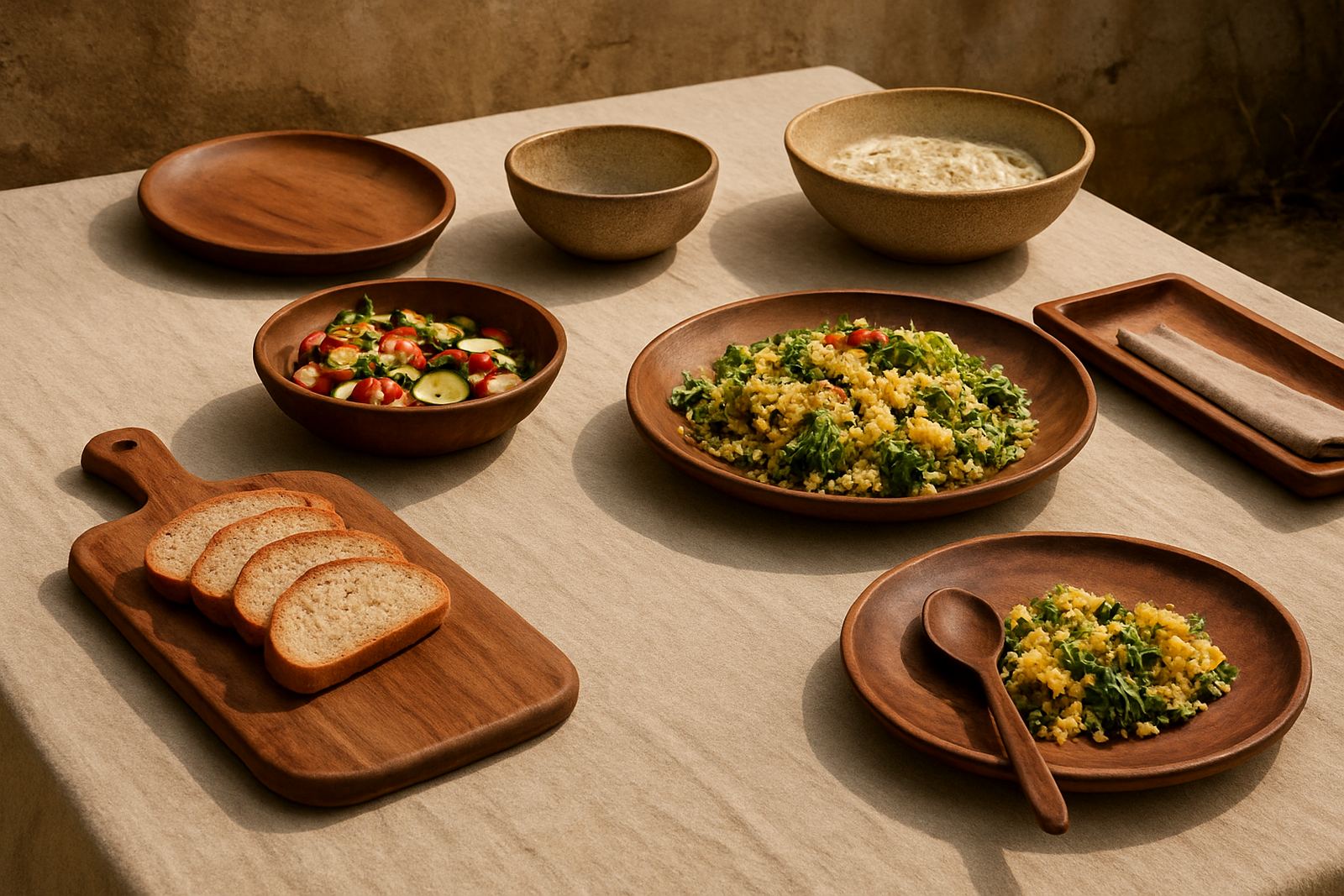
Shape affects how useful a piece is. Long boards suit sliced bread, meats, biltong and layered tasting platters. Round boards are often easier for shared snacks and small group hosting. Rectangular boards can sit neatly on narrow sideboards and catering tables, while irregular hand-shaped pieces create a more relaxed, crafted look. Bowls should be chosen the same way. A wide bowl works well for salads, fruit and bread rolls, while a deeper bowl is better for soups, stews or mixed dishes served at the table.
If you host in a formal dining setting, clean lines and matching sets may work best. If your style is more relaxed, mixing a few handcrafted forms can feel personal and easy. The key is not to let the style overwhelm the function. A board with a dramatic edge is still useful only if food can sit flat on it. A bowl with a narrow mouth may look elegant but be awkward when serving guests.
For hospitality styling, it helps to buy in small groups. Two or three similar pieces can be rotated through events, so one is always ready while another is drying or being stored.
Use a simple quality checklist before you buy
Good artisan serveware should feel considered, not fragile or overworked. When you are choosing pieces for personal use, gifting or retail ordering, use a short checklist and inspect each item closely. This saves time later and helps you avoid returns or awkward surprises after delivery.
- Is the size right for the food you actually serve?
- Does the surface look suitable for food contact and easy cleaning?
- Are the edges smooth, with no rough patches or loose parts?
- Is the base stable on a table or counter?
- Can the piece be packed safely for local courier or longer export travel?
- Does the finish suit your home, guesthouse or retail display style?
- Are care instructions clear enough for the person who will use it?
If you are placing a bulk order, ask for a sample first. Even handcrafted pieces in the same group can vary slightly, and that is part of their character, but the size and finish should still sit within an acceptable range. For hospitality work, those small differences can matter when laying out a breakfast buffet or function table.
Care, cleaning and storage after the guests leave
Serveware lasts longer when it is cleaned soon after use and stored properly. Wooden boards should usually be wiped or gently washed, then dried straight away. Ceramics can often handle more thorough washing, but hand-painted or artisanal surfaces should still be treated with care. Never leave items sitting in water, especially in humid coastal areas where drying slows down. In a busy home or guest house, this one habit can make a big difference.
Store boards upright or flat in a dry cupboard, not stacked where moisture can sit between them. Bowls should be placed where they will not knock against harder items. If the piece has a natural finish, occasional maintenance may be needed to keep it looking good. For businesses using serveware for events or guest service, build care into the routine so the team knows exactly how each item is handled.
It also helps to keep serveware separate from heavy kitchen equipment. A board that is beautiful on the table should not be used as a chopping block unless it is specifically made for that purpose. Clear use rules protect both the item and the food presentation.
Buying for gifts, retail or export orders
If you are buying artisan serveware as a gift, for a shop floor or for export, presentation becomes part of the value. Provenance cards can explain where the piece comes from, who made it and how to care for it. Gift packing should protect corners, rims and fragile surfaces, especially when items are being sent to Cape Town, Durban, Pretoria, Midrand or abroad. Good packing is not only about appearance, it reduces breakage and keeps the buyer confident.
For retail and wholesale orders, seasonal editing can help you focus on colours and forms that suit the time of year or the type of customer. Hospitality styling often needs a slightly different range from home use, with more repeatable sizes and more neutral finishes. Export packing should be planned with the courier route in mind, since longer transit means stronger cartons, more wrap and better separation between items.
When you are comparing options, do not only ask which piece looks best. Ask which one will move well through your daily use, your storage space and your delivery route. That is the difference between a nice object and useful serveware you will keep reaching for.