
Start with the window, not the fabric
Before you choose a weave or colour, measure the opening properly. Handloom curtains can look too short or too sparse if you guess, and once the panel is cut and finished there is no easy adjustment. Use a steel tape measure and record the width of the rail or pole, then note the drop from the fixing point to the sill, floor, or where you want the curtain to finish.
In Johannesburg homes with higher ceilings, a curtain that falls 10 to 15 cm above the floor can still look neat. In coastal areas like Durban or Gqeberha, where humidity is high, allow enough clearance so the hem does not drag on damp floors. If you are fitting curtains near a sliding door or a balcony opening, also check the handle projection and whether the fabric needs to clear a track or a tie-back point.
- Measure width in 3 places: top, middle and bottom.
- Measure drop on both sides because floors and headers are not always level.
- Note if the curtain will hang inside the reveal or outside it.
- Record whether the pole, rod, or track is already installed.
Choose the right weave for the light you need
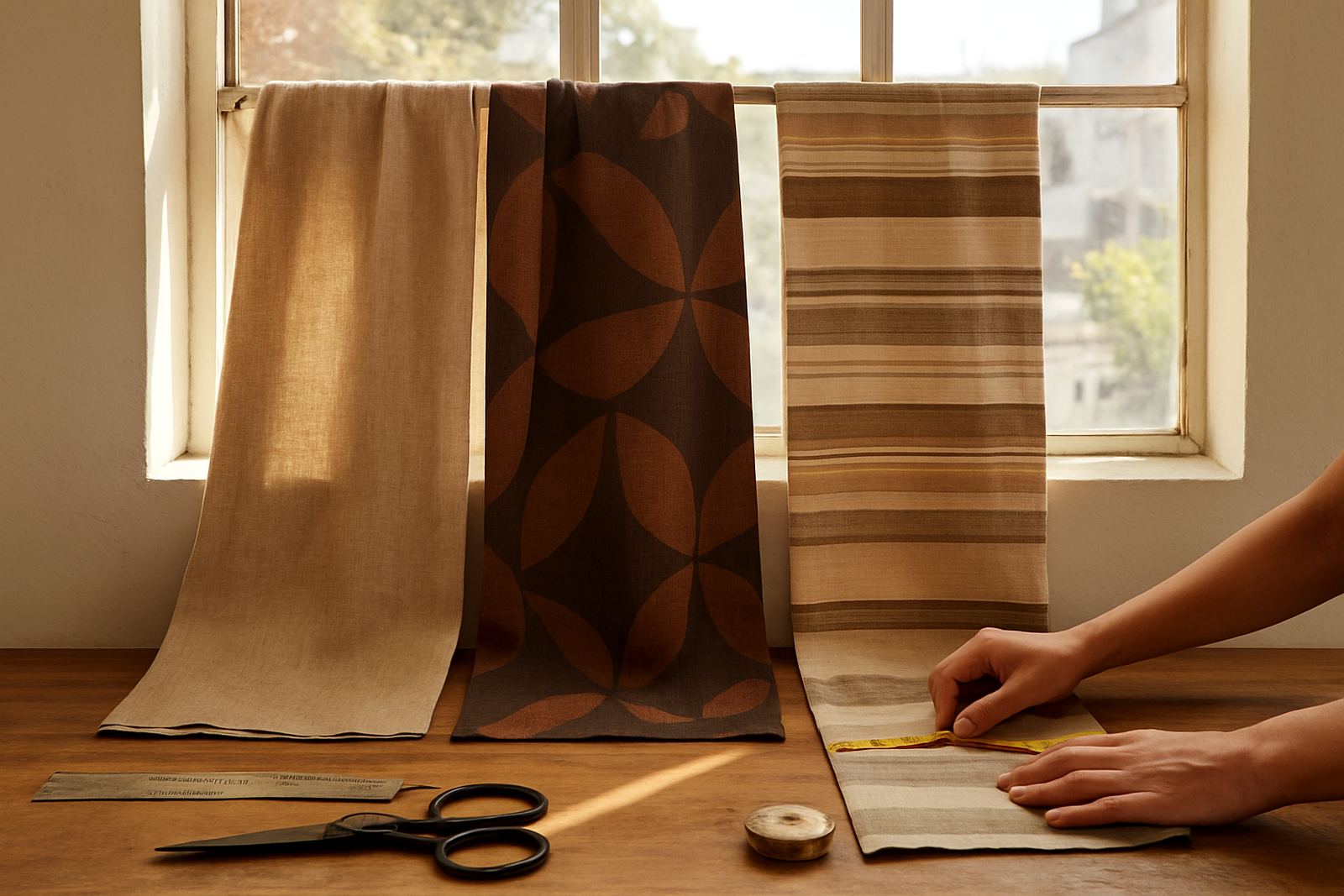
Handloom fabrics vary a lot in density. Some allow a soft daytime glow, while others reduce glare and give more privacy. If the room faces west in Pretoria or Sandton, the afternoon sun can be harsh, so a tighter weave or a lined curtain may work better. For north facing rooms, a lighter weave can keep the space bright without losing the handmade texture.
Think about how the room is used. A lounge or dining room may only need filtered light, while a bedroom or guest room often needs more coverage. If you are buying for a hospitality space, test the curtain at different times of day. Morning light, midday sun and evening street lighting all affect how the weave reads in the room. The same cloth can feel airy in daylight and quite private at night.
- Light filtering: good for living areas and open-plan spaces.
- Medium coverage: useful where privacy matters but you still want daylight.
- Heavier weave or lined: better for bedrooms and street-facing windows.
- Always ask how the cloth behaves in direct sun over time.
Work out fullness before you place an order
Fullness is the difference between a curtain that hangs flat and one that has enough body to gather properly. Woven curtains need the right ratio or they can look thin even when the fabric is beautiful. A practical starting point is 1.5 times the pole width for a neat, tailored look, and 2 times for a softer gathered finish. For very open weaves, you may need a bit more.
When comparing options, ask whether the width given is the fabric width, the finished curtain width, or the width of one panel. That detail matters, especially for export or bulk orders where the same room layout may be repeated across several units. In Gauteng properties with wide glass doors, a pair of narrow panels can leave an awkward gap in the middle if the fullness is under planned.
- 1.5x fullness for a cleaner, minimal gather.
- 2x fullness for a richer fold and better coverage.
- Add extra width if the weave is open or loosely textured.
- Check how many panels are included before confirming the order.
Check lining, edging and hanging method
The finish matters just as much as the weave. A lined curtain blocks more light, improves privacy, and can help the fabric hang more evenly. It can also add a little weight, which is useful on tall windows or in rooms with light breezes from open windows. In seaside homes, a lining can also help reduce the effect of strong sunlight and salt air, though both fabric and lining still need care.
Ask how the top is finished. Eyelets, tabs, rod pockets and pinch pleats all sit differently and affect the final drop. If you use a track system, confirm whether the heading suits it. If you are styling a guest house or lodge, a consistent hanging method across rooms will save time during cleaning and replacement. Loose threads, weak hems and uneven edging are signs to check before fitting.
- Confirm whether the curtain is unlined, lined, or interlined.
- Check the top heading against your pole or track.
- Ask for hem allowance on very long drops.
- Inspect stitching around stress points before hanging.
Plan for care, cleaning and daily use
Handloom curtains are made with care and need a practical care plan. Some fabrics are fine for gentle vacuuming and airing, while others need professional cleaning. In homes that run fans, air-conditioning or open windows often, dust builds up quicker than people expect. In winter, indoor heating can dry out natural fibres, and in summer humidity may make them feel heavier.
If the curtains will hang in a kitchen, near a braai area, or in a child’s room, choose a weave that can handle more frequent cleaning. For hospitality or retail spaces, it is worth keeping a small reserve length for repairs or replacement panels. A simple care note should travel with the item so the next person knows how to clean it properly. That saves damage and keeps the cloth looking right for longer.
- Ask what cleaning method is recommended before purchase.
- Keep curtains away from water splash zones where possible.
- Rotate panels occasionally if one side gets more sun.
- Store spare panels flat, dry and away from direct light.
Use a short checklist before you confirm the order
Once you have your measurements and fabric preference, run through a final checklist. This helps avoid mistakes on made-to-order curtains, and it is especially useful when ordering for multiple rooms or sending goods to another city. For deliveries to Cape Town, Durban, Pretoria or Gqeberha, confirm the receiving address, access details and whether the parcel needs to go to a home, office, lodge, or warehouse. If the curtains are for export, the packing should protect the fabric from moisture and rough handling.
Keep the conversation simple: window size, desired drop, fullness, light level, lining, finish and delivery timing. If you are comparing options for a home, guest space or retail display, a sample or small reference piece can help with colour and texture under your own lighting. A good woven curtain should suit the room and also work for daily life, not just the first impression.
- Window measurements checked twice.
- Light level confirmed for the room.
- Fullness ratio agreed.
- Lining and heading selected.
- Cleaning method understood.
- Delivery address and access details confirmed.