
Start With Where the Basket Will Work Hardest
Before you choose a basket, decide what it will store and where it will sit. A basket for blankets in a cool bedroom needs different construction from one used for towels in a humid bathroom, or for produce in a kitchen that gets busy every morning. If the basket will live in a coastal home or near a steamy laundry area, natural fibres can move slightly with moisture, so it helps to check the finish and the tightness of the weave.
In Johannesburg and Pretoria, dry air can keep many baskets firm and light, while in Durban, Gqeberha or Cape Town the same basket may need a bit more structure to stay neat over time. For export orders or hospitality use, it is also worth thinking about how the basket will travel, stack and unpack after courier handling. A basket that looks beautiful but collapses under pressure is not a sound buy.
- Daily-use storage: toys, towels, magazines, laundry
- Display use: guest rooms, reception areas, gift presentation
- Transport use: market goods, hospitality amenities, courier packing
- Special use: pantry stores, bathroom rolls, firewood, craft supplies
Check Weave Tightness Before You Pay
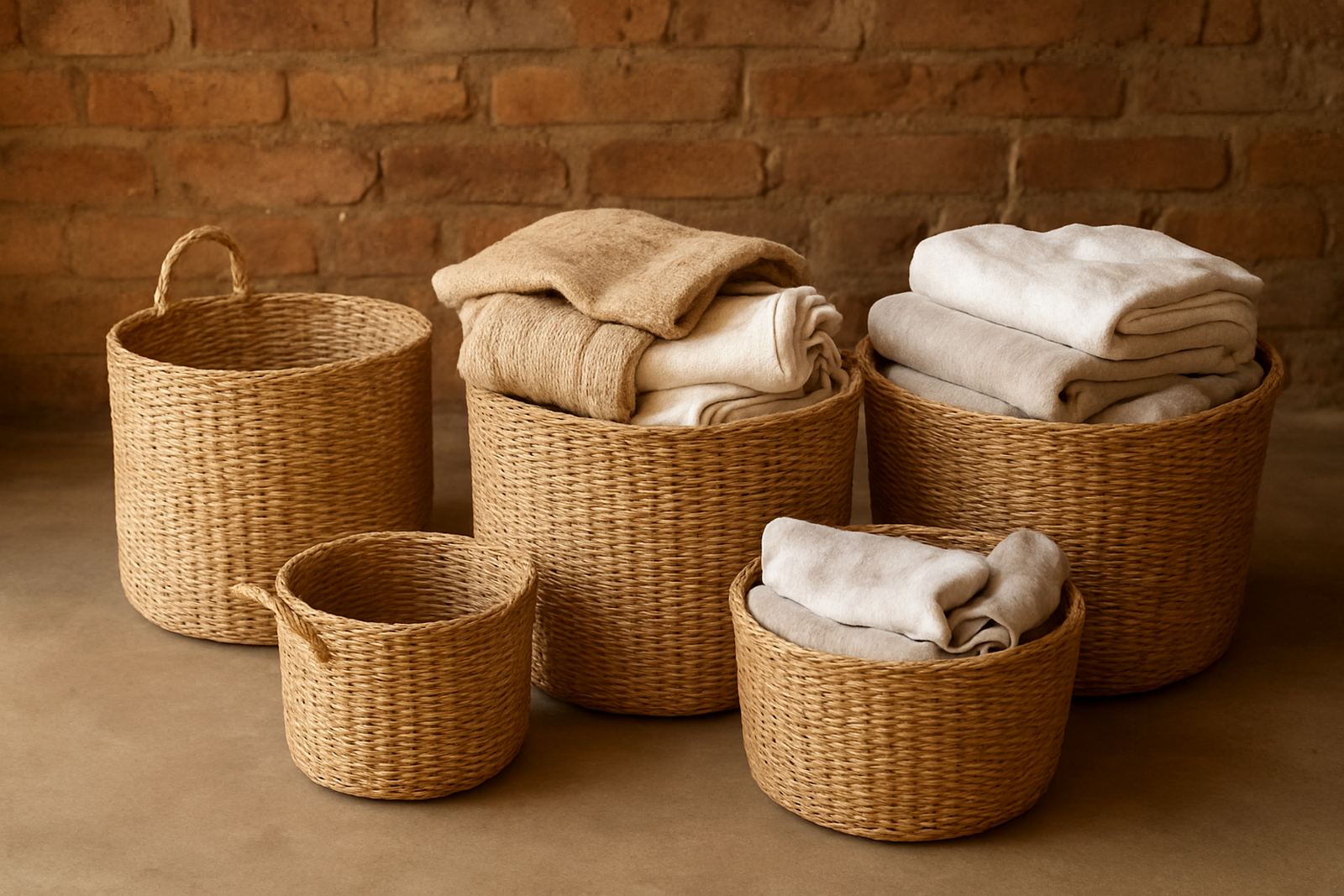
Weave tightness tells you a lot about durability. A tight weave usually means less snagging, better shape retention and fewer gaps for small items to poke through. Looser weaving can work well for decorative baskets or lighter goods, but it may not suit heavy loads or sharp-edged items. Run your hand along the inside and outside surfaces. If the weave feels uneven or shows large open spaces, ask whether the basket is meant for light display only.
Look closely at the base as well. The bottom should sit flat without rocking, especially if the basket is meant for shelves, cupboards or tiled floors. A good base helps the basket stay upright when packed full. If you plan to use it for retail or wholesale, ask for repeatable sizing too, because baskets that vary too much in height can make shelf planning a nuisance.
- Tight weave: better for shape retention and smaller items
- Medium weave: good for mixed household storage
- Loose weave: best for light, decorative or airy storage
- Test the base: flat, stable and able to stand without tipping
Test Handles, Edges and Carry Strength
Handles are often the first part to fail, so inspect them properly. Lift the basket with both hands and let it take a bit of weight, not just a quick pickup. The handles should feel balanced and secure, with no sharp join at the top that could dig into your hand. If the basket will carry laundry, logs, bottled goods or pantry items, choose stronger handles that are firmly attached to the body of the basket.
For hospitality styling and gift packing, handles still matter even when the basket is not meant for rough use. Neat handles make moving and reusing the basket easier. Rounded edges are better for homes with children, while more rigid forms work well where the basket is likely to be stacked or packed repeatedly. A handle that flexes too much usually signals weak construction, and that can become a problem after only a few uses.
- Lift the basket while it is empty and again with sample weight inside
- Check that both handles sit evenly and do not twist
- Feel for rough or loose ends that could catch fabric
- Confirm whether the basket is for light carrying or regular transport
Match the Shape to the Job
Shape affects how useful a basket will be. Round baskets are handy for soft goods like throws, cushions and toys. Square and rectangular baskets work better for shelves, cupboards and rooms where floor space is tight. Tall baskets suit laundry and firewood, while low wide baskets are useful for linen, pantry items or display in a shop or lodge. If you need the basket to sit under a counter or on a high shelf, measure the space first. It saves disappointment later, especially when ordering in bulk.
Shape also changes how much a basket can hold without bulging. A basket with straight sides usually stacks better and keeps a cleaner look. A tapered basket can be easier to lift, but it may waste space if you need to line up several at once. If you are selecting baskets for a guesthouse, boutique or gift hamper programme, keep shape consistent so the final presentation stays tidy.
- Round: soft goods, decorative storage, open display
- Square or rectangular: shelves, cupboards, neat stacking
- Tall: laundry, firewood, bulk household items
- Low and wide: linen, pantry goods, gift presentation
Choose Materials That Suit South African Conditions
Different fibres behave differently in heat, humidity and sun. Natural materials can look and feel warm and handmade, but they may need dry storage and a bit of care if they are used near windows, bathrooms or coastal air. Tighter finishes generally handle daily use better, while more delicate weaves are better kept for light duty and display. If the basket will be washed or wiped often, ask whether the surface can take regular cleaning without losing its shape.
Also think about load-shedding and the way homes and businesses operate during outages. In darker rooms, a pale or lighter basket can make it easier to find items quickly. For retail or hospitality, consider whether the basket will sit under lights, near steam or beside open doors where dust can build up. A basket with a clean finish and steady colour will usually age better in those conditions, but it still needs sensible placement and care.
For buyers in Durban, Cape Town or Gqeberha, moisture resistance matters more than many people expect. In inland areas like Midrand, Soweto, Sandton or Pretoria, dust and dry air are often the bigger issues. Match the basket to your environment rather than choosing on looks alone.
Use a Simple Buying Checklist Before Ordering
If you are buying one basket for home use, or placing a larger order for a lodge, store or corporate gift run, keep the checklist simple. Ask what the basket will hold, where it will stand, how often it will move, and whether it must match other baskets already in use. For export orders, confirm packing and courier requirements early so the baskets are protected properly and arrive in good condition.
This is also where custom curation helps. Some buyers need mixed sizes for a retail display, while others want one basket style repeated across several rooms. Provenance cards can add useful detail when the basket is a gift or part of an artisanal collection, but the basket itself still has to do the practical work first.
- Measure the storage space before buying
- Check weave tightness and base stability
- Test handles for grip and balance
- Match shape to the item you want to store
- Confirm care needs for your climate and room type
- Ask about packing for courier or bulk delivery
When to Buy One Basket and When to Buy a Set
A single basket is enough when you need a specific fix, like one place for throws or one tidy option for toiletries. A set makes more sense when you want consistency across rooms, shelves or guest units. Sets are especially useful for hospitality, retail and export buyers because they make stock planning easier and keep a repeated look through different spaces.
Before buying several, compare samples side by side. Even handmade baskets should have a sensible level of consistency in height, width and finish. Small differences are normal, but large variations can make stacking and merchandising awkward. If you are planning a collection for a home, shop or project site, it is better to approve a sample first than to discover the mismatch after delivery. That saves time and a lot of frustration.