
Hand carved stools with real utility
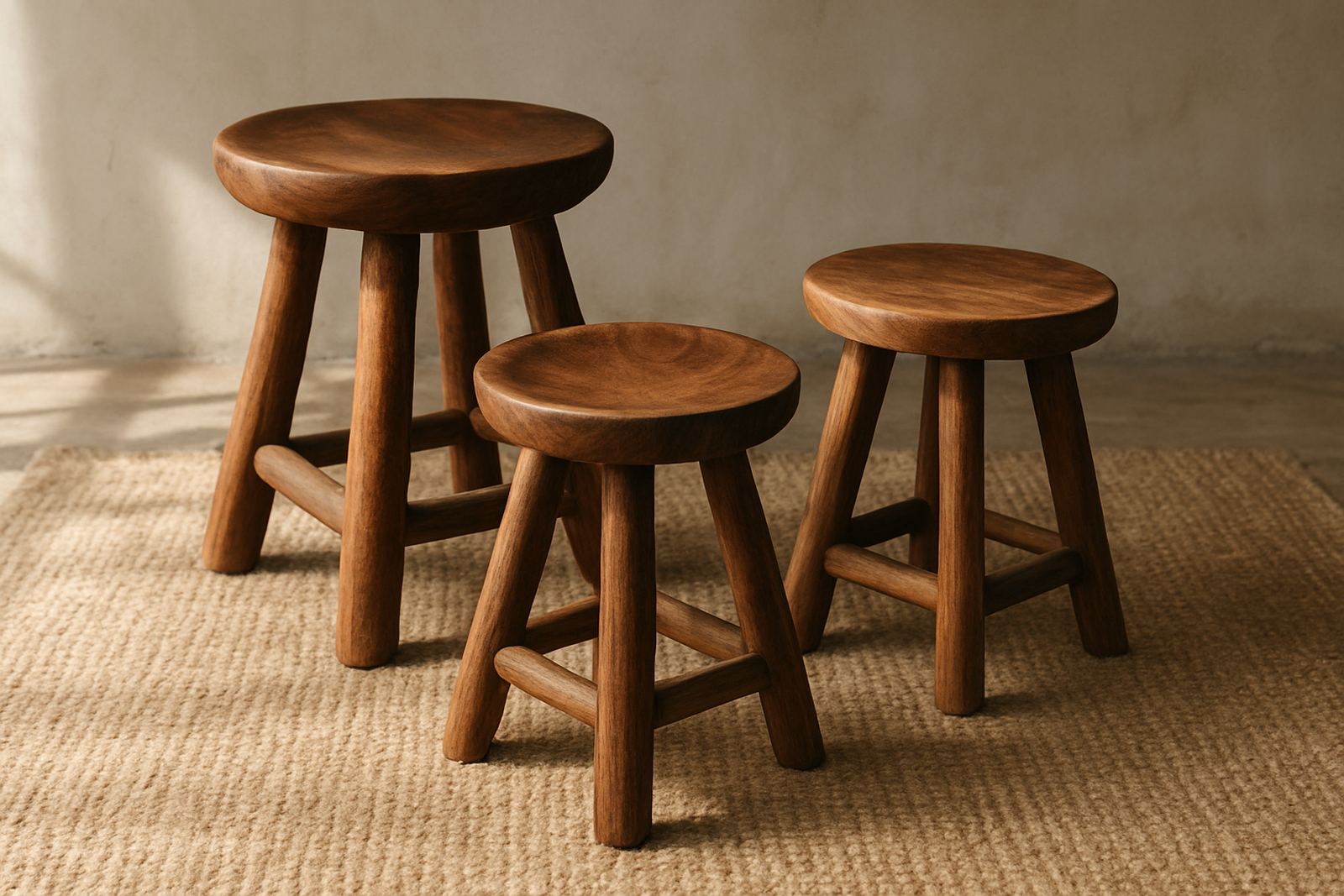
Carved stools are made from solid timber and shaped by hand, so each piece carries small marks of the maker and the grain of the wood. They are usually used as occasional seating, but many clients also place them next to a bed, under a window, in a reading corner or at an entrance where a small surface is needed for a bag, plant or lamp.
In Johannesburg homes and apartments, a carved stool works well where space is tight because it gives you function without taking up much room. In coastal areas like Cape Town and Durban, it also helps to choose a piece with a finish that suits humidity and everyday wipe-down cleaning. These stools are not flat-pack items, they are made to be used and seen.
- Solid timber construction with hand carved detail
- Use as seating, side stand or display piece
- Suitable for homes, guest rooms, lodges and retail spaces
- Each stool may vary slightly in grain, tone and carving depth
Sizes, forms and finish options
The right stool depends on how you plan to use it. A lower stool can sit beside a sofa or fire place, while a taller one works better as a bedside stand or informal perch. Some are round, some square and some have a more organic silhouette, which makes them useful for styling where you want the room to feel layered and collected.
We can help with custom curation if you need a specific height for hospitality suites, retail display or gifting. For wholesale and bulk order planning, it is worth checking a few dimensions before you confirm, especially if the stools need to fit under counters, between beds or inside a courier box with other goods.
- Typical heights range from about 35 cm to 55 cm
- Seat widths often range from 25 cm to 40 cm
- Weight varies by timber and carving style, with heavier pieces offering better stability
- Natural, stained or lightly polished finishes are common
Where carved stools fit best in South African interiors
These pieces suit a wide range of spaces. In a compact flat in Sandton or Midrand, a stool can stand in for a side table when you need something movable. In a family home in Pretoria or Soweto, it can be used as a spare seat in the living room or a place to set a bag and keys near the door. In Cape Town and Gqeberha, many customers choose carved stools for covered patios and indoor-outdoor spaces, as long as the timber is kept out of direct rain and harsh sun.
They also work well in guest houses, lodges and hospitality settings where practical furniture needs to look considered. A carved stool can soften a room with a lot of hard surfaces, and it pairs well with linen, ceramics and other handmade goods. For retail display, it is handy because it adds height without hiding the product placed on top.
- Bedrooms as bedside stands or blanket holders
- Living rooms as occasional seating or side tables
- Hospitality suites, reception areas and guest rooms
- Retail displays for ceramics, folded textiles or small objects
Installation, placement and power or gas needs
There is no installation in the electrical or gas sense for a carved stool, so no power or gas connection is required. The main thing is placement. Set it on a level floor so it sits steady, especially on tiled surfaces or uneven older floors. If the base is slightly irregular, a thin felt pad can help protect the floor and reduce movement.
If you plan to use the stool beside a lamp, heater or any other item that gives off heat, leave enough clearance so the timber does not dry out or mark. In homes affected by load-shedding, people often move furniture around to make space for portable lights or charging stations, and a carved stool is easy to reposition without fuss.
- No electrical or gas connection needed
- Place on a level surface for stability
- Use felt pads on timber, laminate or tiled floors
- Keep away from direct heat and prolonged moisture
Care for timber, carving and finish
Care is simple, but regular attention keeps the stool looking good. Dust with a soft dry cloth, then wipe gently with a slightly damp cloth if needed. Do not soak the timber or leave standing water on the surface, especially in humid areas or near open windows. For carved sections, a soft brush can help remove dust from grooves and edges.
If the finish begins to look dry, a light timber conditioner may be suitable, depending on the wood and polish. For older or heavily handled pieces, occasional servicing may include re-oiling or a careful refresh of the surface. If a stool will be used in hospitality or retail, it is smart to inspect it at intervals for loosening, surface wear or small chips from repeated moving.
- Dust weekly with a soft cloth
- Wipe spills soon after they happen
- Avoid direct sun for long periods
- Recondition the finish only when needed and with care
What to check before placing an order
Before ordering, confirm the use, the size and the finish you need. If the stool is for seating, check the height against the chair or sofa nearby. If it is for a bedside stand, make sure the top surface is wide enough for a lamp, book or glass of water. For export orders, it is also important to confirm packing requirements, because carved edges need proper protection to travel safely.
For local and international customers, we can coordinate courier and collection options, and provide provenance cards where required. If you are buying for a store, hotel or gifting programme, it helps to note quantity, delivery town and whether the pieces need to match closely or can vary naturally. Small differences are part of the appeal, but they should still suit the room or range you have in mind.
- Confirm height, top width and intended use
- Ask about timber type, finish and carving style
- Check whether you want matching pieces or a mixed set
- Tell us if the order is for local delivery, export or collection
Key facts
| Product type | Solid carved stool |
|---|---|
| Use | Occasional seating, bedside stand, accent piece, display plinth |
| Typical size range | Height 35 cm to 55 cm; width 25 cm to 40 cm |
| Materials | Solid timber with hand carved detailing |
| Power or gas requirement | None |
| Care | Dust regularly, wipe dry, keep away from standing water and direct sun |