
What a Calabash Lampshade Is
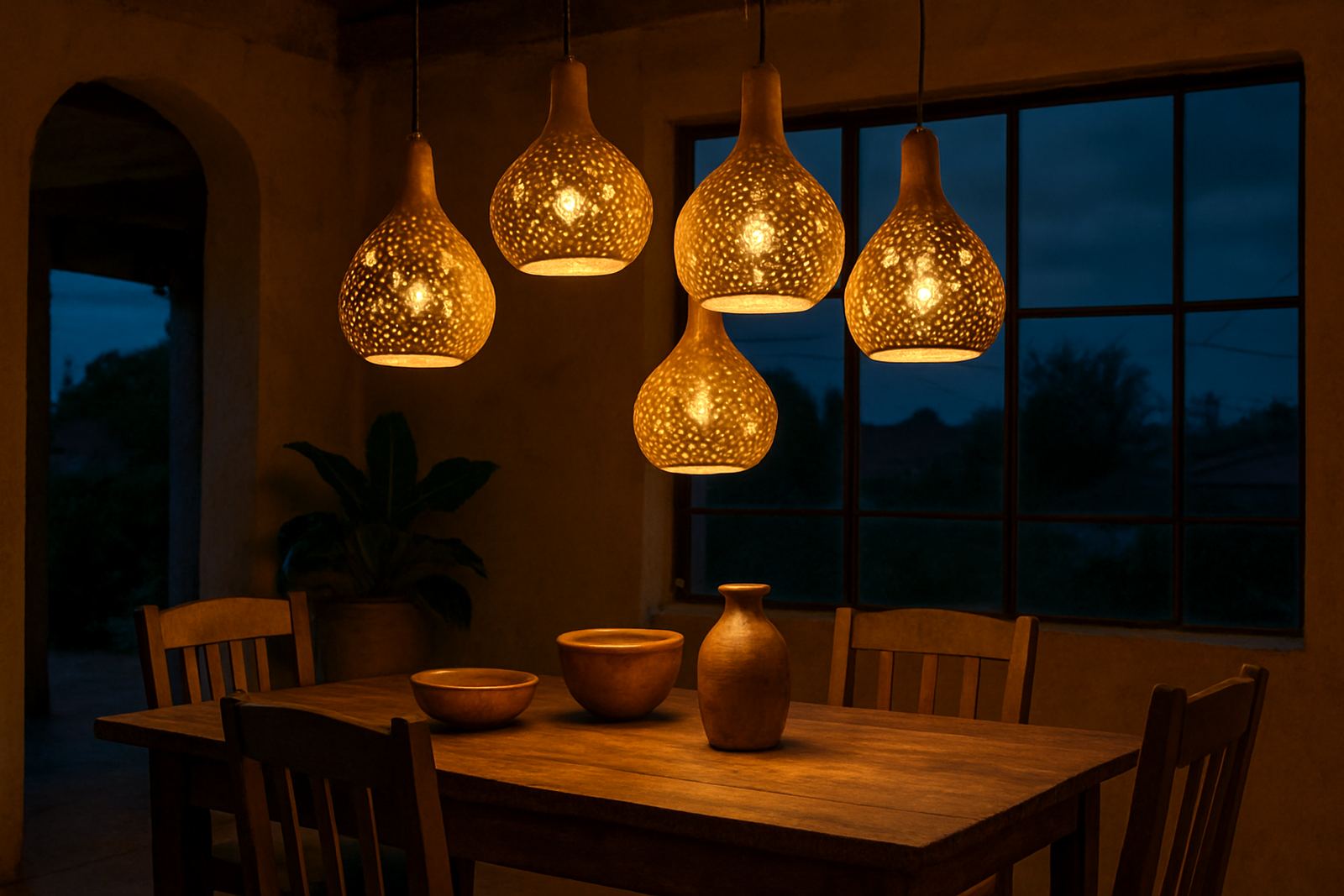
A calabash lampshade is made from a dried gourd shell that has been cleaned, cut, sanded and finished for use over a light fitting. The natural form gives the shade its character, with each piece showing its own curves, markings and surface variation. When lit from inside, the cut pattern throws soft spots and shadows across nearby walls and ceilings, which makes it useful in bedrooms, lounges, entrance halls and dining areas where you want atmosphere without glare.
These shades are usually chosen for decorative pendant lighting rather than as the main task light in a kitchen or workspace. They suit homes, guesthouses, lodges and hospitality interiors that want an African-made detail with visible craft. Because the shell is a natural material, size and shape can differ slightly, so it is best to order with enough time if you need matching sets for a project.
Sizes, Finishes and Light Effects
Most calabash shades are supplied as pendant shades, though some can be adapted for table or floor lamps if the fitting and weight allow it. Common diameters are 180 mm, 250 mm and 320 mm, with heights usually between 180 mm and 400 mm depending on the gourd selected. Smaller pieces work well in a cluster over a breakfast counter or bar, while larger pieces make sense above a dining table or in a reception area. The opening at the top and bottom can vary, so the lamp holder style should be checked before you place an order.
- Natural finish: left close to the original shell colour, with light sanding and a protective coat.
- Darkened finish: stained or smoked for a deeper tone and stronger contrast against the light.
- Perforated pattern: drilled or cut openings that create a more pronounced star or dot effect.
- Set of matching shades: useful for hospitality or retail spaces that need a consistent look.
Because the shell thickness changes from one gourd to the next, the light pattern can be tighter or softer depending on the individual shade. That variation is part of the appeal, but if you need a uniform row over a bar counter, it is worth asking for matching sizes and finish notes before dispatch.
Where Calabash Shades Work Best
These shades suit spaces where the light itself becomes part of the decor. In a home they work well over a dining table, in a stairwell, beside a reading chair or in a covered patio that is protected from weather. In hospitality spaces they are often used in reception areas, private dining rooms, coffee corners and guest suites. They can also add interest to retail fitting rooms or display counters where a softer, more personal feel is wanted.
They are not the best choice for areas that need high task illumination or frequent wiping with damp cloths, such as a busy prep kitchen. If you want them in a coastal area, keep them inside and away from direct salt air where possible, because humidity can affect the finish over time. In Johannesburg and other inland areas, they do well as long as they are kept out of harsh direct sun and protected from heavy knocks.
- Living rooms and lounges
- Dining rooms and breakfast nooks
- Bedrooms and passage lighting
- Guesthouses, lodges and boutique hospitality spaces
- Reception counters and feature corners
Installation, Fittings and Power Checks
Calabash lampshades are decorative shade bodies only, so they need a proper lamp holder, bulb and cable setup. For pendant use, they are normally fitted to a standard ceiling rose or suspended lampholder, with the weight supported by the correct cord set or chain as advised by the installer. Always confirm the top opening size, the holder type and the maximum bulb length before installation. A compact LED bulb is usually the safest option because it gives good light with lower heat and a smaller power draw during load-shedding planning.
These shades do not need gas. For electrical use, the fitting should be done by a competent installer who understands local wiring practice and ceiling support. If the shade is going into a hospitality or retail space, check municipal fire and electrical rules for the premises and make sure the installation allows for safe access when a bulb needs changing. Do not use a high-heat incandescent bulb inside a natural shell, as excess heat can shorten the life of the finish and make the shade uncomfortable to handle.
- Use LED bulbs where possible for cooler operation and lower running costs.
- Check the lamp holder diameter and cord length before ordering.
- Allow space for bulb removal, especially in shallow shades.
- Confirm whether the ceiling point can support the full hanging weight.
Care, Cleaning and Long-Term Use
Care is simple, but it should be gentle. Dust the shade with a dry soft cloth, feather duster or a clean paintbrush used only for this purpose. If needed, wipe lightly with a barely damp cloth and dry it straight away. Do not soak it, and do not use harsh cleaners, bleach or abrasive pads. The natural shell can mark if it is rubbed too hard, especially on lighter finishes.
Over time you may notice small changes in tone, particularly if the shade sits near strong sunlight or coastal humidity. That is normal for a natural product, though regular dusting will help keep it looking even. If a crack, chip or loose edge appears, stop using the shade until it has been inspected. A good rule is to treat it like a handmade decorative object, not a bathroom fitting or outdoor lantern. With sensible care, it should keep its shape and character for many years.
What to Check Before You Order
Before placing an order, measure the space and decide whether you want a single feature shade or a grouped set. It helps to note the ceiling height, table width, holder type and the mood you want from the light. For project orders, ask for photos of available pieces, because natural variation means no two shades are completely alike. If you need a matching run for a hospitality job, allow extra time for selection and packing.
- Shade diameter and height: confirm the size range that fits your space.
- Opening size: check the top and bottom openings against your holder.
- Finish: natural, darkened or patterned, depending on the look you want.
- Quantity: single piece, paired set or bulk order for a project.
- Delivery address: confirm whether it is for Cape Town, Durban, Pretoria, Gqeberha, Midrand, Soweto or export courier.
- Use case: home, hospitality, retail or gifting, so packing and protection can be planned correctly.
If you are ordering for a client or a trade brief, provenance cards and gift packing can be included on request. That is useful when the shade is being supplied as part of a curated room, a lodge fitout or a corporate gift with a South African handmade story behind it.
Key facts
| Product type | Handmade calabash lampshade |
|---|---|
| Material | Natural dried gourd shell with finished surface |
| Common sizes | 180 mm, 250 mm, 320 mm diameter, with height from about 180 mm to 400 mm |
| Lighting use | Pendant feature lighting, decorative table or floor lamp use where fitting allows |
| Power need | Electric light fitting with LED bulb recommended, no gas required |
| Care | Dry dusting and light wiping only, keep away from excessive moisture and high heat |