
Handmade mugs with a practical feel
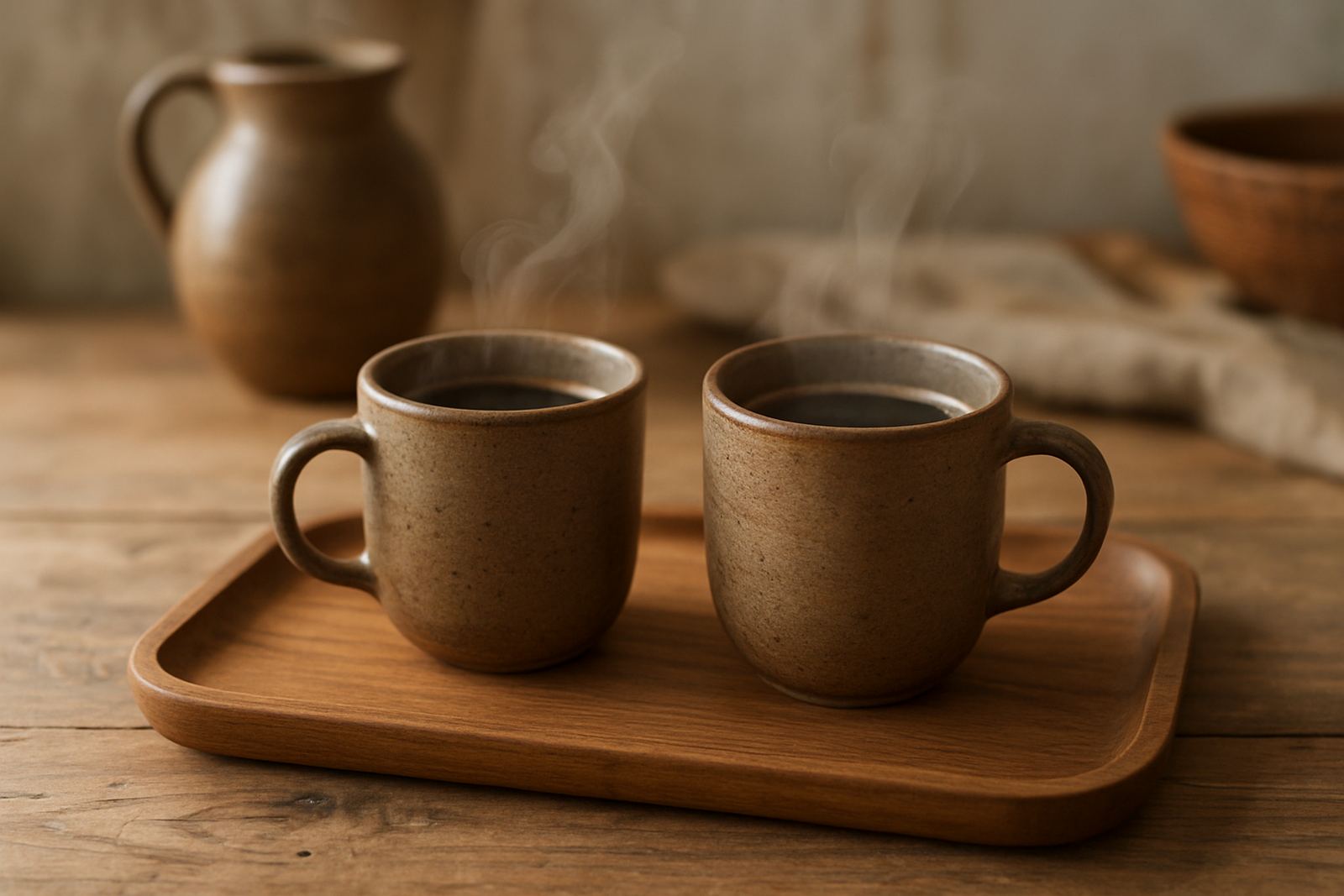
Ceramic mugs from Creation Africa Foundry are sourced from makers across the continent and chosen for daily use, not just display. Each mug is shaped, fired and finished by hand, so no two are exactly the same, which gives a table or shelf a lived-in feel without looking mismatched. In a home kitchen, a guest room tray, or a small hospitality setup in Johannesburg or along the coast, they bring a grounded, usable quality to hot drinks.
The clay body, glaze thickness and handle shape can vary slightly from batch to batch. That is normal for handmade work and one of the reasons buyers choose it. A mug that feels balanced in the hand, holds heat well and washes properly after repeated use is the real test, especially where staff need reliable service during busy mornings or load-shedding schedules.
- Handmade ceramic body with glazed interior and exterior
- Comfortable handle for everyday coffee or tea service
- Suitable for home use, guest rooms and light hospitality service
- Natural variation in colour, size and finish
Sizes, shapes and finish options
Most ceramic mugs in this collection are supplied in a standard drinking size, with some makers offering smaller cups or wider mugs for filter coffee and hot chocolate. Capacity usually ranges from about 250 ml to 400 ml, depending on the form. A smaller mug is useful for espresso-based drinks or a neat tea service, while a larger one suits long coffees, breakfast service and colder months in Gauteng and the Highveld.
Finish options often include matte, satin or glossy glaze, and some pieces feature brushed clay, speckled surfaces or painted detailing. Colour runs from neutral whites and earth tones to stronger blues, greens and terracotta shades. If you are ordering for a guesthouse, restaurant or retail shelf, it helps to choose one finish family so the set feels considered and easy to restock later.
- Typical capacity: 250 ml to 400 ml
- Common height: 8 cm to 11 cm
- Common diameter: 7 cm to 10 cm
- Handle opening and mug weight may differ by maker
Where ceramic mugs work best
These mugs are suited to homes, lodges, guest houses, boutique hotels, cafés and curated gift ranges. They also work well in corporate hospitality packs, welcome trays and small retail edits where buyers want something local and handmade. In coastal towns like Cape Town, Durban and Gqeberha, ceramic mugs are a useful choice because they do not rely on power, they store neatly, and they handle humid conditions well when properly dried after washing.
For private homes, they are ideal for daily coffee service, tea stations and weekend entertaining. For hospitality use, the main advantage is consistency in feel and presentation. If you are ordering for multiple rooms or outlets, it is worth thinking about stackability, replacement supply and how the mug will sit on a tray with sugar, teaspoons and a small jug. A mug with a stable base and easy-grip handle is usually the better pick for quick turnover.
- Guest rooms and hotel welcome trays
- Breakfast rooms, cafés and small eateries
- Corporate gifting and seasonal hampers
- Retail shelves, boutique counters and online resale
Power, gas and installation notes
Ceramic mugs do not need power, gas or fitting, which makes them simple to introduce into a home or hospitality space. There is no installation in the usual sense. What does matter is how you receive, store and use them. Mugs should be unpacked carefully, checked for chips and washed before first use. If you are buying in volume, allow time for inspection and counting on delivery so any breakages can be logged straight away.
For kitchens running on generators or dealing with load-shedding, mugs are unaffected because they are not dependent on appliances. They can be paired with kettles, coffee machines or urns as needed, but the mugs themselves are only serving ware. Keep them away from sudden temperature shock, for example pouring boiling liquid into a cold mug straight from a chilly storeroom, as this can stress the glaze or body. In most cases, a steady rinse with warm water first is enough.
- No electricity, gas or plumbing needed
- No mounting or assembly required
- Check for chips before first service
- Warm the mug slightly before very hot drinks in cold conditions
Care, washing and everyday servicing
Handmade ceramic mugs are easiest to look after with normal dishwashing, a soft sponge and non-abrasive detergent. If the glaze is smooth and fully finished, most mugs can handle regular hand washing and many are suitable for dishwashers too, though hand washing tends to extend surface life and reduce marking. Avoid steel wool or harsh scourers, especially on matte or lightly textured finishes.
If a mug is used in a hospitality setting, set up a simple rotation system so handles and rims are checked regularly. Minor crazing can appear over time on some handmade ceramics, and while this does not always affect use, it is worth monitoring for hygiene and appearance. If you serve coloured drinks like strong coffee or beetroot-based teas, rinse soon after use to avoid staining. Proper drying matters in humid areas, because trapped moisture can lead to musty storage smells even when the mug itself is sound.
- Wash with warm water and mild detergent
- Use soft cloths or sponges only
- Dry fully before stacking or packing away
- Inspect for chips, cracks or glaze wear during routine cleaning
What to check before placing an order
Before ordering ceramic mugs, confirm the quantity, preferred capacity, colour range and whether you need a matching or mixed set. If the mugs are for retail or gifting, ask for provenance cards so the maker story is included with the product. For hospitality orders, check whether you need extra units for breakage cover, and whether the handles and base size fit your existing trays, shelves and washing setup.
It also helps to ask about batch variation, as handmade mugs can shift slightly in shade or form between runs. If you need a repeat order later, confirm the style name, finish and dimensions now. For export packing, breakage risk should be considered early because ceramic goods need stronger inner wrapping and carton planning than textiles or soft goods. If your delivery is going to Pretoria, Midrand, Soweto or further afield, courier choice and lead time should match the quantity and fragility of the order.
- Confirm size, colour and finish before checkout
- Allow for a few spares on hospitality or wholesale orders
- Ask about batch variation and restock availability
- Check courier packing if the order is travelling long distance
Key facts
| Product type | Handmade ceramic mugs |
|---|---|
| Typical capacity | 250 ml to 400 ml |
| Common dimensions | 8 cm to 11 cm high, 7 cm to 10 cm diameter |
| Use case | Home, guest rooms, cafés, retail and gifting |
| Care | Hand wash recommended, dishwasher suitability depends on glaze |
| Power or gas needs | None required |