Handmade ceramic vases with real character
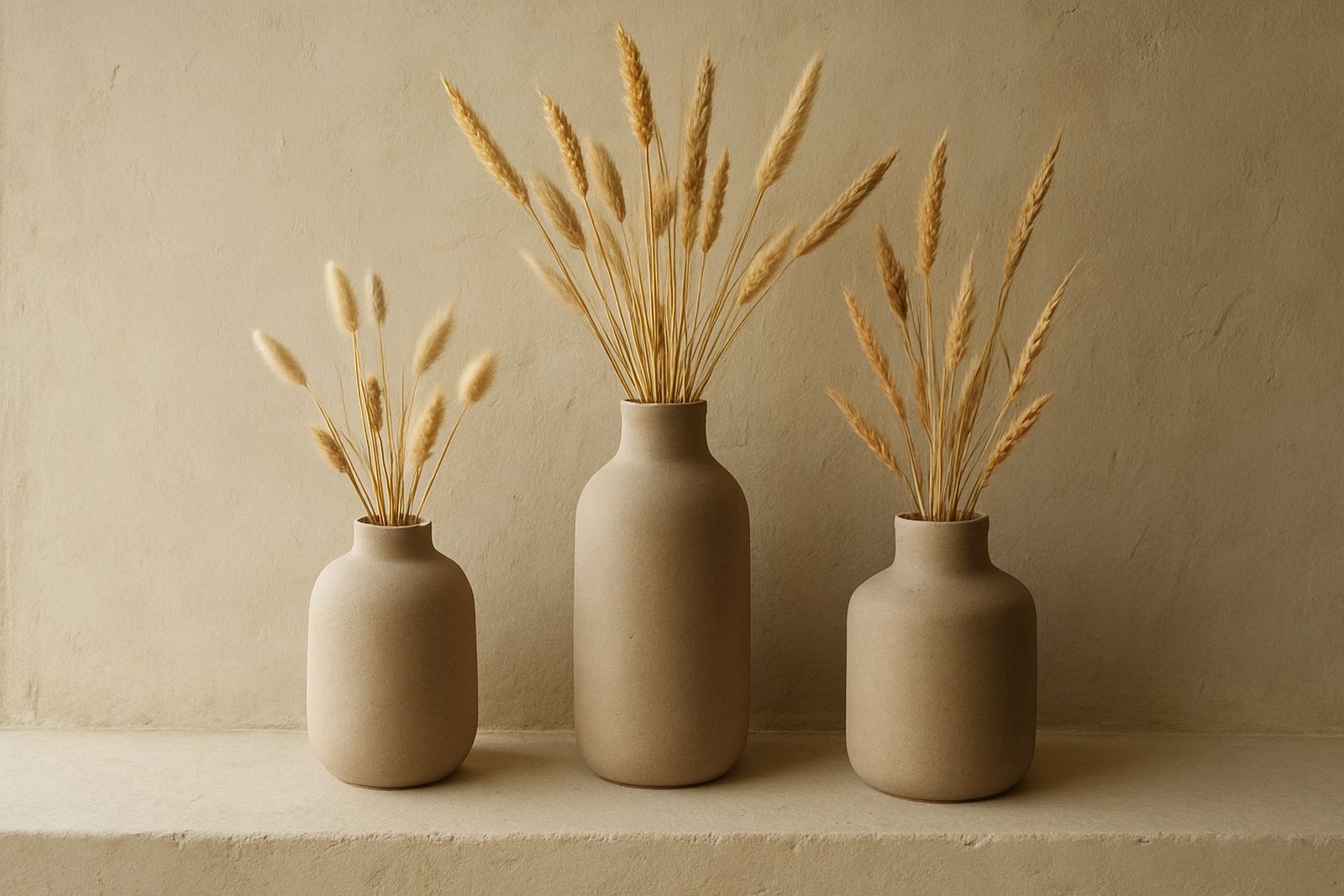
These ceramic vases are made by hand, so no two are exactly alike. Some are wheel-thrown with a smooth round profile, while others are hand-built with a more sculptural line or a slightly uneven rim. That variation is part of the appeal, especially if you want a piece that feels collected rather than mass-produced.
The clay body is fired for everyday display and light floral use, with glazes or matte surfaces chosen to suit natural light, timber, concrete and painted walls. In Maboneng apartments, Sandton reception spaces or a Cape Town seaside home, the right vase can soften hard edges and bring in a tactile, grounded feel. A small note, these are decorative objects first and foremost, so a fitted liner may be useful for long term water use.
Sizes, profiles and finish options
We work with a range of vase sizes so you can choose what suits the room and the arrangement. Small vases are ideal for single stems or compact shelf groupings, while medium and tall pieces work better on sideboards, console tables and hospitality counters. Some are narrow-necked for structured stems, others have a wider mouth for loose market bunches.
Typical sizes include compact accent pieces around 15 cm high, mid-sized vases around 20 to 28 cm high and statement forms from 30 cm upwards. The opening, base width and silhouette matter just as much as the height because they affect stability and the way flowers fall. If you are buying for retail or wholesale, it helps to order a mix of heights and finishes so the range reads well on a shelf.
- Height ranges commonly from 15 cm to 35 cm
- Opening widths often range from 3 cm to 12 cm
- Base widths vary for narrow, medium and wide-bodied forms
- Finishes may include gloss glaze, satin glaze, raw clay or textured surfaces
Where ceramic vases suit best
Ceramic vases work well in homes, guest lodges, restaurants, hotel foyers, salon counters and curated retail spaces. They are often used as single statement pieces, or grouped in threes for visual balance. In Johannesburg and Pretoria, they suit formal and informal interiors alike, while in coastal cities such as Durban and Gqeberha, a glazed ceramic finish tends to hold its look well in humid conditions.
They also work as gifting items for corporate packs, weddings and seasonal hospitality updates. Because the forms are handmade, they bring warmth to modern spaces that might otherwise feel too plain. If you are styling a shelf or console, pair a taller vase with a lower bowl or a stack of books for balance, but leave enough space around it so the form can be seen from all sides.
Placement, stability and no special utilities needed
No power or gas is needed for ceramic vases, and installation is simple. What matters is placement, weight balance and the surface beneath the piece. Use a level shelf, console or table, and avoid putting a tall vase where it can be knocked by foot traffic, pets or a busy serving area.
For fresh flowers, use a watertight liner if the vase is more decorative than functional, especially on timber furniture or upholstered surfaces. On stone, marble or sealed concrete the risk is lower, but water marks can still happen if the piece sits in one place for months. In windy entrances or near open windows, heavier bases are better for tall stems. If you are using the vase in a public space, check that it complies with your own house rules for safety and cleaning access.
- No electrical or plumbing connection required
- Place on a level, stable surface
- Use felt pads or coasters if the base is rough
- Keep clear of edges and high traffic zones
Care for glazed and unglazed surfaces
Routine care is straightforward. Dust with a soft dry cloth, and wipe glazed surfaces with a slightly damp cloth when needed. Avoid harsh abrasives, bleach or scouring pads, as these can mark the finish. If a vase is unglazed on the outside, handle it with clean hands because porous clay can pick up oils and dust more easily.
For water use, empty the vase after displaying fresh stems and rinse it out so sediment does not build up inside. If there is a mineral mark from hard water, a mild vinegar solution can help, but test a small spot first. In summer humidity or near the coast, let the vase dry fully before storing it in a cupboard. A chipped base or hairline crack should be checked before continued water use, because even a small flaw can worsen over time.
What to check before you order
Before placing an order, confirm the exact height, mouth opening and base width, especially if the vase needs to fit a shelf, niche or tray. Ask whether the piece is fully watertight or best used with a liner. It is also worth checking the glaze colour in natural light, because ceramic surfaces can read differently under warm indoor lighting and bright daylight.
If you are ordering for wholesale, hospitality or export, confirm packing requirements, carton quantities and whether mixed styles can be combined in one shipment. Ceramic is fragile, so good packing matters. We recommend checking lead times for made or sourced stock, plus any special requirements for courier delivery, collection or export packing. When a vase is part of a seasonal edit, it helps to know if replacement pieces will have slight variation in shape or glaze, because handmade goods often do.
- Confirm height, opening and base measurements
- Check if the vase is watertight or needs a liner
- Request finish details and colour references
- Confirm pack quantities for retail or export orders
Key facts
| Product type | Handmade ceramic vases |
|---|---|
| Making method | Wheel-thrown and hand-built |
| Typical heights | 15 cm to 35 cm plus |
| Typical openings | 3 cm to 12 cm |
| Use | Fresh stems, dried arrangements, shelf styling |
| Care | Dust with a soft cloth, rinse after water use, avoid abrasives |