
Handwoven mats with everyday use in mind
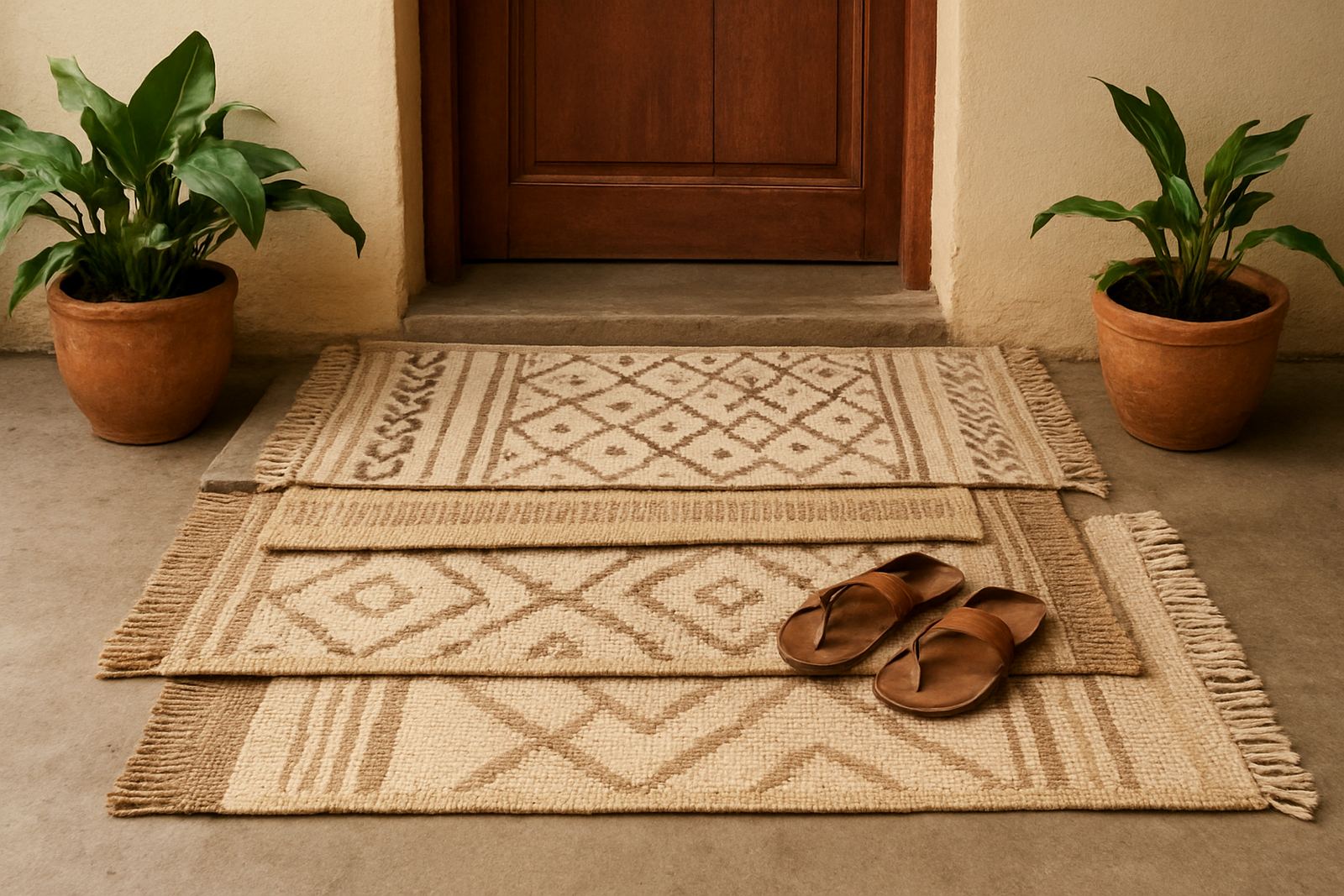
Our woven floor mats are selected for practical use rather than showy display. They are made by makers across Africa using natural fibres, plant-based yarns or mixed fibre weaves, depending on the style and the intended use. The result is a mat that feels grounded, sits neatly on tile or concrete, and adds warmth to hard floors without needing any installation work.
These mats suit busy entry points, kitchen walkways, laundry rooms, enclosed patios and shaded stoops. In Johannesburg and Pretoria they help soften tiled floors in winter, while in coastal homes they add grip and texture in spaces that get a lot of air movement. They are also useful in small guest houses, offices, studios and hospitality spaces where a local crafted item needs to hold up to regular foot traffic.
Because each piece is made in small batches, slight differences in colour, weave tension and edge finishing are part of the product. That is normal and often preferred by buyers looking for something with a handmade feel, not a factory finish.
Sizes, weave styles and finishing options
Woven floor mats are available in a few practical formats so you can match the space properly. Standard sizes are commonly suited to doorways and kitchen runs, while larger rectangular pieces work well under benches, in passages or beside beds. Round or oval mats are sometimes used in seating corners, but most trade orders favour straight-edge shapes for easier placement and packing.
- Small doorway mats for single entrances and apartment units
- Medium mats for kitchens, sculleries and short passages
- Large mats for covered outdoor areas and hospitality spaces
- Custom sizing for bulk orders, where maker capacity allows
We also look at weave density and edge treatment when recommending a mat. A tighter weave is usually better for high-traffic zones, while a looser weave can work in lower traffic rooms where softness and visual texture are more important. Some mats are reversible, which gives a longer service life and helps with even wear.
Where these mats work best
These mats are a good fit for spaces that need a practical layer over hard flooring. They work well on tiled kitchen floors, sealed concrete, polished screed and covered outdoor verandas. In homes along the coast, they should be used in areas that are protected from direct rain and standing water, as natural fibres can absorb moisture if left exposed for long periods.
For retail and hospitality, they can be used in reception areas, fitting rooms, wellness rooms, tasting spaces and sheltered entrance zones. They are not a substitute for commercial safety flooring in wet public areas, and they should not be used where spillages are frequent unless the mat is easy to lift and dry. On municipal sites or in rental properties, check that the mat does not obstruct fire exits or create a trip edge at thresholds.
- Best for dry or semi-sheltered indoor spaces
- Suitable for homes, guesthouses and boutique retail settings
- Not recommended for uncovered rain-exposed walkways
- Use with a non-slip underlay if the floor is very smooth
Installation needs, movement and safety
No electrical or gas installation is required for woven floor mats. They are a simple placement product, which makes them easy to move during cleaning or layout changes. For most homes, you only need to unpack the mat and position it on a clean, dry surface. In commercial spaces, allow a few hours for the fibres to settle flat after unrolling or folding during transport.
If the mat is being used on a highly polished floor or in a busy passage, we recommend checking for slip movement before daily use. A suitable underlay can help keep it in place, especially in homes with children or older people. For hospitality venues, it is worth confirming that the mat sits flush enough for trolleys, luggage or service traffic to pass safely.
When ordering for a project, send floor measurements in metres or millimetres and include door swing direction, furniture placement and any threshold heights. That makes it easier to match the mat size to the room and avoid cutting, which is not usually practical on woven pieces.
Care, cleaning and how to help the mat last longer
Routine care is straightforward. Shake out dust, vacuum on a low setting or brush lightly in the direction of the weave. For small spills, blot promptly with a dry cloth rather than scrubbing. If a mat becomes damp, hang or lay it flat in a ventilated area until fully dry. In humid coastal towns, this matters because trapped moisture can lead to odour or fibre movement over time.
We do not recommend soaking woven mats or putting them through a washing machine unless the product notes specifically allow it. Harsh detergents can weaken natural fibres and heavy wringing can distort the shape. For hospitality or wholesale buyers, rotate mats periodically so one area does not bear all the foot traffic. That helps keep the wear even and extends the service life.
- Vacuum gently and avoid aggressive beater bars
- Keep out of standing water and direct all-day sun
- Rotate monthly in busy areas if practical
- Dry thoroughly before storing
What to confirm before ordering brass candleholders
Before ordering, check the room size, the exact use case and the floor finish. A mat for a home entrance may need a tougher weave than one for a quiet bedroom, while a hospitality order may need matching sizes across several rooms. It is also worth checking whether the mat must fit under a door, beside a counter or around existing furniture. A few millimetres can make a difference with doors that sit low.
Ask for the fibre type, approximate thickness, backing details and any variation you should expect from handwoven production. If you are buying for resale or multiple sites, confirm lead times, available quantities and whether custom curation is possible across several styles. For export orders, ask about packing method, carton dimensions and whether the mats can be folded or should be rolled. That helps with courier planning and storage on arrival.
For local buyers in Cape Town, Durban, Gqeberha, Pretoria and Johannesburg, collection consultations can help with selecting the right finish for the climate and the floor type. For larger orders, share your budget per piece and the room list upfront so we can advise on the most suitable options without wasting time on unsuitable sizes.
Common use cases across home and trade
Woven floor mats are popular with homeowners, interior stylists, guesthouses and small retailers because they are easy to place and easy to move. They work well as entry mats, kitchen mats, under-bench runners and covered patio pieces. In a retail or hospitality setting, they also help create a softer feel in spaces with tile or concrete, which can otherwise feel cold and hard underfoot.
For wholesale buyers, it helps to think about the mat as part of a larger floor plan. Matching size, colour and texture across several units gives a cleaner result than mixing too many styles in one project. If you are planning a seasonal refresh, these mats also work well with cushions, ceramics and other handmade goods, especially when the aim is a restrained, practical look rather than a fully themed display.
Key facts
| Product type | Handwoven floor mat |
|---|---|
| Materials | Natural fibres, plant-based yarns or mixed fibre weave |
| Typical sizes | Small doorway, medium runner, large rectangular and selected round or oval formats |
| Best use | Entrances, kitchens, covered outdoor spaces and sheltered hospitality areas |
| Care | Vacuum gently, shake out dust, spot clean and dry fully |
| Installation | No power or gas needed, place on a clean dry floor, optional non-slip underlay |