Handwoven baskets with a proper picnic purpose
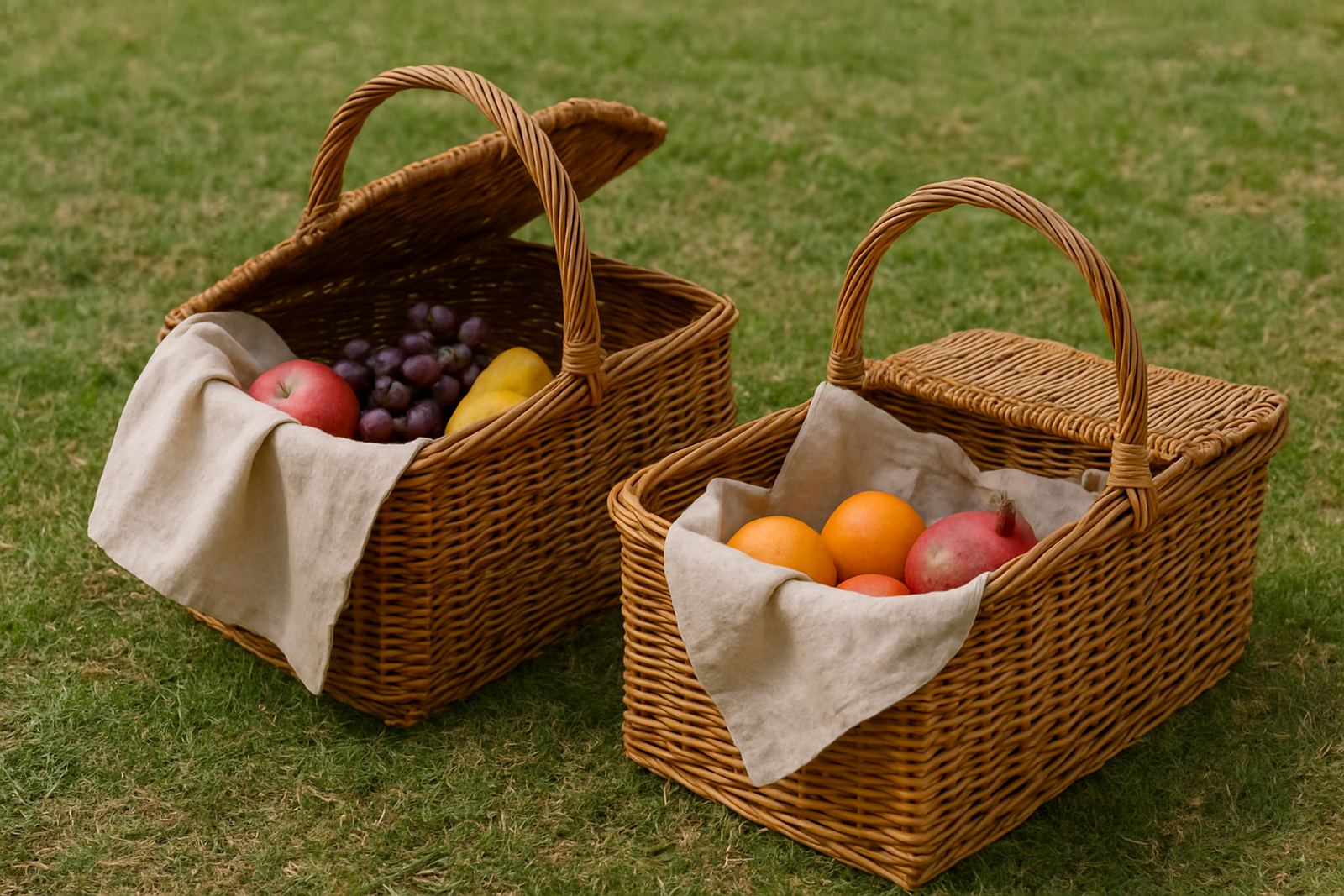
Our woven picnic baskets are lidded carry baskets made for food, drinks and small picnic essentials. They are usually woven from natural plant fibres, grasses or reed-like materials, with some makers adding leather-look ties, fabric linings or split handles for extra comfort. Because they are handmade, no two are exactly alike, and that is part of the appeal.
These baskets suit anyone wanting a more polished picnic set-up than a soft cooler bag, but without moving into bulky hard containers. They also work well as storage pieces at home for throws, napkins or pantry items when not in use. In a retail setting or hospitality space, they can be used for display, gifting or room welcome packs, depending on size and finish.
- Handmade, lidded construction
- Natural fibre weave, sometimes with fabric lining
- Suitable for picnics, gifting and display
- Light enough to carry by hand for short distances
Sizes, shapes and finishing options
Sizes vary by maker, but most picnic baskets fall into a small, medium or large format. Small baskets are ideal for two people or for gift hampers. Medium baskets suit family picnics or shared grazing packs. Large baskets are better for hospitality use, events or retail gifting where you need more volume and a stronger visual presence. Some are rounded, some more boxy, and the lid may sit flush or dome slightly for extra room inside.
If you are buying for a business or an event, it helps to check the internal dimensions rather than only the outside size. A basket can look generous from the front and still have limited usable depth because of the lid shape or the curve of the sides. We can also source sets in matching or mixed weave tones when a client needs a coordinated look across several baskets.
- Small, medium and large options available
- Round, oval and rectangular forms
- Flat, dome or slightly raised lid profiles
- Optional lining or divider features on select pieces
Where these baskets suit best
Woven picnic baskets suit outdoor dining spots, guest houses, safari-style stays, wedding hampers, gifting ranges and home use. In Johannesburg they are popular for markets and weekend escapes, while in Cape Town and Durban many buyers favour them for beach days, braais and garden lunches. They also work well in colder inland months for indoor entertaining, because the basket itself adds a warm handmade feel to the table.
For hospitality styling, they can be used in guest rooms with snacks, as breakfast presentation baskets, or as a simple storage item for toiletries and towels. For retail, they fit well in gift ranges, seasonal collections and artisanal displays. If you are buying in bulk, it is worth planning by use case, because one basket size may suit hampers while another works better for open serving.
Use, lining and practical setup notes
These baskets do not need installation in the technical sense, and there are no power or gas needs. What matters is how you plan to use them. If you intend to carry food, add a washable cloth liner or food-safe wrap inside. For chilled items, use separate cold packs or insulated inserts, because the woven structure itself is not a cooler. In humid coastal areas such as Gqeberha or Durban, allow the basket to dry properly after use so moisture does not sit in the fibres.
On rough roads or during courier delivery, baskets should be packed carefully with soft padding to keep the lid shape and handle edges intact. For event use, it is also smart to test the lid closure and carrying comfort before placing an order for a full set. A basket that feels light in the hand can still be awkward if the handle sits too low or the lid opens too easily.
- No installation, electricity or gas required
- Use with liners for food or gifting contents
- Not an insulated cooler on its own
- Keep dry after use, especially in humid conditions
Care, cleaning and servicing over time
Woven picnic baskets need gentle care. Dust them with a dry cloth or soft brush, and if there is a spill, wipe the area carefully with a barely damp cloth then dry it straight away. Do not soak the basket, leave it in direct rain, or store it while still damp. That can weaken the fibres and cause the weave to loosen over time.
For long-term use, store the basket in a cool dry place out of harsh sun. Strong sun can fade natural tones, while closed cupboards in very humid rooms can encourage musty smells. If the basket has a lining, remove and wash the lining separately according to the fabric type. Regular servicing is simple: check the lid hinge points, the handle joins and any tie closures before each season of use, especially if the basket is used for frequent deliveries or hospitality turnovers.
What to confirm before ordering brass candleholders
Before ordering, confirm the basket size, lid style, handle strength and intended use. If you need the baskets for gifting or export, ask for packing details early so the product can be protected for courier movement and customs handling. For retail or wholesale orders, it is worth checking consistency across a batch because handmade pieces can vary slightly in colour, weave tightness and shape. That variation is normal, but you want it within the range that suits your display.
Also check the basket depth against what you plan to put inside. A basket for breads and napkins is very different from one meant for bottles, jars or picnic cutlery. If you are ordering for Cape Town, Pretoria, Midrand or further afield, lead time should include sourcing, final packing and courier collection. For larger orders, confirm if you need provenance cards, gift packing or bulk order planning so the delivery matches the way you will use the baskets.
- Confirm internal size, not only outside dimensions
- Check lid fit, handle comfort and closure style
- Ask about lining, colour variation and finish
- Plan for courier packing if the order is going interstate or overseas