Wedding brief for a city reception in Cape Town
The client was a private wedding couple based in Cape Town, planning a reception in the city bowl with guests arriving from across the Western Cape and beyond. They wanted tables that felt considered rather than overdone, with enough detail for close-up dining photos and enough durability to handle a full service on the night.
The ask was clear: runners with a handmade look, candleholders that would give height without blocking conversation, and serving ware that could move from pre-set table styling into actual use. The couple wanted pieces that felt rooted in African making, but still suited to a formal city wedding with a clean colour palette and controlled lighting.
Because the venue had a tight bump-in window and limited storage, we planned the pieces in advance and grouped each table set for fast placement. The order covered 14 guest tables, one main table and a welcome display, with coordinated items that kept the room consistent from the first arrival to the final course.
Constraints that shaped the table plan
Cape Town weddings can come with practical pressure points. In this case the venue had a strict load-in time, no long unpacking area and limited on-site parking for delivery vehicles. The team also had to work around wind at the loading bay and the usual need to keep fragile items secure when moving between vehicle, prep room and function floor.
We also had to think about lighting, because candle flame and glass can read very differently once the room is dimmed. The runners needed to hold their shape, the candleholders had to be stable on polished tabletops, and the serving pieces had to be easy for wait staff to lift and return during service. Coastal humidity was part of the planning too, especially for fibre finishes and wrapped items that could pick up moisture on a warm day.
- Venue access: narrow delivery window of 90 minutes
- Table count: 15 in total, including one long head table
- Surface finish: polished tops needing soft, non-scratch placement
- Weather factor: coastal humidity and wind at the entrance
- Service need: pieces had to remain practical, not just decorative
What we supplied for the tables
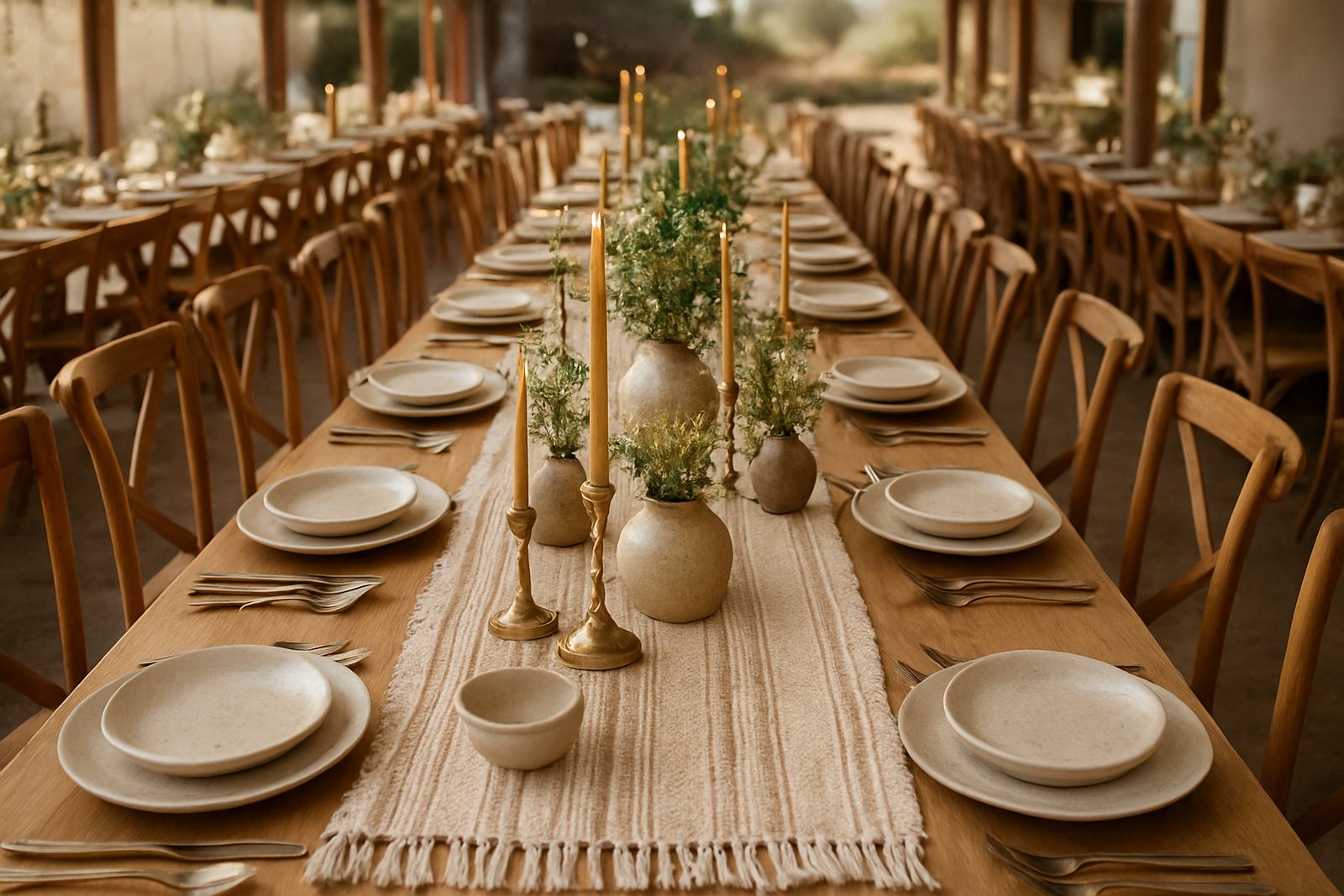
We supplied woven table runners in a muted natural palette, with a hand-finished texture that sat well against linen and polished glass. Each runner measured 2.4 metres long and 35 cm wide, which gave enough fall for standard banquet tables without pooling excessively at the ends. The texture added depth in the room, but it stayed neat under plates, glassware and centrepieces.
For candlelight, we selected a mix of candleholders in varying heights, mostly between 18 cm and 32 cm, so the tables had movement without creating visual clutter. The candleholders were sturdy enough for repeated handling and balanced well on the tables even where the floor was slightly uneven. We paired those with serving platters, small bowls and water jugs with a handmade finish, all chosen to work across the meal service rather than sit unused after setup.
We also prepared provenance cards for selected pieces so the couple could acknowledge the makers behind the tableware. That detail gave the reception a more personal tone and made it easier for the family to speak about the objects when guests asked where they came from.
- Runners: 2.4 m x 35 cm, hand-finished weave
- Candleholders: 18 cm to 32 cm height range
- Serving ware: platters, bowls, jugs and side pieces
- Cards: maker and origin notes for key items
- Presentation: grouped per table for faster placement
Three weeks from brief to delivery
The project ran over three weeks. In week one, we confirmed the guest count, venue table sizes and colour direction, then mapped the quantities required for each surface. In week two, we finalised the mix of runners and service pieces, checked stock with makers and set aside backup items in case of breakage during transit. In week three, we completed packing, labelling and delivery coordination for the Cape Town handover.
Our process included a sample review before final approval so the couple could see the texture, scale and tone against their chosen linen. That saved time later, because the final table plan could be locked without guesswork. On the day of dispatch, each set was packed in order of use, with the table pieces for the head table marked separately for quick access.
The timeline was tight but manageable because the range was defined early. There was no need to overcomplicate the tables, just to choose pieces with enough character to hold their own in a formal room.
How the table styling worked on the night
At installation, the runners anchored each table and immediately softened the room. The candleholders added height and reflected the low evening light, while the serving ware carried the same visual language across all the tables. The result was not overly matched, which was important for a wedding. It felt curated rather than rigid.
The kitchen team found the platters and bowls practical for service, which mattered just as much as the styling. Nothing had to be removed and replaced midway through the meal, and the wait staff could work around the centrepieces without constant adjustment. That made the room look better for longer, and it reduced pressure during service.
- Visual result: warm, textured tables with consistent tone
- Operational result: easy service flow for wait staff
- Guest result: tables photographed well in low evening light
- Venue result: quick setup and simple pack-down after the event
What we would repeat for another Cape Town wedding
We would use the same approach again for a city wedding where the couple wants handmade details but does not want the tables to feel crowded. Start with the runners, then choose candleholders that create height without blocking faces, and finish with serving ware that can move from styling into actual use. That order keeps the budget sensible and the look grounded.
For a Cape Town venue, we would again allow for wind, humidity and short access times. We would also keep a buffer set of pieces on standby, especially if the wedding falls in peak season when courier delays and venue overlaps can happen. The main lesson from this project is simple: good table styling works best when it is planned with service in mind from the start, not added later as an afterthought.
Creation Africa Foundry handled the curation, packing and courier coordination, while the couple focused on the rest of the celebration. That is the sort of support we like best: practical, tidy, and easy to trust when the day gets busy.
Key facts
| Project type | Wedding table curation for a city reception |
|---|---|
| Town | Cape Town |
| Timeline | 3 weeks from brief to delivery |
| Main items | Table runners, candleholders, serving ware and provenance cards |
| Runner size | 2.4 metres long x 35 cm wide |
| Table count | 15 tables including the main table |