
A Pretoria brief with a clear local feel
The client was a residential developer in Pretoria preparing a furnished showhouse for buyer viewings, media photography and private walkthroughs. The home had clean lines, pale walls and generous light, so the styling needed to add depth without making the rooms feel busy or overdone. The ask was simple in wording but detailed in execution: make the space feel lived-in, current and distinctly South African, while keeping maintenance low between viewing days.
We were brought in during the final fit-out stage, once the fixed finishes were in place and the main furniture layout had been set. That timing matters, because the craft pieces had to work around existing colours, room proportions and circulation paths. Pretoria’s dry climate and bright daytime light also influenced the selection, since some textiles can look flat or dusty under strong sun if the weave and dye work are not right.
What the home needed, and what had to be avoided
The design team wanted warmth, but not a heavy ethnic look. They also needed items that would hold up over a six-week marketing period, with staff opening curtains, moving scatter cushions and cleaning surfaces often. We were asked to avoid anything fragile in high-touch zones, and to keep the palette within earthy clay, indigo, sand and charcoal so the finishes did not fight with the cabinetry and flooring.
- No loose pieces in narrow walkways or near door swings
- Textiles that could be refolded and still look neat after repeated handling
- Ceramics with stable bases for shelves, consoles and dining surfaces
- Gift-worthy styling that still felt believable in a family home
- Items suitable for use in Pretoria, with low fuss maintenance in a dry interior
We also had to plan for changing light across the day. Morning sun in Gauteng can be sharp, so reflective glaze and very glossy fabrics were kept to a minimum. The result needed to photograph well from 8 am to late afternoon, and not read too dark when the blinds were partly open.
Craft layers we supplied and placed
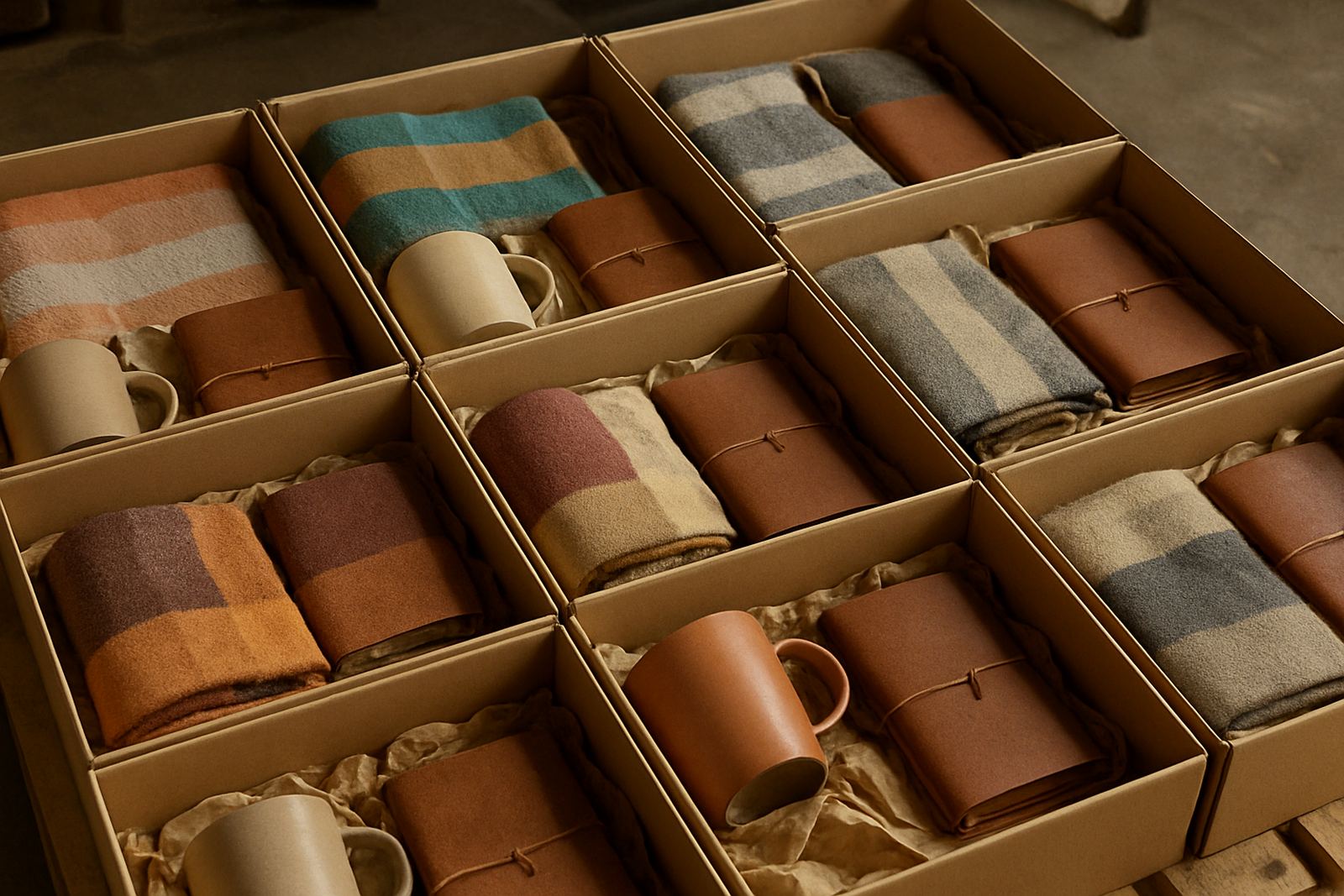
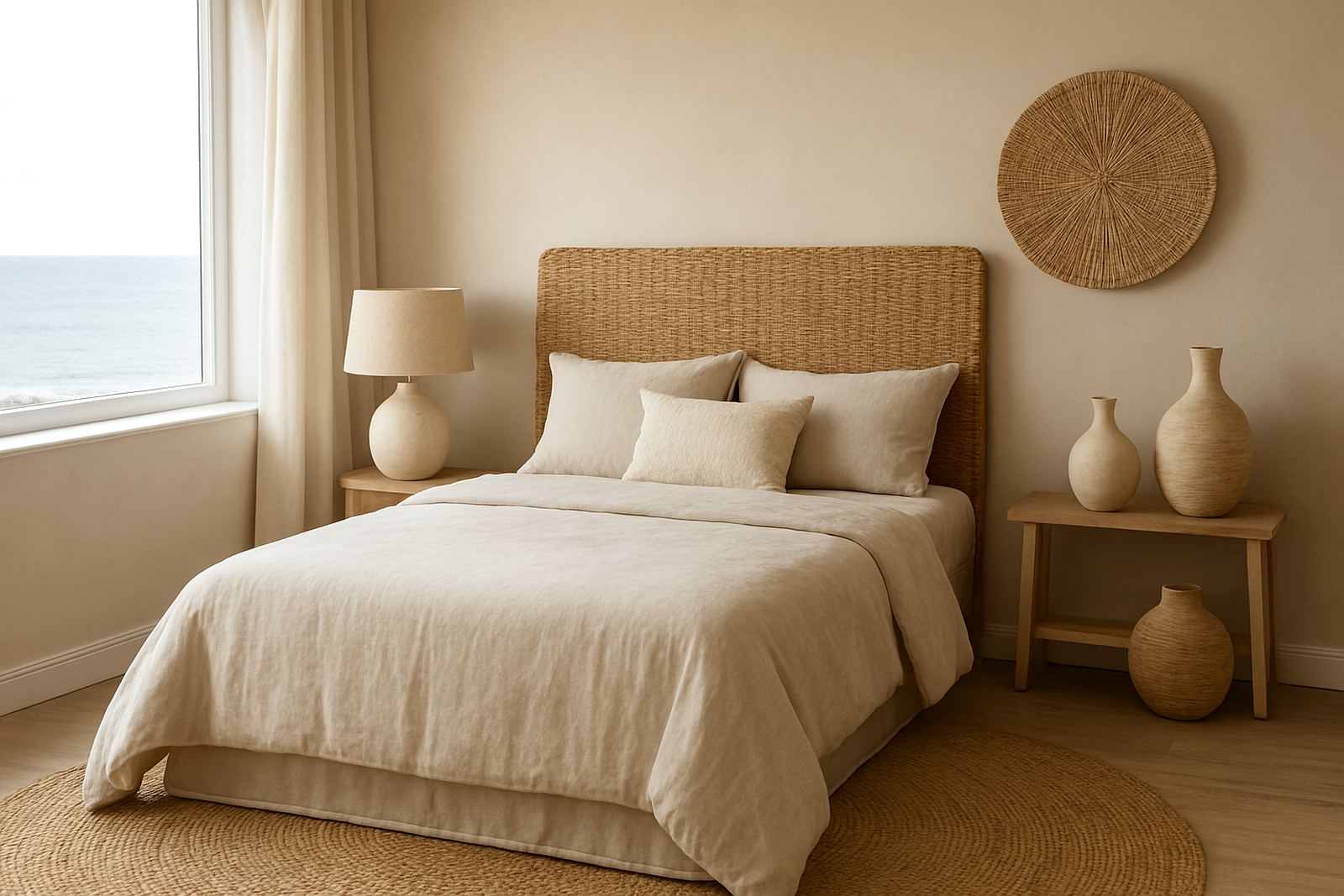
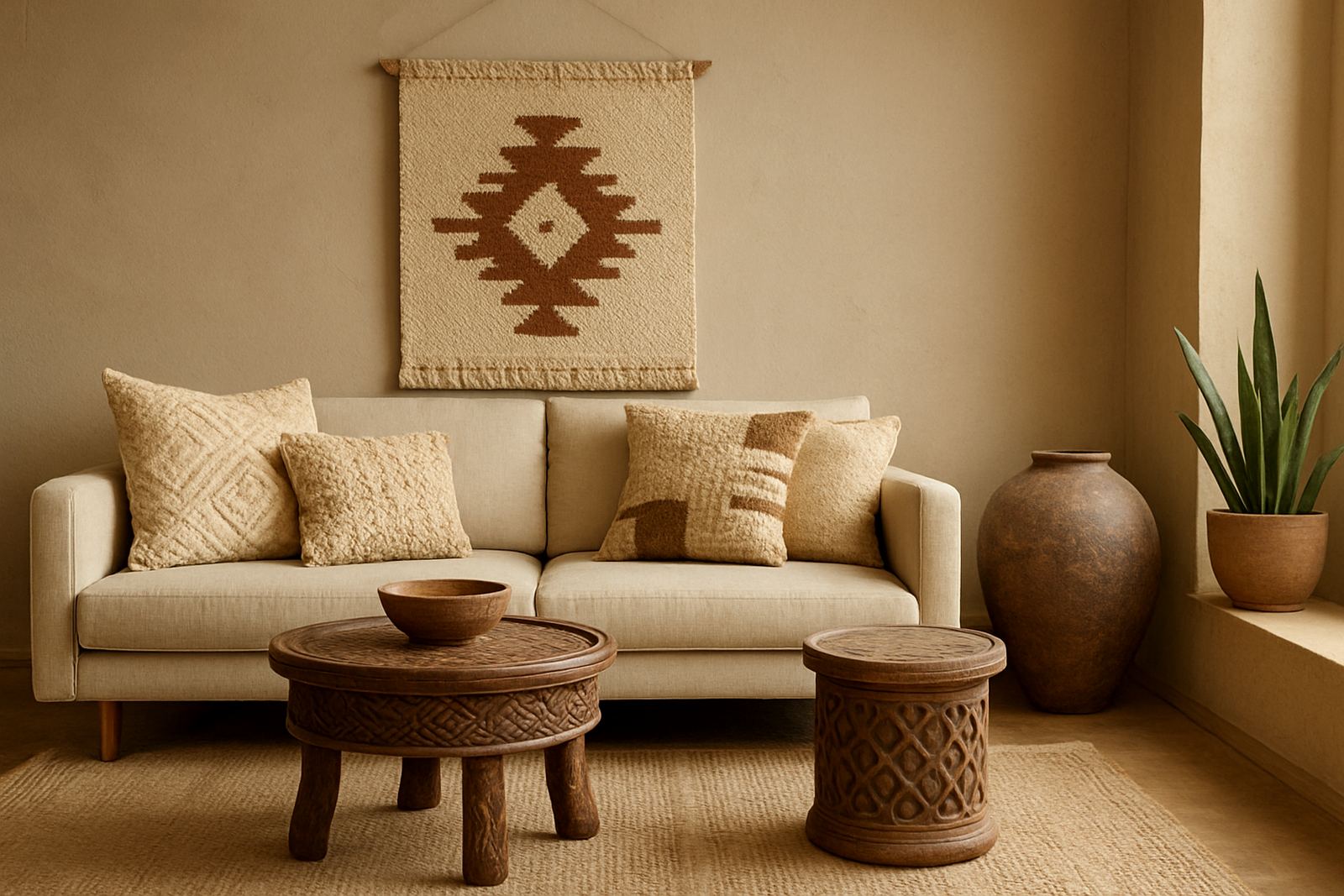
We curated a mix of handmade textiles, ceramics and small artisan goods from makers across the continent, then split the stock room by room. In the living areas we used woven throws, scatter cushions and table accents to soften hard edges and add a tactile layer. In the dining room, a hand-thrown vessel grouping and a set of serving pieces gave the table a sense of use without clutter. For the bedrooms, we kept the styling quieter, with one or two well-made textile statements per room so the beds remained calm and easy to make each morning.
Because the property would be shown to buyers as a ready-to-move-into home, every item had to feel useful. That meant selecting ceramics that could work as display pieces or serve ware, and textiles that could move between couch, bed and chair without needing special treatment. We supplied provenance cards for the key pieces too, so visitors could see where the work came from and how it was made. That added context, and gave the home a more personal story.
- Handwoven throws for lounge and main bedroom styling
- Scatter cushions in natural fibre and block-printed fabric
- Ceramic bowls, vessels and side-table objects
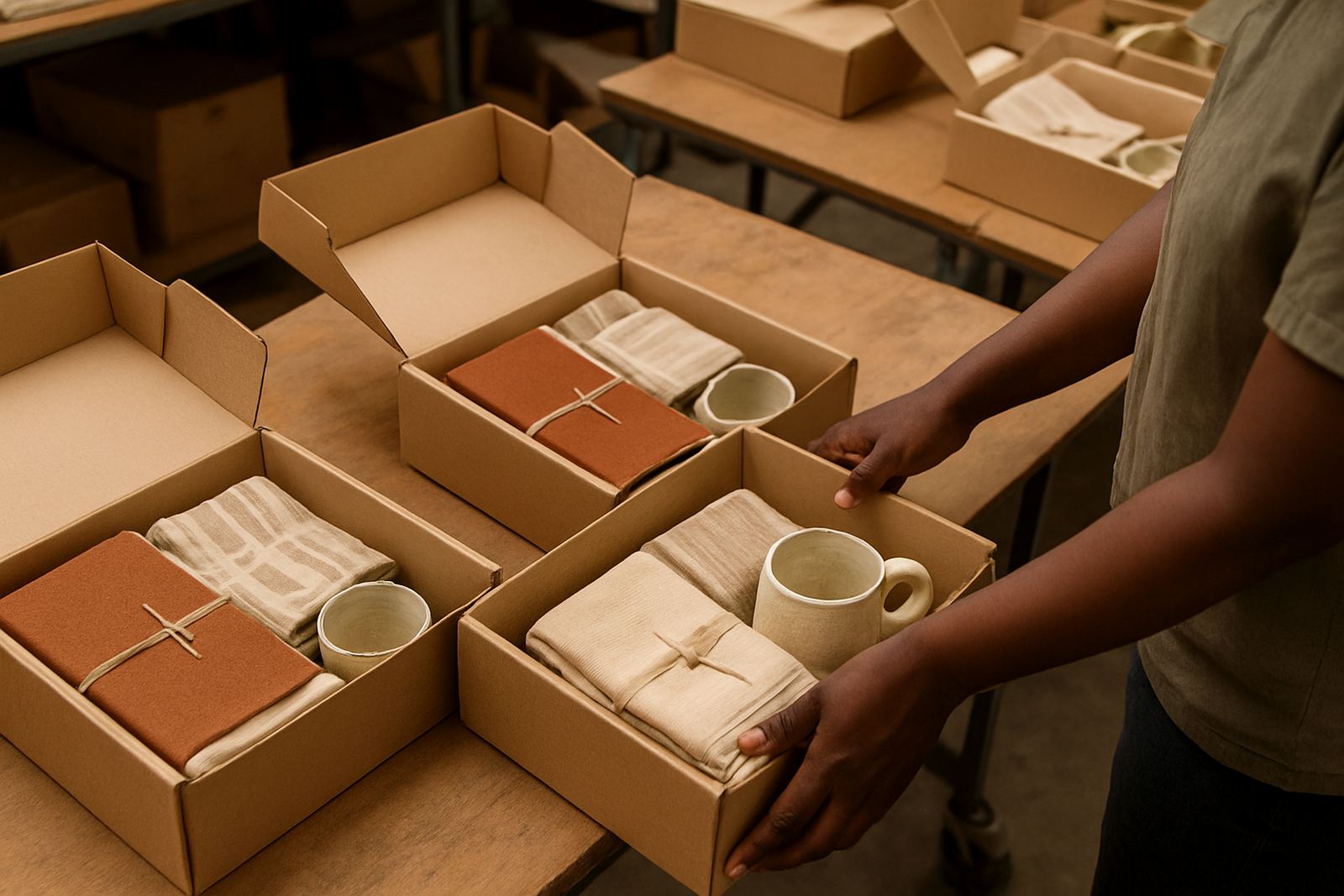
- Gift wrapping and presentation for featured pieces
- Provenance cards for selected handmade items
Four weeks from curation to placement
This Pretoria showhouse project was completed over four weeks. Week one covered sourcing and shortlisting, with image reviews and size checks against the room plans. Week two was for final selection, stock confirmation and export-quality packing for the items travelling into Pretoria from our Maboneng base. Week three covered delivery coordination, unpacking and placement on site. In week four we did the final tidy-up, adjusted a few shelf groupings, and replaced one cushion set that was reading too pale in the afternoon light.
That last round of tweaks is often where a showhouse comes alive. A room can look complete on the first visit, but once the blinds shift and the sun changes, the balance may need a small nudge. We prefer to do that in person rather than hope the first arrangement will hold under daily viewing. It saves time later and keeps the property looking considered rather than staged in a rushed way.
Logistics, packing and the practical side
Showhouse work has to survive transport, storage and repeated handling, so the packing method mattered as much as the selection. Ceramics were wrapped individually and boxed with space fill to reduce movement, while textiles were folded with tissue and labelled by room. We also planned for the common practical issues that come with Gauteng delivery work, including security access timing, building rules and loading bay windows. A few items arrived during a load-shedding slot, so the unpacking sequence was kept simple and hand written labels were used on the crates just in case.
For this project we coordinated collection and delivery between our Johannesburg base and the Pretoria site, with all items checked before dispatch. The client wanted a clean handover with no last minute missing pieces, and that is exactly how it should be done. One item was swapped on the day because it read too small in the dining room, so we replaced it with a taller ceramic form and the whole corner settled immediately.
- Secure packing for fragile ceramics and glazed pieces
- Room-by-room labelling for fast unpacking on site
- Delivery timing aligned with access control and viewings
- Simple replacement plan for any piece that felt under-scaled
What changed once the styling was in place
The finished house felt warmer straight away, but still neat enough for repeated viewing. The textiles softened the echo in the open-plan rooms, the ceramics broke up flat surfaces and the provenance cards gave the home a point of difference that buyers remembered. The client reported that visitors responded well to the handcrafted details, especially where the pieces reflected African making without making the house feel themed. That balance was the main win.
If we were doing the project again, we would keep the same overall approach but allow for one extra review after the first public viewing week. For a property like this, the use pattern changes fast, and a small restyle can keep the home fresh without buying anything extra. We would also keep a second cushion set ready in a dust-friendly colour, because Pretoria’s dry air can make pale textiles show handling marks more quickly than expected.
For us, the strongest result was simple: the home looked ready, grounded and local, with craft details that supported the architecture instead of competing with it. That is the kind of showhouse styling we favour, practical enough for real use, but distinct enough to make people pause.
Key facts
| Project type | Residential showhouse styling |
|---|---|
| Town | Pretoria |
| Timeline | 4 weeks from curation to final placement |
| Supplied items | Handmade textiles, ceramics, artisan objects and provenance cards |
| Service mix | Custom curation, courier coordination, gift packing and collection consultations |
| Base | Maboneng, Johannesburg |