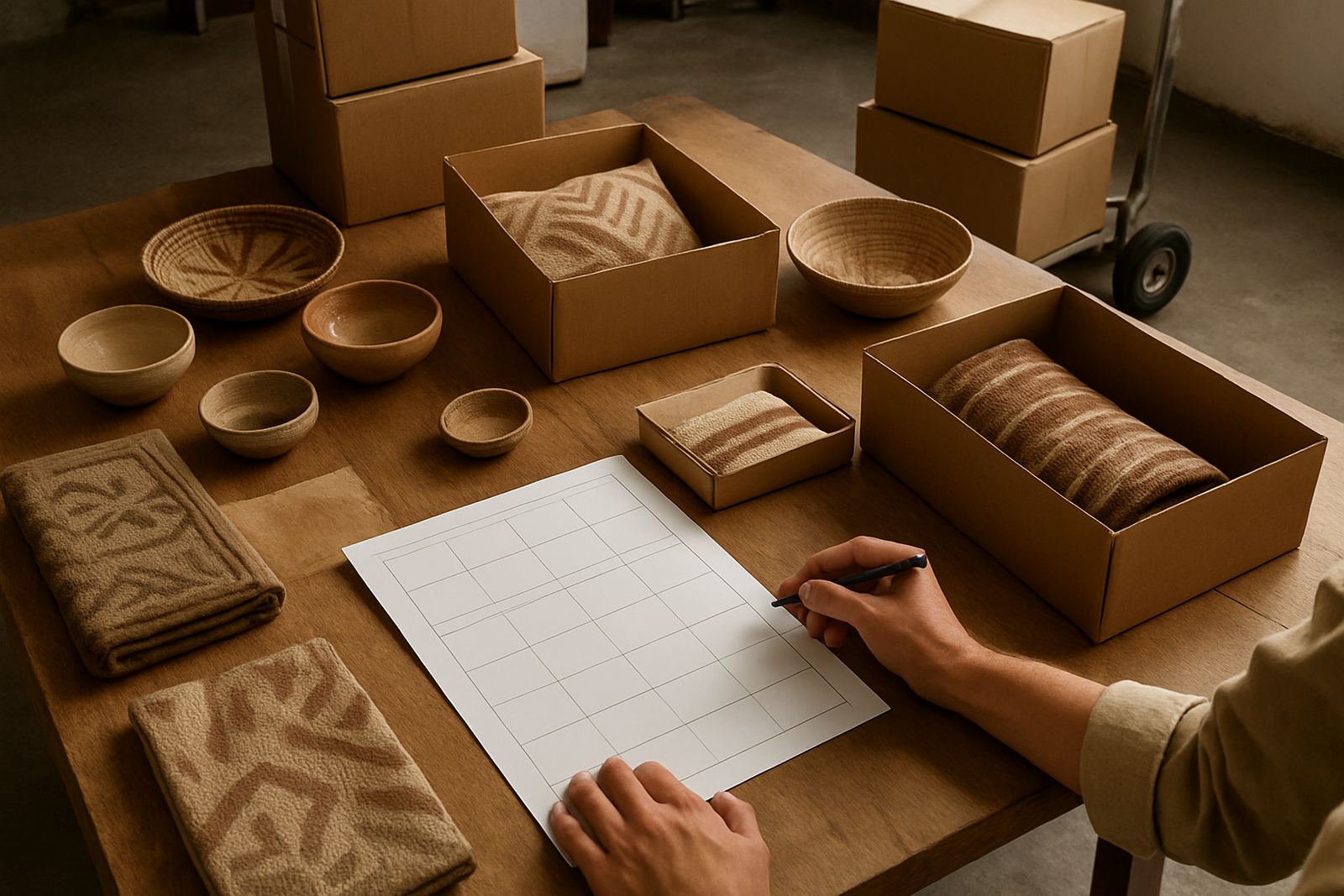


What courier coordination covers for your order
Courier coordination is the practical side of moving textiles, ceramics and artisan goods without damage or delay. We confirm the delivery address, check access notes, choose the right parcel size and prepare the order for collection so it leaves in the correct condition. For local deliveries we work around Gauteng traffic, building access rules and business trading hours, while export orders are packed for longer transit and handling changes at border points or airport transfer points.
This service suits individual buyers, retailers, hospitality buyers and wholesale customers who need one clear process from dispatch to delivery. We handle the timing, the updates and the paperwork flow needed for a clean handover. Where goods are fragile or have mixed materials, we separate items properly and mark parcels with handling notes so the courier knows what is inside.
- Address verification before dispatch
- Collection scheduling and parcel readiness checks
- Shipment status updates for local and overseas orders
- Packaging guidance for fragile and mixed-material goods
- Courier handover notes for signed deliveries and secure drop-offs
How the dispatch process works from Maboneng
Our dispatch process starts as soon as an order is confirmed. First we check the delivery details, including suburb, access instructions, receiver name and any site restrictions. For offices, hotels and retail floors we confirm receiving hours. For homes and apartments we look out for security counter procedures, lift access and local drop-off rules. If a parcel is going overseas, we also confirm the destination country, the required declaration details and whether the parcel needs split packing for size or weight limits.
Next, we prepare the shipment for collection. Textiles are folded to reduce creasing and ceramics are cushioned with protective wrap, card separators and outer cartons suited to the item weight. Where needed we use double boxing for breakable pieces or for mixed orders containing both soft goods and hard goods. After collection, we share the tracking reference and keep the client updated when the parcel is in transit, delayed or ready for delivery. If the driver needs a corrected address or contact change, we handle that fast so the parcel does not circle around Johannesburg or sit at a depot longer than needed.
- Step 1: Order check and address validation
- Step 2: Packing review and dispatch prep
- Step 3: Courier booking and collection handover
- Step 4: Tracking, transit updates and delivery follow-up
Packing standards for fragile and handmade goods
Handmade items need different packing from ordinary retail stock. Ceramics need impact protection, textiles need moisture control and artisan goods with beads, shells or stitched detail need careful surface protection. In Johannesburg and coastal cities alike, parcels can face heat, dust and damp conditions, so our packing aims to hold shape and prevent rubbing. For exports we also consider longer handling times and varied storage conditions along the route.
Our standard packing approach includes inner wrapping, corner protection where needed and sturdy outer cartons sized to reduce movement. Small ceramics are packed with at least 25 mm of cushioning on each side, while larger breakables may need 50 mm or more depending on weight and shape. Textile parcels are sealed to protect from dust and light moisture, especially for cross-country road freight or wet-weather delivery days. Labels are applied clearly and checked twice, because a clean label can save a day of delay.
- Ceramics packed with foam or paper cushioning and rigid outer cartons
- Textiles folded flat with moisture-resistant outer wrapping
- Mixed orders separated by material type to reduce scuffing
- Clear parcel labelling for receiver details and handling notes
- Optional gift packing when the order is going straight to the recipient
Turnaround times, delivery windows and updates
Turnaround depends on the size of the order, the destination and how quickly the courier can collect. Local Gauteng orders can often be dispatched within 1 to 2 working days once the parcel is packed and checked. Deliveries to Cape Town, Durban, Gqeberha and other major centres usually take longer because of linehaul timing and route schedules. For international courier work, lead times depend on customs movement, destination rules and service level. We always work with realistic dispatch windows rather than promising a date we cannot keep.
For urgent orders, the fastest path is to confirm the delivery information early in the day and let us know if a parcel must leave before a cutoff time. We can also coordinate staged dispatch for larger wholesale orders, which helps if a buyer wants part of the order sent first and the rest after stock finalisation. Shipment updates are shared through the order process so the client knows when the parcel has been collected, is moving, or needs attention. If there is a delay due to weather, courier backlog or a depot scan issue, we keep the client informed and work on the next step immediately.
Pricing approach for local and export courier work
Our pricing is based on the actual requirements of the shipment rather than a flat guess. We look at parcel size, weight, destination, packing complexity, fragile handling, collection timing and whether the order is local, national or international. Smaller parcels with standard packing cost less than large or breakable shipments that need extra materials and more time to prepare. Export parcels can also carry additional costs for declarations, special handling and route-specific courier charges.
For clients placing repeat orders, wholesale runs or hospitality styling shipments, we can plan courier costs across the batch so budgeting is simpler. If there are multiple drop points or a mixed order that must be separated before dispatch, we quote according to the work involved. The aim is to keep the cost structure clear from the start so there are no surprises at collection or after delivery. When the route changes or the customer asks for a faster service, we update the courier plan before the parcel leaves Maboneng.
Ongoing maintenance for active shipping accounts
For clients who ship often, courier coordination works best with regular checks. We review address books, delivery notes and packing stock at set intervals so errors do not build up. For active retail or wholesale accounts, a monthly review is useful for testing new addresses, confirming courier service changes and checking whether parcel sizes have changed with the season. For export-heavy work or high-volume hospitality orders, a fortnightly check can help keep packing supplies and dispatch notes current.
We also recommend a review whenever there is a change in receiving staff, a new store opens, a hospitality site changes access rules, or the order mix shifts from textiles to ceramics and back again. In practice, this means fewer failed deliveries and less rework. It also helps with time-sensitive shipments during festive periods, load-shedding disruptions or peak courier weeks when collections can get tight. Regular upkeep is simple, but it saves money and time over the long run.
- Monthly review for address records and shipping notes
- Fortnightly check for high-volume or export accounts
- Update courier instructions when access or receiver details change
- Reassess packing stock before busy seasons and public holidays
Key facts
| Base area | Maboneng, Johannesburg |
|---|---|
| Coverage | South Africa and international courier |
| Typical local dispatch | 1 to 2 working days after packing approval |
| Handling formats | Textiles, ceramics, artisan goods and mixed orders |
| Packing options | Standard, fragile, export and gift packing |
| Order support | Address checks, tracking updates and dispatch coordination |