
What bulk order planning covers
Bulk orders for handmade goods need more than a simple quantity count. We map the full order from maker availability through to packing, collection and final delivery, so you know what can be confirmed now, what needs a second production run, and where substitutions may be needed if a certain textile, glaze or weave has limited stock. This is useful for hotel fit outs, retail launches, gifting programmes, seasonal promotions and export shipments where timing matters just as much as the product itself.
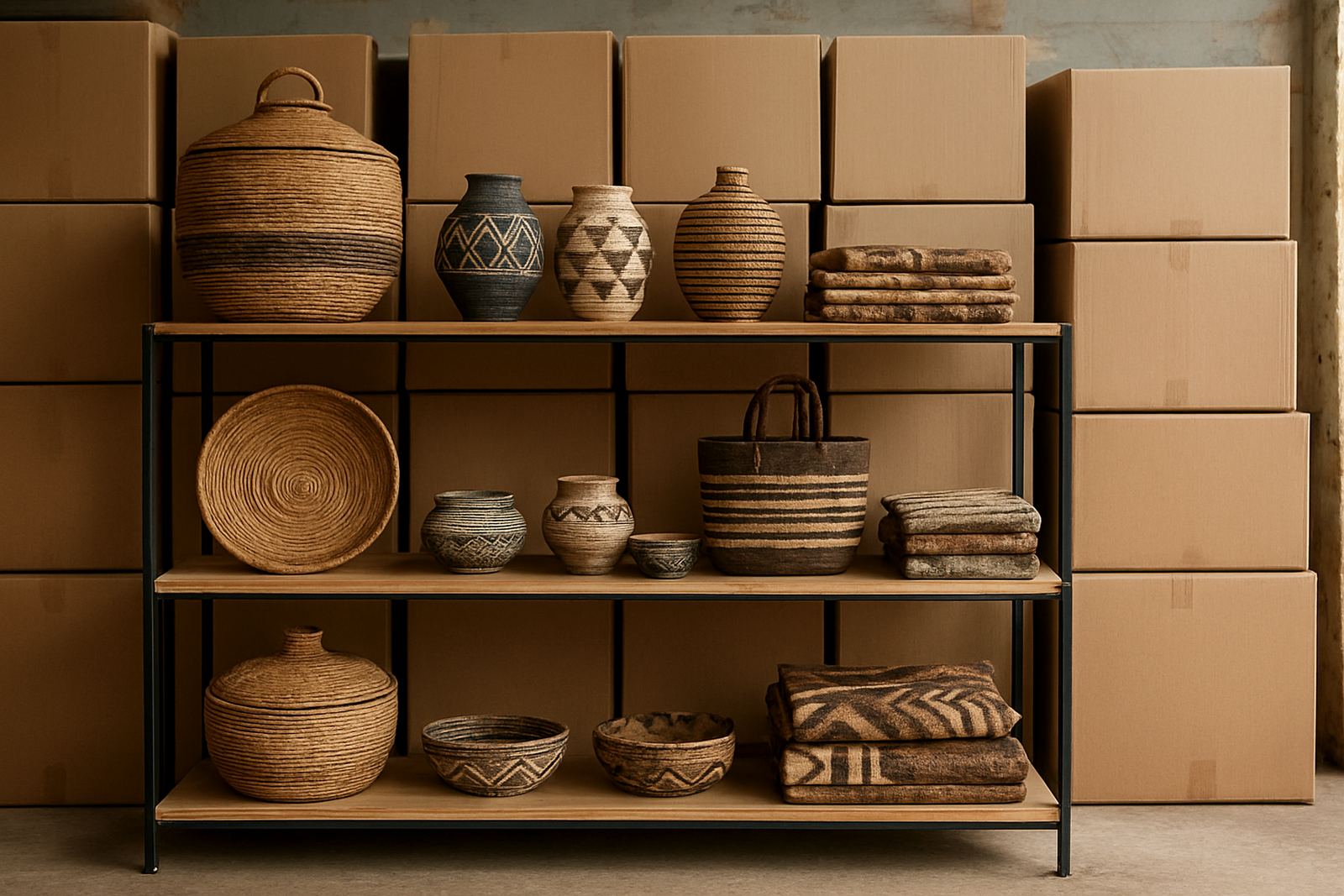
Our planning service suits orders that include mixed items such as woven textiles, ceramics, baskets, home accessories and gift sets. We work with stock that may be one-off, small-batch, or made to order, and we keep the numbers practical. If a client needs 180 items but only 42 are immediately available, we will phase the balance and set clear milestones rather than forcing a rushed commitment that may affect finish or consistency.
- Quantity planning across multiple product lines
- Lead time checks with individual makers
- Stock depth review for ready-to-ship items
- Phase-by-phase delivery scheduling
- Export and local courier coordination
How we structure a large order
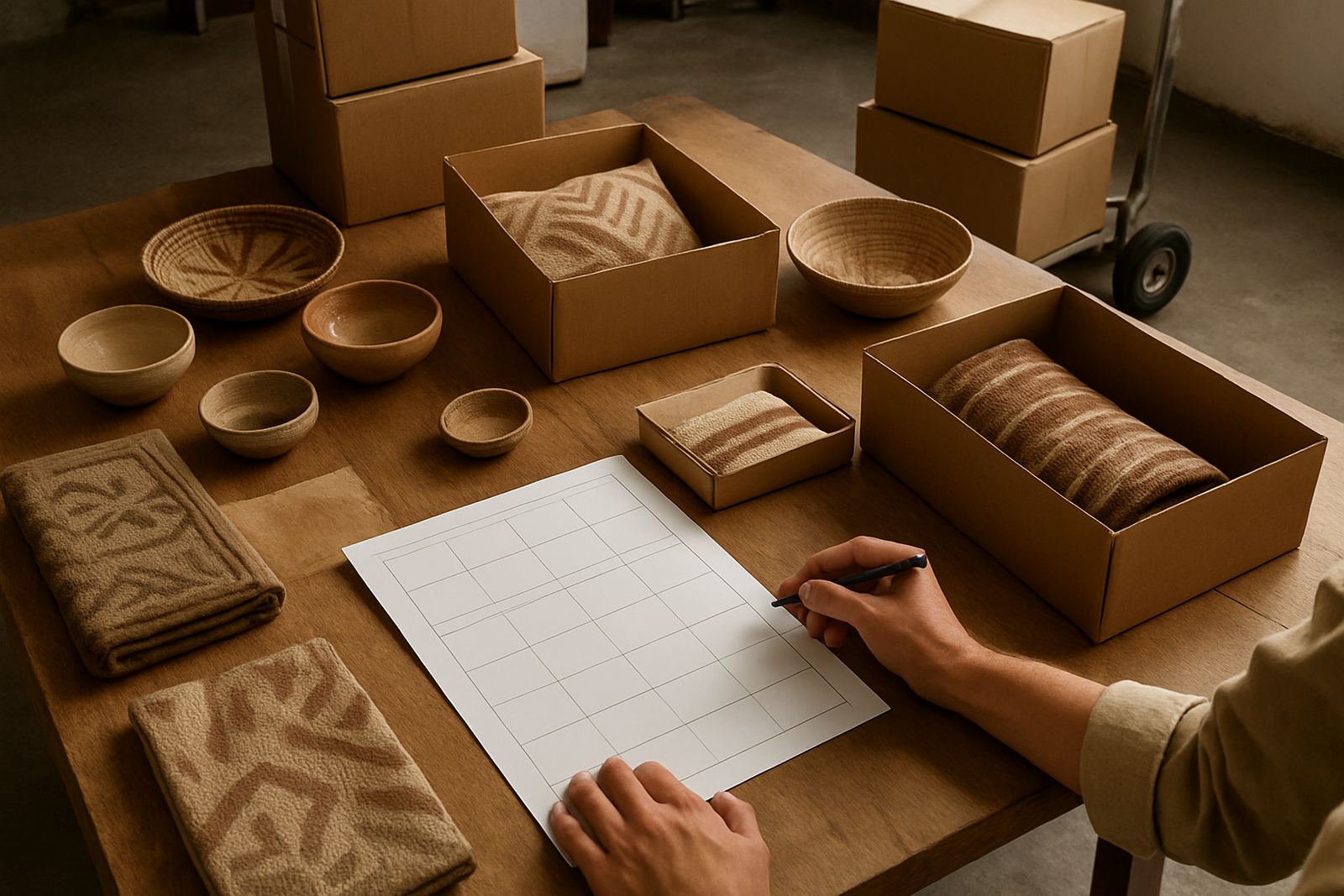
We start with the product mix, target date and delivery points. From there we split the order into confirmed stock, scheduled production and reserve options. For many clients this includes size splits, colour allocation, box counts and packaging instructions. Where products vary by hand, we note the acceptable range so the client can approve realistic tolerances upfront.
For example, ceramic items may need allowance for slight size variation, and handwoven goods may differ by fibre batch or dye lot. We record those details before the order is placed, which helps avoid hold ups later. If the destination includes Cape Town, Durban, Pretoria, Gqeberha or an international address, we also factor in courier timings, customs paperwork where needed and any municipal or venue receiving rules for large deliveries.
- Order mapping by product, quantity and destination
- Approval of size, colour and finish tolerances
- Allocation of stock by event date or store opening
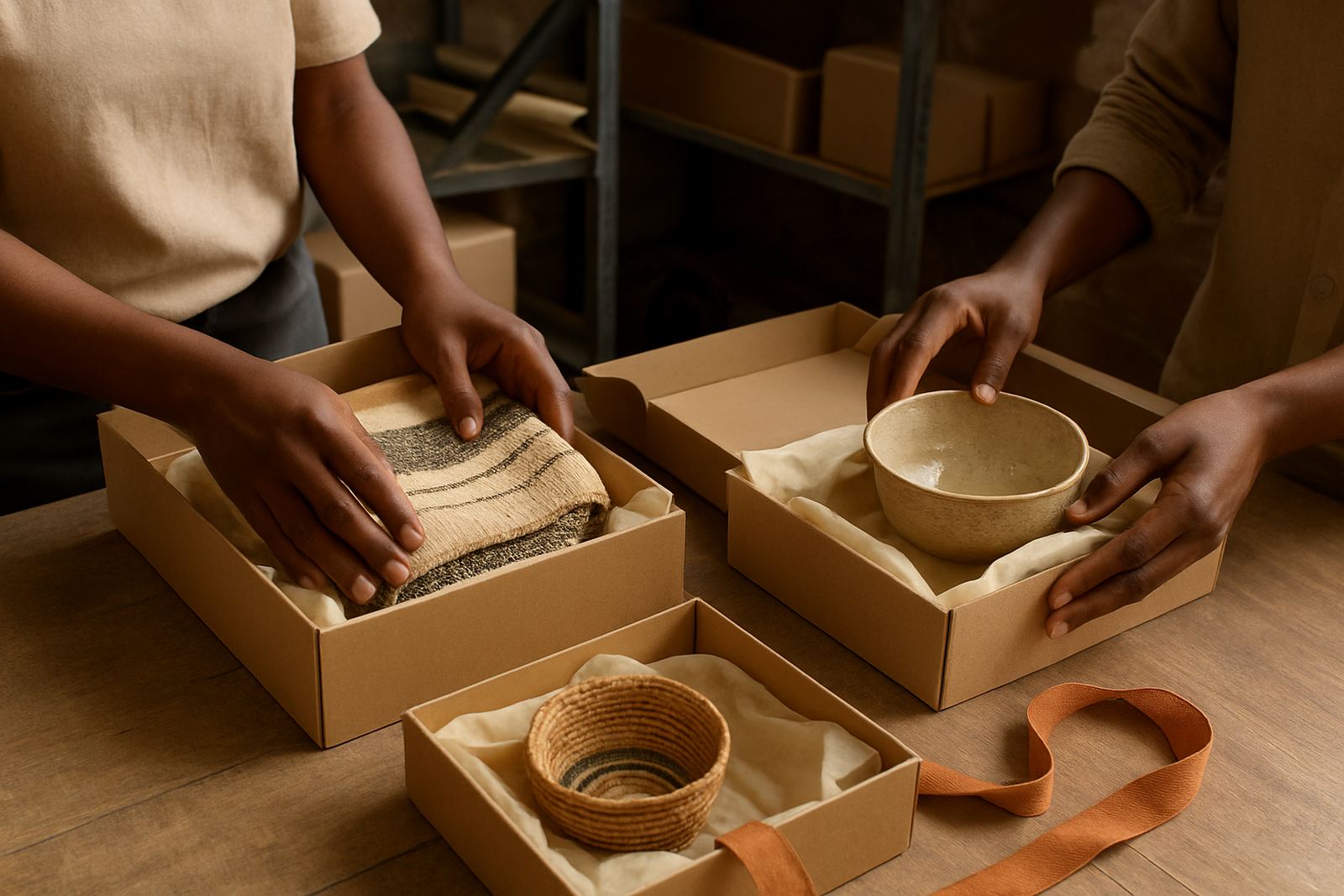
- Packing instructions for breakable or folded items
- Delivery routing for multiple addresses
Step-by-step planning process
Our process is straightforward and built for clear sign-off. First, we review the brief and confirm the volume, budget range and delivery window. Next, we check maker capacity and available stock depth. After that, we issue a practical plan showing what can ship immediately, what requires production time, and what should be held as backup. Once the client approves the plan, we move to booking, packing and dispatch.
For recurring clients, we can also set rolling replenishment dates. That works well for retail stores, hospitality groups and corporate gifting teams that need regular top ups rather than one large shipment. The planning cadence can be weekly, fortnightly or monthly depending on sales velocity and storage space. If load-shedding or courier pressure may affect dispatch, we build in a buffer so your order does not land at the last minute.
- Brief review and quantity confirmation
- Maker capacity and stock depth check
- Phased production plan with delivery milestones
- Packing and export or local dispatch booking
- Follow-up for replenishment or repeat runs
Turnaround times and delivery milestones
Turnaround depends on the product mix and the size of the order. Ready stock can often move within 2 to 7 working days once the final list is approved, while made to order lines may need 2 to 6 weeks depending on the maker, material availability and finishing time. Large mixed orders may be split into more than one dispatch so the client receives stock in stages instead of waiting for every item to be completed at once.
We will always give a realistic timeline rather than an optimistic one. If an order includes ceramics, hand-dyed textiles or fragile pieces, additional time may be needed for drying, firing, folding, export packing and courier booking. For international consignments, customs checks and destination handling can add further days, especially during peak shipping periods. We track milestones so the client can plan store launches, events or distribution handovers properly.
Maintenance intervals for the planning itself are also important. For active bulk programmes, we recommend a review every 2 to 4 weeks, with stock checks before each new production release. That helps keep the order aligned with actual sales and avoids dead stock sitting in storage for too long.
Pricing approach and what affects cost
Bulk order planning is priced according to the scope of the work, not just the item count. A straightforward restock with one delivery point will cost less than a mixed export programme with staggered releases, gift packing and multiple collections. We quote after reviewing the brief, the number of makers involved, packaging requirements and any special handling needed for fragile or oversized pieces.
Costs can be affected by the following:
- Number of product lines in the order
- Local or export destination
- Need for sample approval or sample loans
- Special packing for breakables or textiles
- Multiple delivery points or phased dispatches
- Rush timing or tight event dates
We keep pricing practical and transparent. If a client wants to protect budget, we may recommend a mixed approach where a portion of the order comes from current stock and the balance is scheduled for the next production cycle. That often gives better cost control and less pressure on makers, especially where quantities are high and the finish needs to stay consistent across batches.
What clients receive at handover
Every bulk planning project ends with a clear handover pack. This includes quantities confirmed, delivery dates, packaging notes and any outstanding balance still in production. For larger orders we also provide provenance cards where required, so the client can tell the product story correctly at retail, in hospitality spaces or in corporate gifting packs.
Our team in Maboneng manages the moving parts across maker coordination, merchandising checks and courier booking. If the order is going into store displays, guest rooms or event hampers, we can also advise on how to keep items grouped by size or colour for easier receiving. That makes unpacking simpler and reduces mistakes at the point of handover, especially when stock is arriving in batches.
- Confirmed quantities and phase schedule
- Packing list and dispatch notes
- Provenance cards where requested
- Delivery milestones and follow-up dates
- Storage guidance for fragile or textile items
Key facts
| Service area | Maboneng, Johannesburg with deliveries to Cape Town, Durban, Pretoria, Gqeberha, Midrand, Soweto and international destinations |
|---|---|
| Order sizes | From small phased restocks to large mixed orders of 50 to 500 plus units |
| Lead times | Ready stock: 2 to 7 working days; made to order: 2 to 6 weeks, depending on maker capacity |
| Materials covered | Handmade textiles, ceramics, baskets, gift items and artisan home goods |
| Review cadence | Stock and production review every 2 to 4 weeks for active bulk programmes |
| Pricing basis | Quoted per scope, based on volumes, maker count, packing, delivery points and turnaround |