

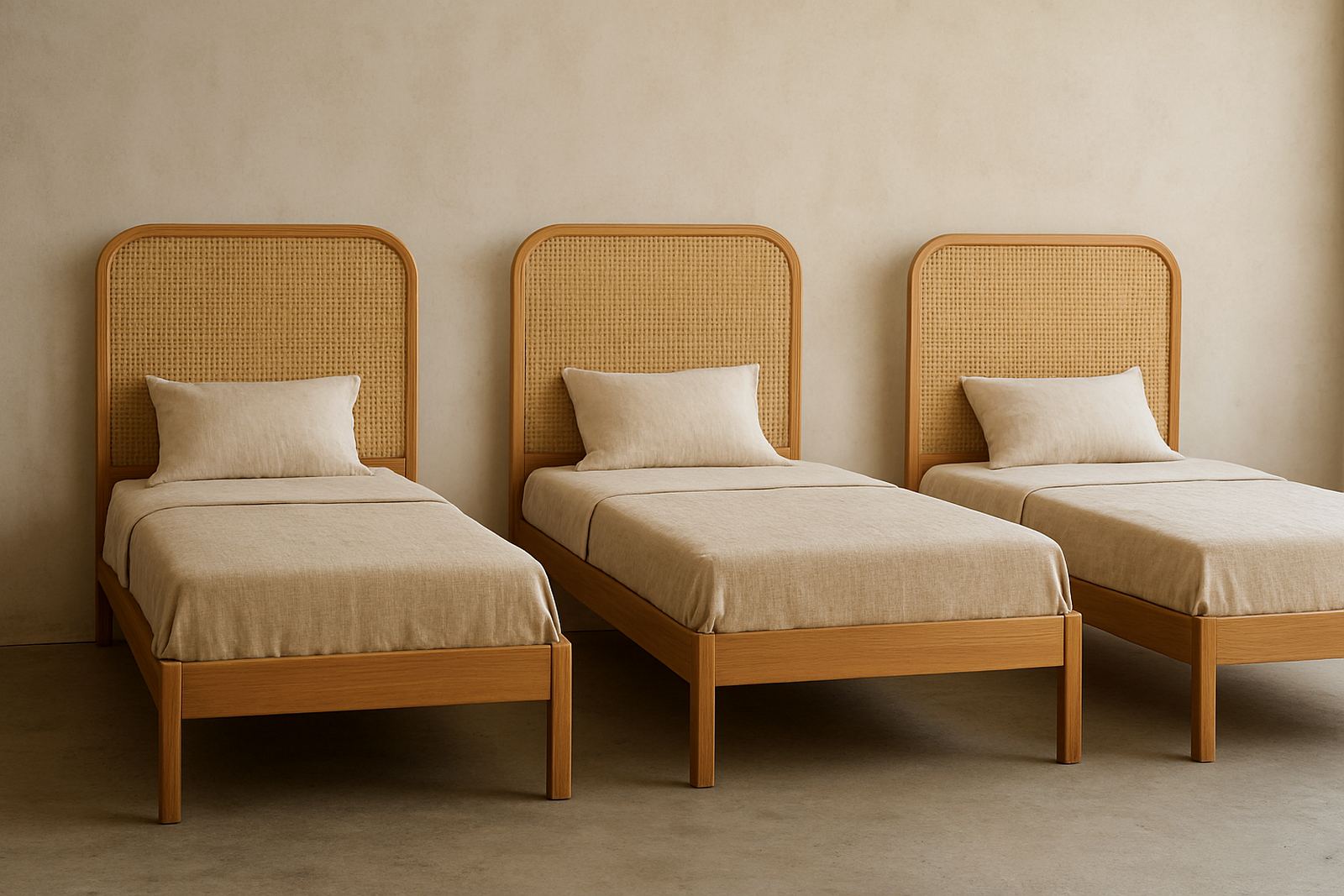
Start with the bed size, then check the wall space
The first step is simple: match the headboard to the mattress size, then measure the wall behind the bed. A headboard that is too narrow can look lost, while one that is too wide may crowd bedside tables, windows or a light switch. In Johannesburg apartments, guest rooms and compact homes, this matters just as much as the finish.
Measure the bed base width, not only the mattress, and note the height from floor to the top of the mattress. If you like a lower profile look, a modest headboard can sit just above the pillow line. If the room has high ceilings, a taller piece can help balance the space without needing much else on the wall.
- Measure bed width in centimetres, then allow for side tables if they are staying in place.
- Check whether the headboard is for single, three-quarter, double, queen or king sizing.
- Look at skirting, wall plugs, sockets and picture rails before choosing a fixing method.
- Allow at least 20 to 30 cm of free wall space above or around the headboard where possible.
Choose the fixing option that suits your room and wall
Rattan headboards are usually either wall-mounted or attached to the bed base. Wall-mounted options give more freedom with height, which is useful when you want the top line to sit a little higher than standard. Bed-base fixing keeps the piece aligned with the frame and can be helpful where the wall is not suitable for drilling.
Before buying, think about the wall material. A solid brick wall is common in many South African homes, while plasterboard partitions are found in newer developments and some refurbished units. In older homes, you may also need to work around uneven plaster or damp patches. If you are dealing with coastal humidity in Durban or Gqeberha, ask how the frame and fixings should be protected against moisture.
- Wall-mounted: best for height control and a cleaner gap between bed and wall.
- Bed-base mounted: useful when you prefer the headboard to move with the frame.
- Freestanding: good for rentals or rooms where you do not want wall drilling.
- Ask about the fittings supplied and whether basic installation hardware is included.
Read the weave closely before you look at the colour
With rattan, the weave tells you more than the colour does. A neat weave should sit evenly across the frame, with consistent spacing and no loose ends that catch on linen or clothing. Handmade work will always have small variations, but the structure should feel steady and well finished.
Check the front and the edges. The border should look deliberate, not rushed, and the cane or fibre should be tightly secured where the pattern turns corners. If the piece is for regular use in a family room or guest room, ask whether the surface has been sealed for easier cleaning. That can help where dust builds up quickly, especially in dry inland areas.
- Look for even tension in the weave from top to bottom.
- Inspect corners and joins for loose strands or rough edges.
- Ask whether the natural material has been sealed or left untreated.
- Confirm if the piece is suitable for a busy room or better for light use.
Get the visual proportion right for the room
A headboard works best when it balances the bed, side tables and the shape of the room. A low bed with a very tall headboard can feel top-heavy, while a wide bed with a very slim headboard may look unfinished. If your room is narrow, a simple outline can keep things calm. If the room is large, a fuller weave or taller silhouette can help the bed hold its place in the space.
Think about other textures already in the room. If you have strong wood furniture, patterned bedding or busy curtains, choose a rattan piece with a cleaner profile. If the room is plain, a more detailed weave can add interest without needing extra decor. The aim is not to fill every wall, only to let the bed look properly dressed.
A quick check is to stand back from the doorway and look at the bed in relation to the window and bedside lamps. If the headboard draws the eye in a balanced way, you are usually on the right track.
Use this buying checklist before you place the order
Before you confirm anything, check the practical details so there are no surprises when the headboard arrives. This is especially important if you are ordering for a home in another city, a hospitality project, or a resale order where timing matters. Transport across provinces and export packing both need clear sizes and finish notes.
- Confirm bed size in centimetres or the exact mattress type.
- Check the overall height and width of the headboard.
- Ask how it is fixed and what hardware is required.
- Request notes on finish, colour tone and natural variation.
- Confirm lead time, packing method and courier arrangements.
- Ask whether sample loans or collection consultations are available for bulk orders.
If you are buying for guesthouses, lodges or apartments, it helps to order a little ahead of time. That gives room for courier delays, municipal access rules, building security checks and any changes to the room layout.
How to care for rattan in South African homes
Rattan is practical when cared for properly. Dust it with a soft brush or dry cloth, and avoid soaking it with water. In humid coastal towns, keep air moving around the bed where possible. In dry or dusty areas, regular light cleaning will help the weave keep its shape and look.
If the headboard is in a room with strong sun, reduce direct exposure where you can because prolonged heat can affect colour and fibres over time. For households with children or pets, check that the edges are smooth and that the piece is secured well to the wall or frame. A properly installed headboard should not wobble when the bed is used normally.
When the piece is for a hospitality setting, think about linen changes and daily movement around the bed. A cleanable surface and solid fitting matter more than ornament. Good care starts with good placement.