Start with the feel of the fibre before you look at colour
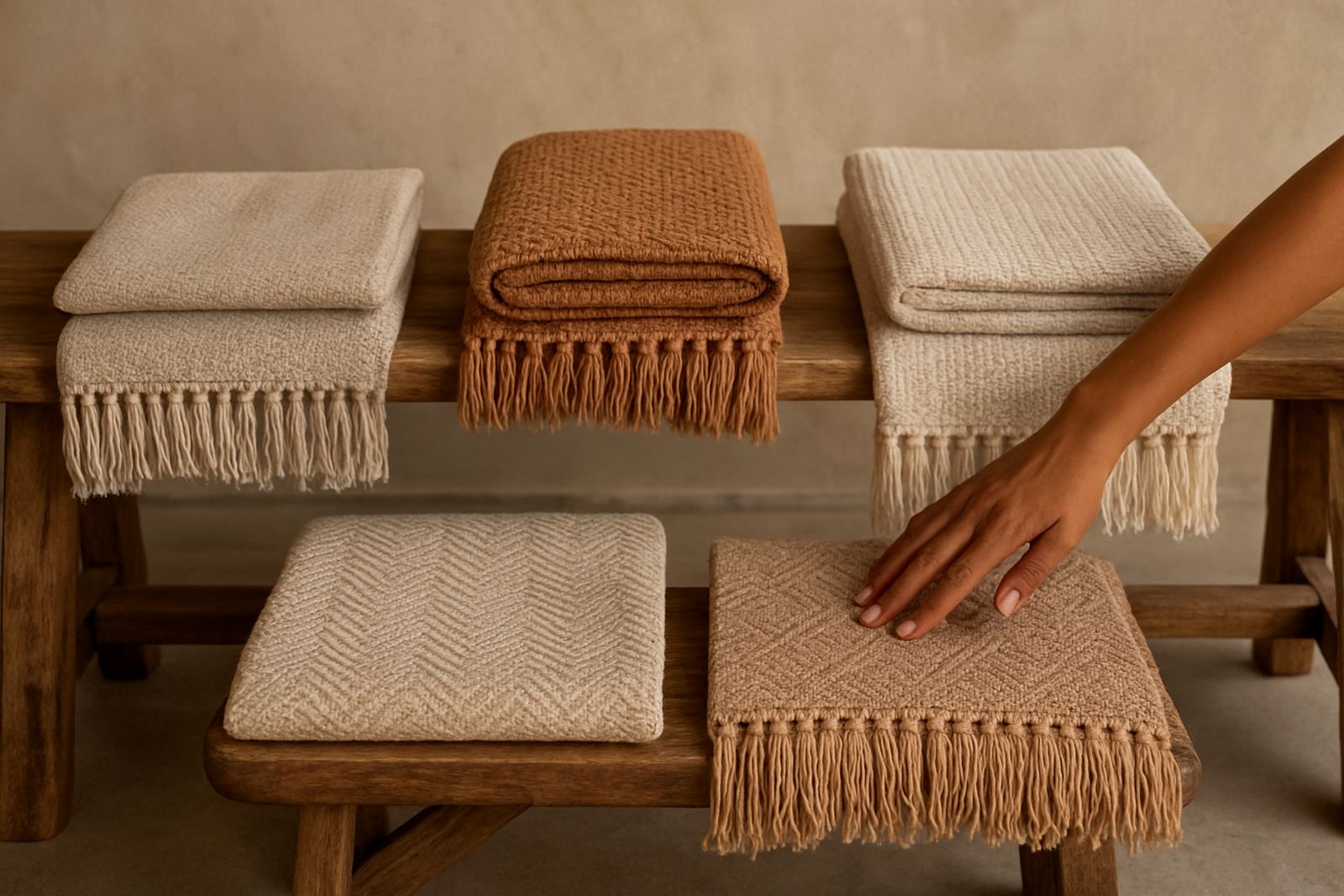
When you are buying handwoven throws, begin with the fibre rather than the pattern. Cotton feels cooler, softer and is usually easier to wash at home. Wool holds warmth better and is a better choice for colder Highveld evenings, but it can feel heavier in the hand. Blends often sit somewhere in between, giving a softer touch with less weight.
Run your fingers across the surface and check for scratchiness, loose loops or uneven tension. A throw with a slightly slubby finish can still be well made, but it should not feel rough enough to bother you on bare skin. If you live near the coast, think about how the fibre handles humidity too. Natural fibres breathe better in damp summer air and tend to feel more comfortable in rooms with less air conditioning.
- Cotton: cool, light to medium weight, easy day-to-day use
- Wool: warm, cosy, better for winter and cooler rooms
- Blends: practical balance of softness, warmth and care
- Plant fibres: often crisp in texture, best for light layering
Check the weight and size so the throw suits the room
The right weight depends on how you plan to use it. A light throw is handy for the arm of a couch, a reading chair or a guest room where the piece is mostly decorative. A medium weight throw gives enough coverage for evening use without feeling bulky. Heavier throws are ideal for winter layering and for rooms that get cold when the power is off during load-shedding.
Size matters as much as weight. Measure the couch, bed or chair before you buy. A throw that is too small can look lost, while one that is too large may hang awkwardly. For a single chair, a smaller piece may be enough. For a queen bed, look for a throw that can sit across the foot of the bed with enough drop to feel intentional.
- Chair or occasional seat: smaller throw for a folded or draped finish
- Three-seater couch: medium to large throw for full or partial coverage
- Bed foot layer: long throw that shows the weave and edge finish
- Guest room: lighter weight for flexible use across seasons
Read the drape before you decide where it will live
Drape tells you how the throw falls. Some handwoven pieces have a soft, relaxed fall that pools gently over the edge of a couch. Others hold more structure and keep cleaner lines when folded. Neither is better, but each suits a different setting. A relaxed drape works well in lounge areas that are used every day. A firmer drape can look neat in a hospitality setting or formal sitting room.
To test drape, hold the throw from one corner and let it fall. Notice whether it hangs evenly or twists. Check whether the edges stay flat or roll up. A good handwoven throw should settle into place without constant fuss. If the piece is intended for a room with strong natural light, also check whether the texture shows clearly, because some weaves are made to be seen up close and others read better from a distance.
Match care needs to your household routine
Care is where many buyers get caught out. A throw that looks beautiful but needs careful handling may not suit a busy family home. If children, pets or entertaining are part of daily life, choose a piece that can be handled without stress. Cotton and some blends are often the easiest to manage. Wool needs more care, especially if it is unwashed or loosely spun.
Before you choose, think about washing space, drying time and storage. In Johannesburg, winter drying can be slow indoors, while in coastal towns a damp load can take longer to finish properly. If you have limited line space or prefer low-maintenance homeware, ask how the throw should be cleaned and how often. A well cared-for handmade throw should keep its shape and colour for years.
- Check whether the throw can be hand washed or needs dry cleaning
- Ask if the colour may run on the first wash
- Find out if fringe or tassels need special handling
- Confirm the best way to dry and store it between seasons
Choose the right room placement for daily use
The best place for a handwoven throw depends on where you need warmth, texture or a softer finish. In a lounge, place it where people naturally sit so it gets used instead of sitting in a cupboard. In a bedroom, the foot of the bed is usually the easiest spot because it adds colour without crowding the bedding. In a guest room, one throw can do double duty as a comfort layer and a decorative accent.
Hospitality spaces and short-term let properties need throws that can handle regular turnover. In those settings, choose pieces that look presentable after folding and can be replaced or laundered without trouble. If you are styling a home in Cape Town, Durban, Pretoria, Gqeberha or Midrand, think about the climate, sun exposure and how often the room is opened to outside air. Strong sun can fade a textile over time, so rotate the piece now and then.
Use this buying checklist before you place an order
A simple checklist helps you compare throws properly, especially when buying more than one piece for different rooms. Keep your eye on the practical details and not only the pattern. Handmade work varies, so small differences are part of the appeal, but the piece should still meet your needs.
- Fibre feels comfortable against the skin
- Weight suits the season and room temperature
- Drape matches the way you want to style it
- Care instructions fit your household routine
- Size suits the couch, bed or chair
- Colour works with the room in daylight and at night
- Edges, weave and finish look sound on close inspection
If you are buying for your own home or for a larger order, it helps to keep room measurements and colour notes close by. That makes it easier to ask for a suitable match and avoids guessing later.
Provenance details for handwoven throws
One of the advantages of buying through Creation Africa Foundry is that you can ask for provenance details and make a more informed choice. That means you know more about where the piece comes from, who made it and what materials were used. For many buyers, this matters just as much as the look and feel.
Provenance cards are useful for gifting, retail display and hospitality use because they give the textile context. They also help when you are choosing matching pieces for a home, lodge or small shop. If you need several throws at once, ask for a sample loan or a collection consultation so you can compare texture, scale and finish before you commit.