Launch brief for a Maboneng venue opening
The client was a hospitality and events team based in Johannesburg planning a launch evening in Maboneng, with guests moving through a main feature space, bar area and reception point. They wanted the room to feel considered from the moment people walked in, using handmade textiles, ceramics and smaller artisan objects to set the tone without crowding the venue.
The brief was clear: create a strong first impression, keep the styling useful for service staff, and make sure every item could be lifted, cleaned and reset quickly during the event. The venue had exposed brick, mixed lighting and limited storage backstage, so the pieces had to work hard and not rely on fragile layering. We also needed to account for load-shedding risk and a late afternoon setup slot, which meant the plan had to be simple enough to execute with daylight and limited power.
What the space needed to work around
The main constraint was timing. We had 2 weeks from briefing to event day, with a final site check taking place 4 days before launch. That left little room for last minute changes, so the curation had to be locked early and packed in a way that made floor placement easy. We also had to respect venue access rules, which meant all crates and soft items had to come through a single service entry and be cleared by a set cut-off time.
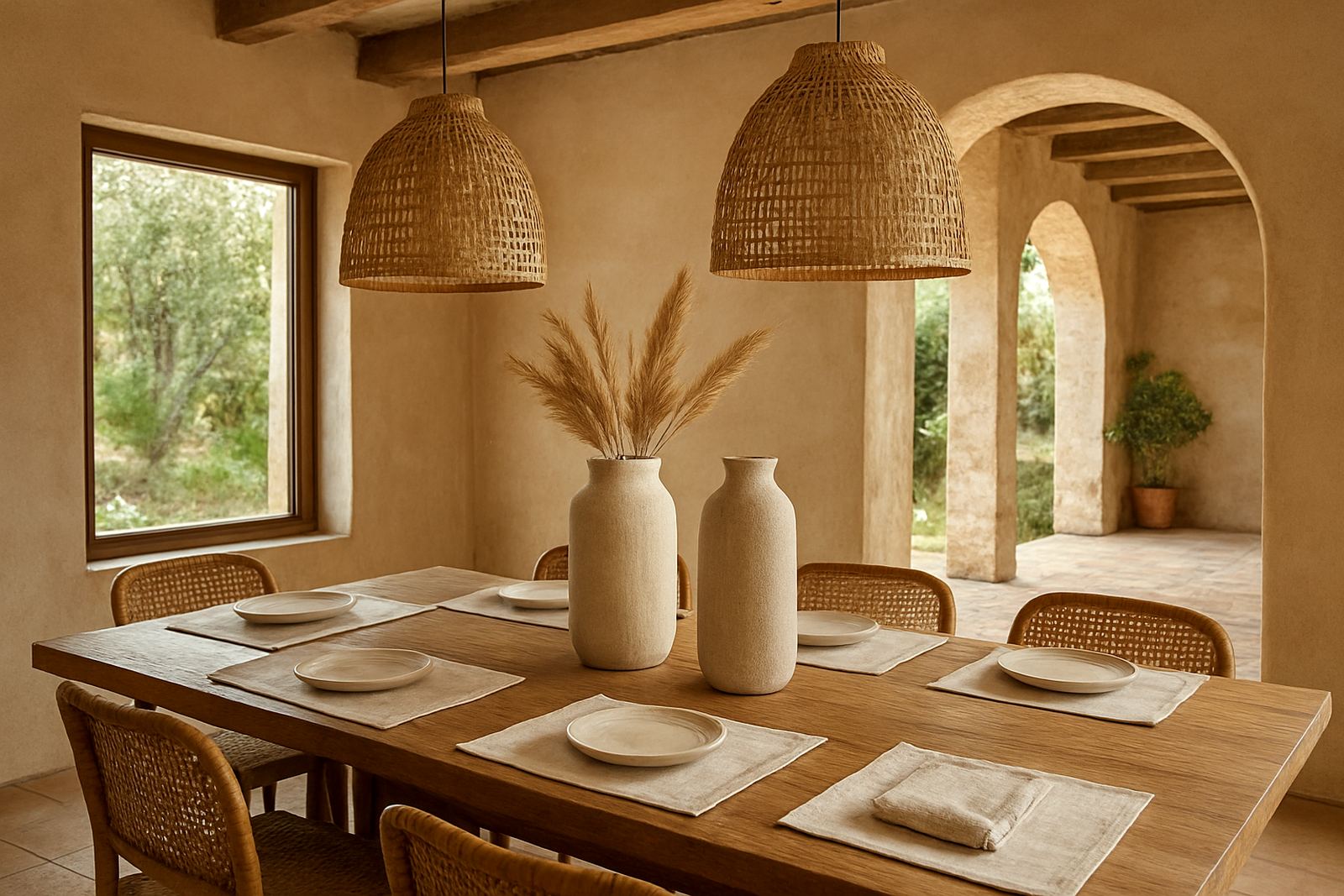
The room itself needed balanced styling, not overload. The client did not want tall arrangements that blocked sightlines or narrow table runs that made it difficult for guests to place drinks and canapes. In response, we kept the height low and used weighty ceramics, folded textiles and grouped display pieces that could hold a table without making it feel busy.
- Low profile centre arrangements for open sightlines
- Soft goods selected to suit polished concrete and warm timber finishes
- Items packed for one-way access through a service entrance
- Materials chosen to tolerate quick cleaning and guest handling
The curation and supply mix
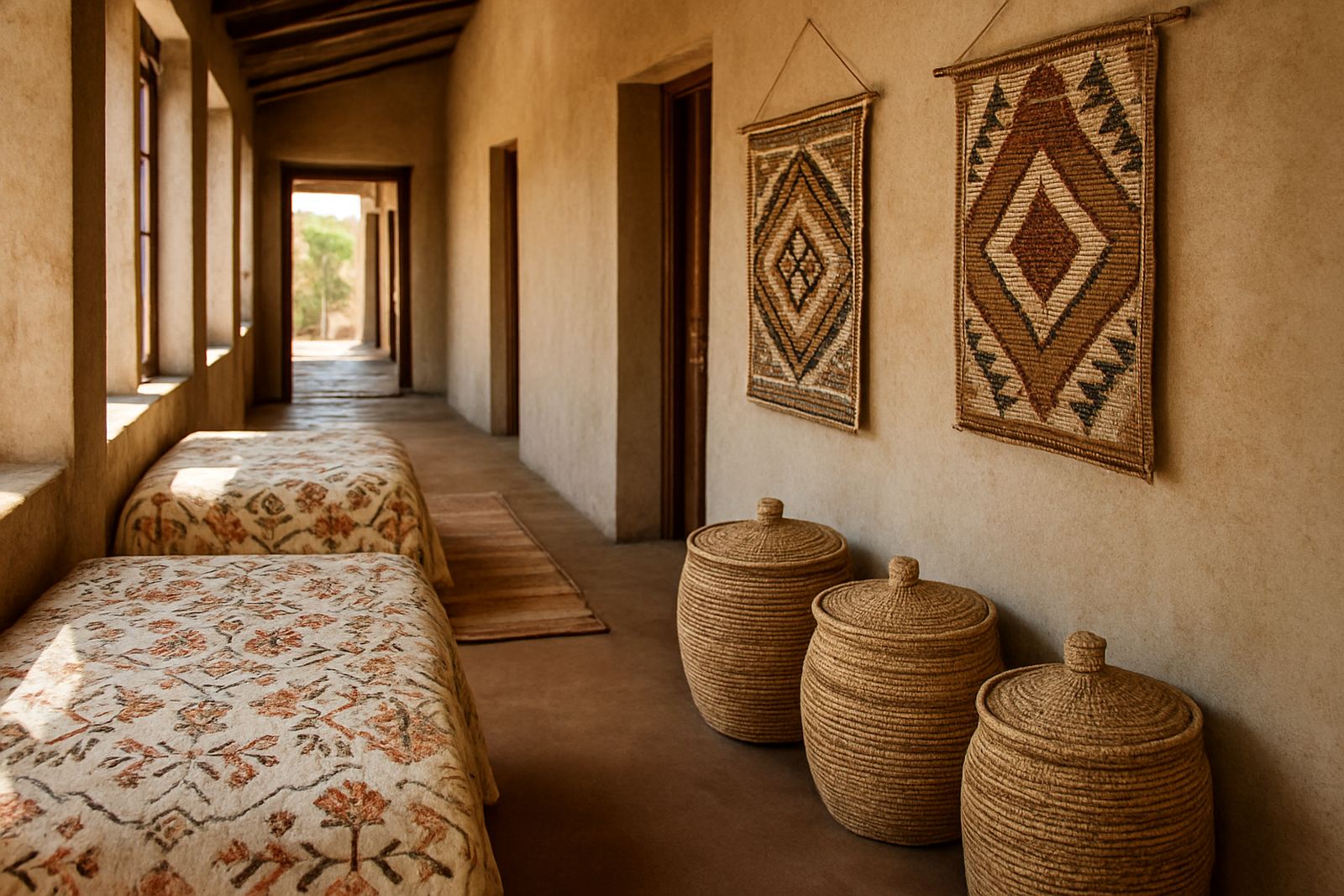
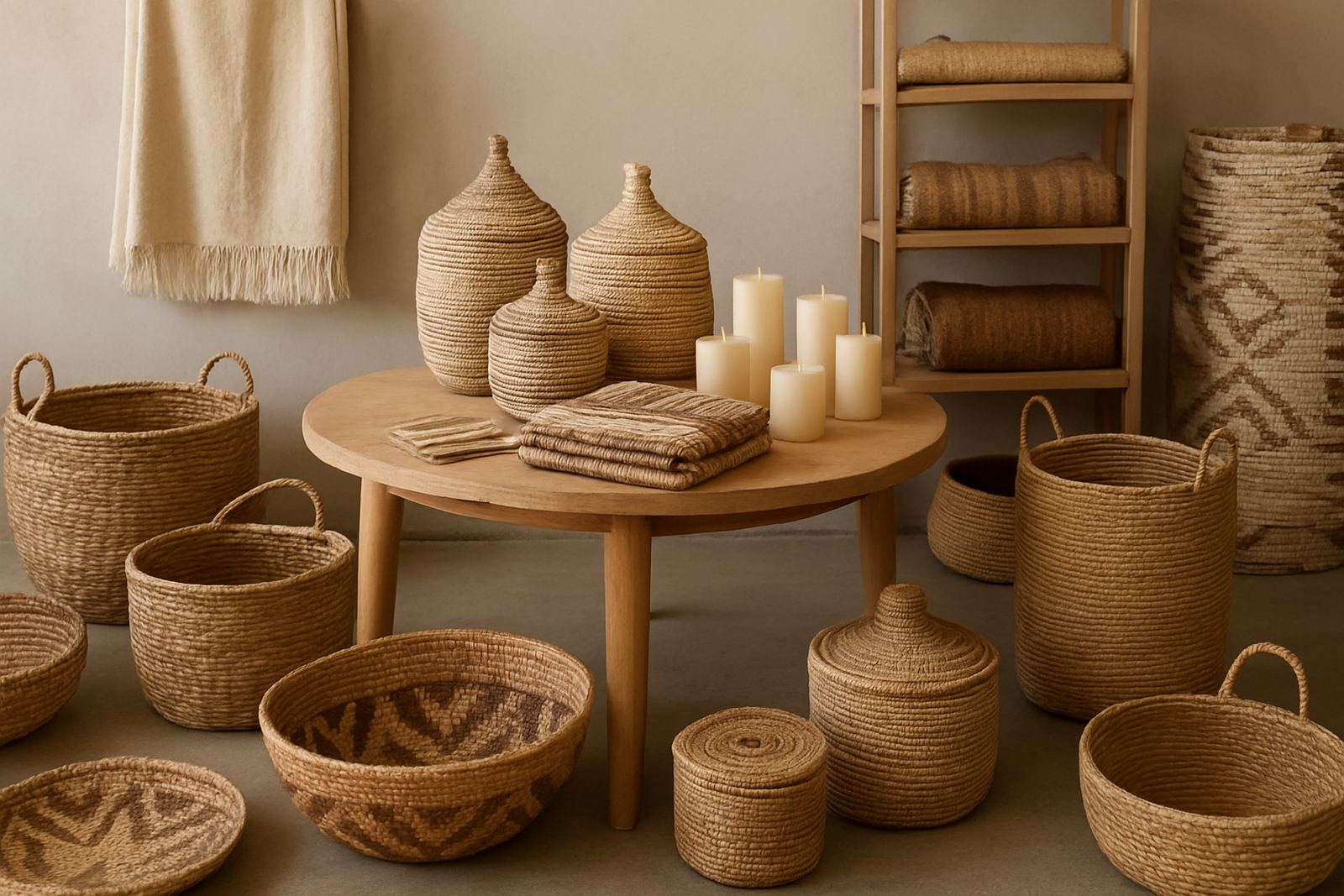
We supplied a mix of handmade textiles, ceramic vessels and display objects sourced from makers across the continent, chosen for colour, texture and scale. The palette sat in deep clay, indigo, sand and charcoal so the room felt grounded and the food presentation could still stand out. Pieces were selected for their tactile quality rather than decorative excess, which suited the venue and kept the event practical for hospitality service.
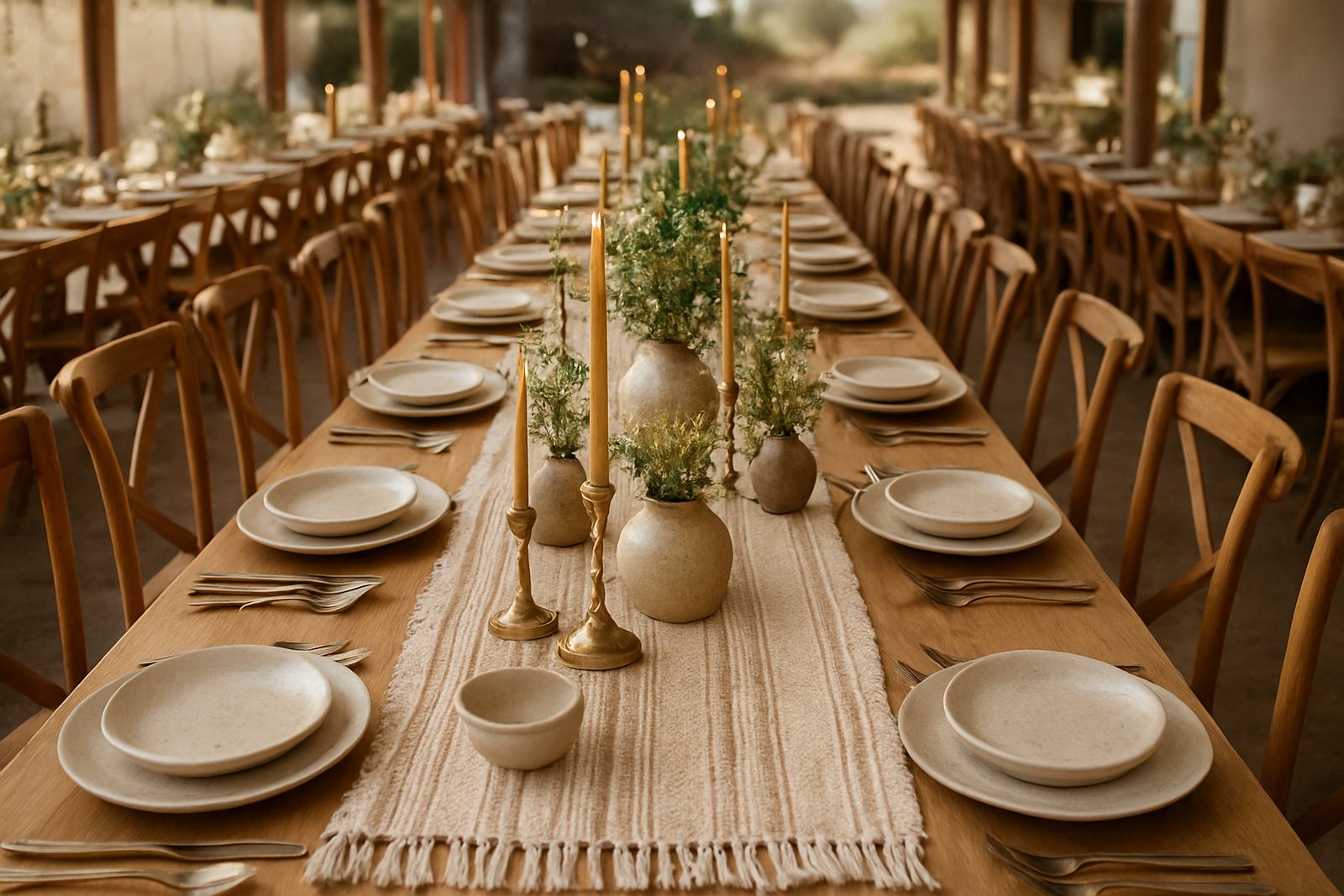
For the tablescapes, we used a combination of runners, folded cloths, small serving vessels and grouped objects to create rhythm across the room. The display surfaces were treated as anchor points rather than full displays, so each table had enough detail to read well in photographs without getting in the way of circulation. We also prepared provenance cards for key pieces, giving guests and organisers a short explanation of origin, maker region and material details.
- Handmade textiles sized for 1.8 m and 2.4 m tables
- Ceramic pieces in mixed heights from 8 cm to 28 cm
- Display objects suitable for reception counters and plinths
- Provenance cards for selected pieces and giftable items
Build schedule and coordination on site
The project ran over 2 weeks in three stages: concept alignment, sourcing and packing, then on-site placement. During the first week we confirmed the room plan, the number of tables and the access points. In the second week we finalised the items, checked breakage risk and prepared the packing order so the first crates off the vehicle contained the pieces needed at the front of house point.
On setup day our team coordinated delivery, placement and last checks with the event crew. We kept the process practical, with each grouping labelled by zone so the hospitality team could move things if needed once service started. Because the venue was working with dimmer evening light and a busy guest arrival window, we tested placement in daylight first and then made a few small adjustments once the room was dressed.
The result was a launch space that felt warm and organised, with a clear line from entrance to main display area. The styling gave the venue a stronger identity and made the handmade pieces part of the guest experience rather than separate decor.
Results from the launch evening
The event achieved what the client needed: a space that looked polished, felt rooted in local making and supported the practical flow of an opening night. The tablescapes held their shape through the full event, with no pieces shifted out of place and no issues with service access around the display points. Guests responded well to the story behind the objects, especially where provenance cards were visible near the main feature tables.
For the client, the strongest outcome was that the venue had a clear visual language for the launch, but the styling did not dominate the room. It supported the food, the drinks and the circulation plan, which is usually the difference between a pretty set and one that actually works. The team also had a reusable selection of objects and textile groupings for later in the season, which gave the project longer value.
- Fast room reset between setup and guest arrival
- Strong visual identity without blocking service lines
- Positive guest response to maker stories and object labels
- Reusable pieces retained for future hospitality use
What we would carry into another launch brief
We would use the same approach again for a venue launch in Maboneng or any inner-city space where access, timing and guest flow all matter. The key is to keep the curation disciplined: fewer pieces, better grouped, and built around the actual shape of the room. That method gives the venue room to breathe and makes the handmade elements feel intentional rather than crowded.
We would also keep the same emphasis on provenance and packing. When a launch has a short build window, there is no time for loose handling or guesswork. Clear labels, early zone planning and a small set of versatile objects make the whole process smoother, especially if the event falls during load-shedding hours or has a strict venue handover time. For this kind of project, that level of order matters just as much as the look of the final room.
Key facts
| Project | Maboneng Studio Launch |
|---|---|
| Client type | Hospitality and events team in Johannesburg |
| Location | Maboneng, Johannesburg |
| Timeline | 2 weeks from brief to event day |
| Supply scope | Textiles, ceramics, display objects, provenance cards |
| Key outcome | Bold craft-led tablescapes that supported guest flow and venue identity |