Start With One Strong Material, Then Build Around It
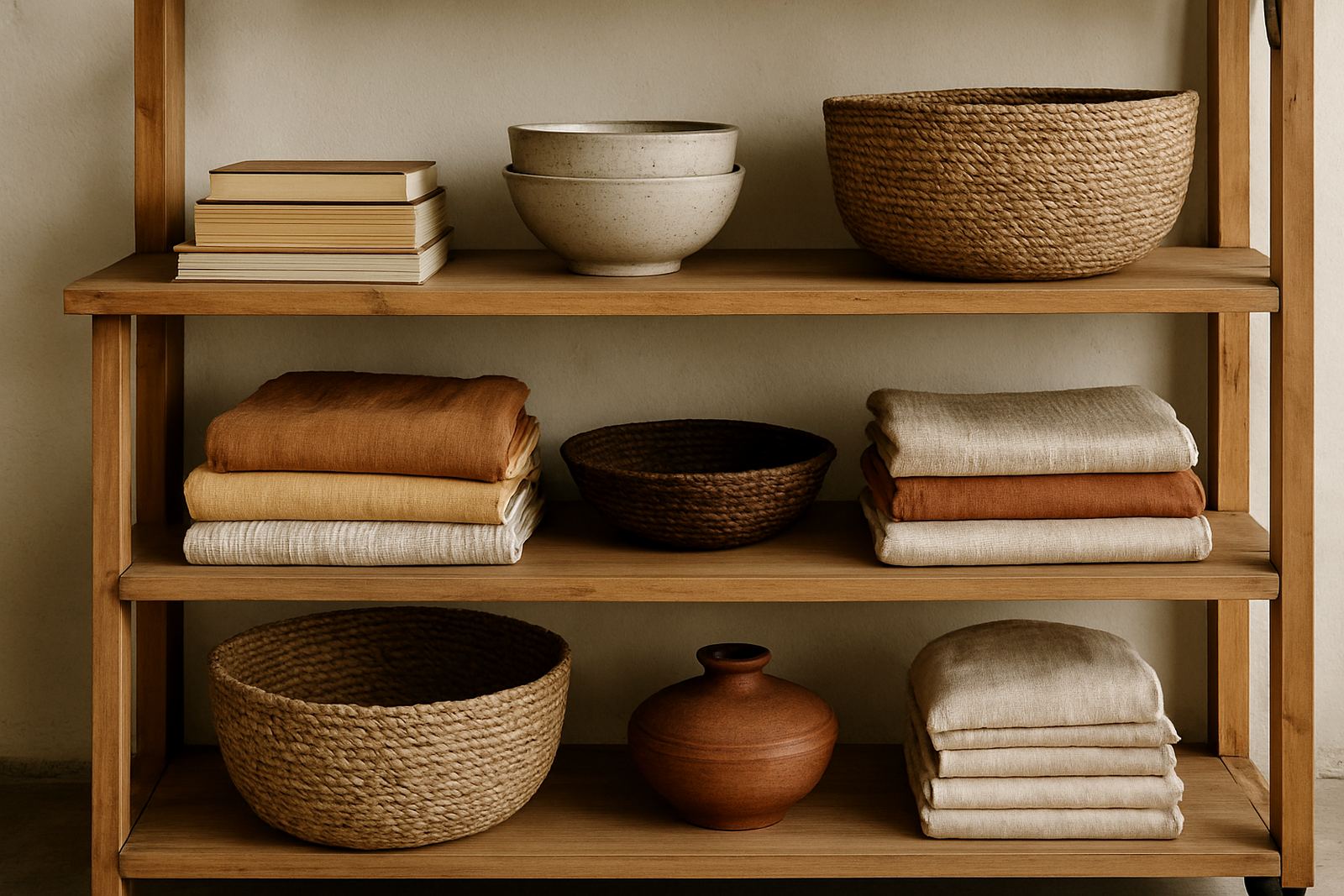
When a shelf starts feeling heavy, it is usually because everything is competing for attention. The easiest fix is to choose one lead material, then let the other pieces support it. A woven basket can anchor a shelf run, or a pair of hand-thrown ceramics can do the same. From there, add smaller objects that repeat a colour, shape or texture already in the room.
This works well in South African homes where shelves often have to do more than one job. In a Johannesburg flat, for example, a living area might need storage, display and a place for family books all at once. If you begin with a stronger base piece, the rest of the shelf has room to breathe, and you do not need to fill every gap.
- Choose one hero item per shelf or bay.
- Repeat one colour in at least two places.
- Mix smooth surfaces with woven or stitched texture.
- Leave some open space so the eye can rest.
Use Baskets to Hide the Things You Need Every Day
Baskets are useful because they let a shelf carry practical items without showing every label and cable. They also soften hard shelving, which is helpful in modern apartments and office spaces with metal or painted units. A lidded basket can hold spare chargers, paperwork or children's bits and pieces, while a shallow open basket can keep magazines or folded napkins close at hand.
For coastal homes in Cape Town or Gqeberha, woven pieces also bring warmth into rooms that can feel cool and bright for much of the year. In humid Durban homes, choose well made baskets with enough structure so they do not sag. If you are styling a hospitality shelf or reception area, baskets can hold brochures, guest information or amenity stock and still look tidy.
- Keep baskets to one material family for a calmer look.
- Mix closed baskets with open trays for variety.
- Use basket height to break up a row of books or ceramics.
- Place heavier items lower down for better balance.
Treat Books as Colour Blocks, Not Just Reading Matter
Books can do more than fill space. On a shelf they act as colour blocks, height markers and visual pauses between other objects. Stack some horizontally and stand others vertically. A short stack can lift a small ceramic bowl or candle, while a vertical row can frame a basket or sculpture.
If you want the shelves to look more considered, group books by cover tone or spine weight rather than by size only. A pale set beside a darker woven piece creates contrast. If the room is already busy, choose a quieter mix and keep the book piles low. This is especially useful in multi use rooms, where the shelves need to support work, family life and entertaining at the same time.
- Use one stack as a pedestal for a ceramic piece.
- Turn some books spine-in if the shelf needs a softer look.
- Keep taller books at the ends of a section.
- Do not crowd books right up against the shelf edge.
Let Ceramics Bring Height, Shape and a Bit of Quiet Drama
Ceramics are often the pieces that make a shelf feel collected rather than assembled. A simple bowl, jug or vessel brings shape without shouting. Because ceramics usually have clear lines and a solid feel, they help separate busier textures like woven grass, printed cloth or patterned book jackets.
For a strong shelf combination, place ceramic pieces where light can catch the glaze or surface. A matte object beside a glazed one creates enough change to keep the eye moving. If you are working with a narrow shelf, use one taller vessel and one low bowl instead of several small pieces. That gives the arrangement a cleaner profile and leaves space for the items around it.
In a Sandton apartment or a Pretoria townhouse, this approach can also help with formal living areas where the shelves need to feel neat for guests but still personal. One or two artisan pieces can change the whole rhythm of the unit without making it feel staged.
- Use odd numbers when grouping ceramic pieces.
- Vary finish, such as matte with glaze.
- Pair a vessel with a book stack for height.
- Keep breakable pieces away from the front edge on busy shelves.
Bring in Textiles to Soften Hard Edges
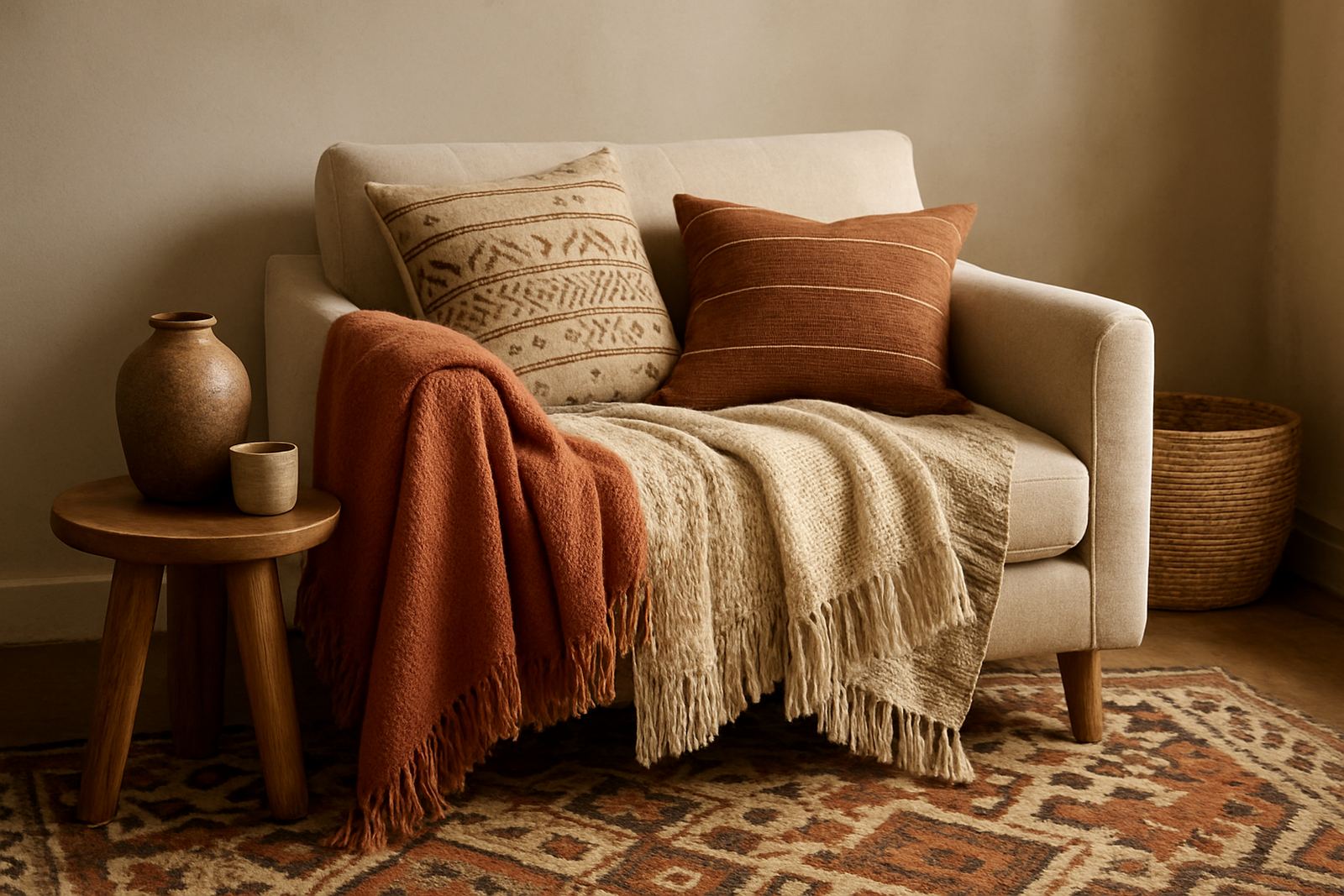
Textiles are the easiest way to stop a shelf from feeling too severe. A folded cloth, runner or small draped piece can soften the straight lines of wood, metal and glass. It also helps introduce colour without needing another large object. If your shelves are in a dining area or entrance, a textile can tie the display back to the rest of the room in a subtle way.
Use textiles carefully, though. One folded piece is often enough. Too much fabric can make the arrangement look fussy, and on open shelves it can collect dust quickly. In homes affected by load-shedding, shelves near rechargeable lamps or power units should stay clear enough for easy access, so keep any draped fabric well away from heat or cords. Small practical choices make the difference between attractive and annoying.
- Fold textiles neatly instead of bunching them.
- Let one colour repeat in a cushion, throw or rug nearby.
- Keep textiles out of reach of candles and heat sources.
- Use them to soften the top or bottom shelf first.
A Maboneng Shelf Example That Works for Mixed Use Spaces
In a Maboneng apartment, a shelf combination can need to do a lot. Maybe it sits in a lounge that opens into a small work corner, or near a dining table that also serves as a homework surface. A balanced combination might start with two woven baskets on the lower shelves, a vertical row of books in the middle, and one ceramic vessel with a folded textile on the upper shelf. The result is tidy but not stiff.
That kind of arrangement also works when you need to prepare for visitors without moving everything out of sight. If you are expecting guests from out of town, or setting up a short-term let, the shelves can carry useful items and still read as part of the decor. The key is to keep the groupings intentional. If every shelf has one clear job, the whole piece feels calmer.
A useful rule is to step back after each shelf and check three things: shape, colour and spacing. If one of those is missing, add or remove an item before moving on. The best combinations usually need less than you first think, which is why they feel collected instead of crowded.
Editing the Shelf When It Starts to Feel Too Full
Shelves change over time. Books come and go, baskets fill up, and small items tend to multiply. When that happens, the fix is usually an edit rather than a full rearrangement. Remove one object from each shelf, then see what the remaining pieces are doing. Often the display improves straight away.
If the shelf is in a shop, guest area or shared home, keep the objects easy to lift and clean around. Leave enough space to dust the top of books and the rims of ceramics. On open shelving, practical upkeep matters just as much as the look. A display that can be maintained is one that will stay appealing for longer. And if a shelf still feels busy after the edit, reduce the number of materials, not just the number of objects.
- Take one item away before adding anything new.
- Keep a spare basket nearby for temporary overflow.
- Refresh seasonal pieces instead of changing everything.
- Use empty space as part of the design, not a mistake.
When the right mix is found, a shelf stops looking like storage and starts looking like a quiet, useful composition. That is the balance worth aiming for.