Start with one textile as the anchor
If a room feels flat, begin with one piece that sets the tone before you add anything else. A runner across a dining table, a throw over a sofa arm, or two cushions on a plain chair can give you a clear starting point. Once that anchor is in place, the rest of the textiles can repeat one or two colours without everything competing for attention.
In South African homes, especially open-plan spaces, this matters because one area often needs to connect to the next. A living room in Maboneng might sit beside a dining nook and a small reading corner, so the textiles should link those zones rather than crowd them. Think in threes: one base colour, one secondary shade and one small accent. That is usually enough.
- Choose one dominant textile first, not three at once.
- Repeat a colour already found in a rug, artwork or scatter cushion.
- Keep the base shade calm if the room gets strong sun during the day.
Mix texture before you mix more colour
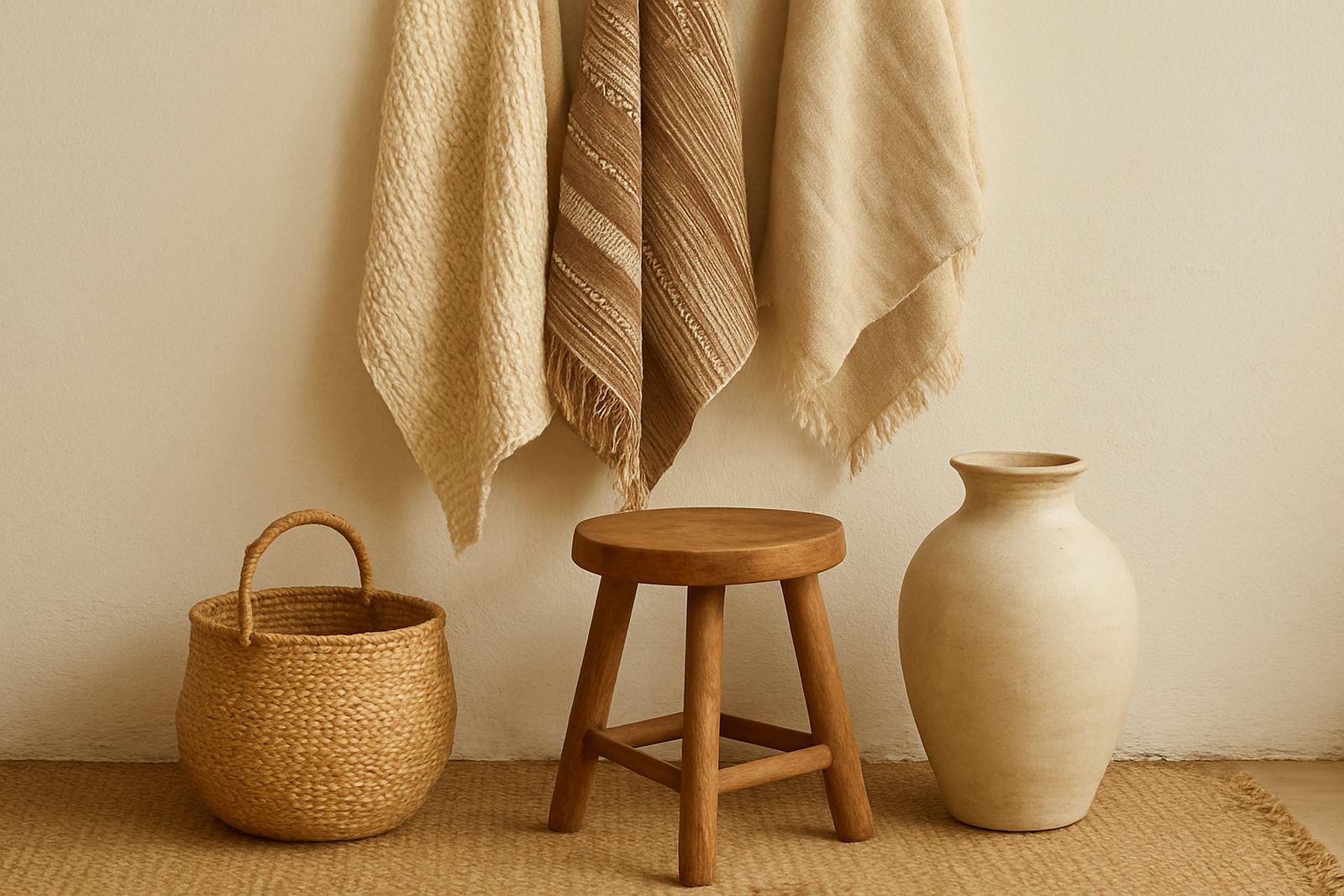
When a room needs warmth, texture does much of the work. A handwoven cotton throw, a nubby linen cushion and a smooth ceramic object nearby can create interest without adding visual weight. Texture also helps in practical ways. In winter, layered fabrics soften hard surfaces. In summer, lighter weaves keep a room airy and stop it from feeling overdone.
Coastal humidity in places like Durban and Gqeberha can affect how textiles feel and age, so breathable natural fibres are a better choice than anything too synthetic for long-term use. If you are curating for a guesthouse or apartment, choose covers that are easy to remove and wash. That saves time, and it keeps the room looking cared for.
- Use one smooth texture to balance two more tactile pieces.
- In humid areas, favour cotton, linen and other breathable weaves.
- For high-use rooms, select covers that can be cleaned without fuss.
Keep cushions low in number but strong in shape
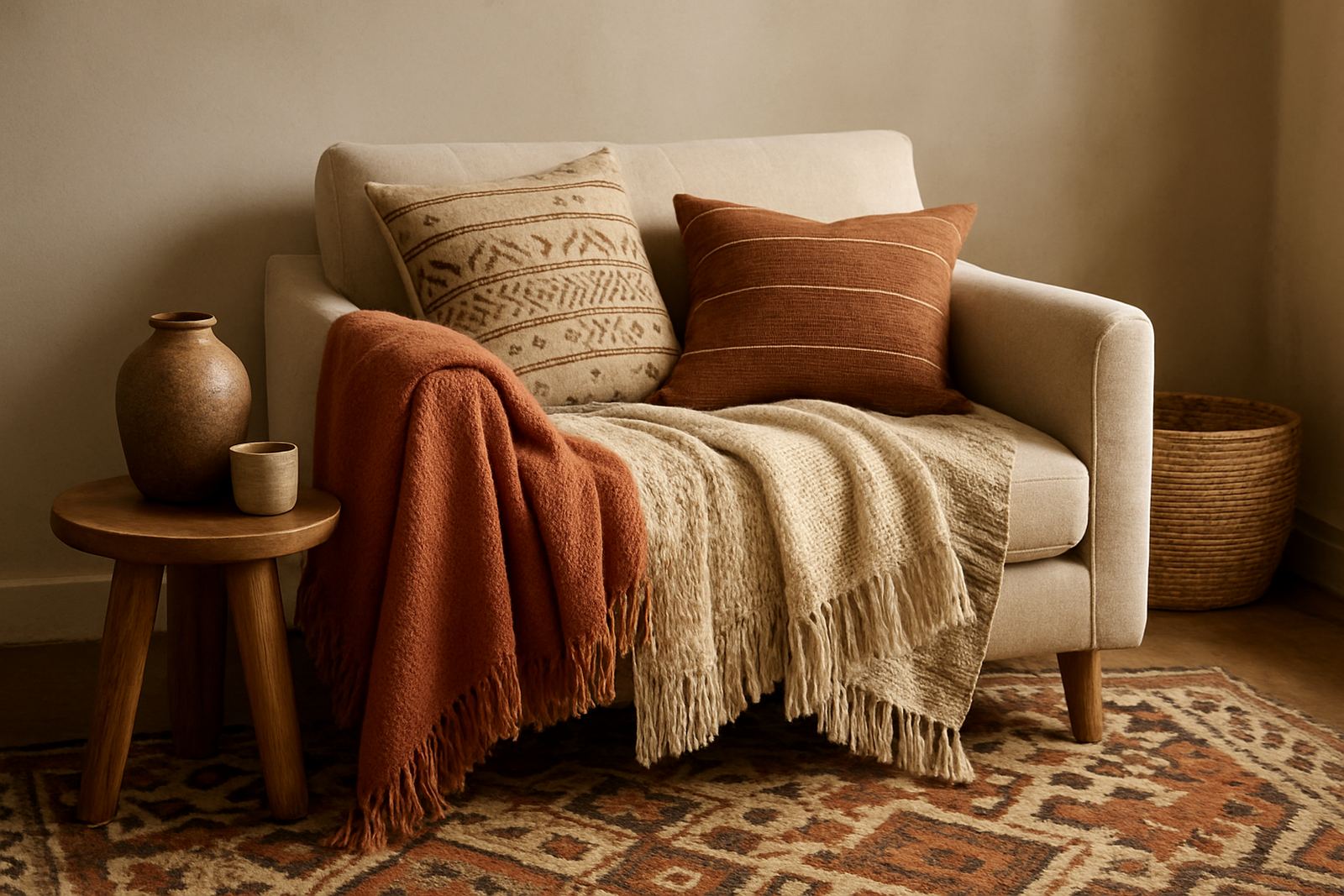
Cushions are often where people overdo it. Too many, and the sofa becomes hard to use. Too few, and the room can feel bare. A better rule is to work with a small number of cushions in varied sizes. One large square, one smaller lumbar and one occasional round cushion can be enough for a standard sofa.
Shape matters as much as pattern. A rectangular cushion can sharpen a very soft seating group, while a round form can break up a boxy layout. If the upholstery is already patterned, keep the cushions simple. If the sofa is plain, then one patterned piece and two solid colours will usually do the job. It is a small detail, but it changes the whole room.
- Use odd numbers for a more relaxed look.
- Vary size and shape rather than repeating the same cushion four times.
- If the sofa is patterned, let the cushions be quieter.
Use throws to soften, not hide, the furniture
A throw should look useful, not stuffed away. Folded once over the back of a sofa or draped across the end of a bed, it adds softness and gives the eye a place to rest. Avoid covering too much of the furniture, because then the textile starts to hide the shape of the piece underneath.
For Johannesburg homes where evenings can cool down quickly and load-shedding can make interiors feel colder, a throw earns its keep. The best ones are substantial enough to use, but not so thick that they dominate the room. If the colour palette is already busy, choose a throw in a single tone that ties the group together. If the room is plain, a subtle stripe or woven detail can add interest without shouting.
- Fold throws neatly on the back or arm, rather than covering the whole seat.
- Match the weight of the throw to the season and room temperature.
- Choose one quiet detail, such as a border or weave, instead of a loud pattern.
Runners work best when they guide the eye
Runners are often overlooked, yet they are one of the easiest ways to layer textiles in a controlled way. On a dining table, a runner can define the centre line and make a table feel finished without adding heavy linen on every surface. On a console or sideboard, it creates a clear base for ceramics, candles or a tray of objects.
For hospitality settings, runners are especially useful because they signal care without making the room fussy. In Pretoria or Sandton, where many homes have cleaner modern lines, a runner can bring in warmth while keeping the furniture visible. Choose a length that leaves enough surface around the edges. If it hangs too far, the room begins to look crowded.
- Leave the furniture edges visible on both sides of the runner.
- Use runners to define dining, console or entrance surfaces.
- Pair with simple tableware or objects so the composition stays light.
A Maboneng example: layering for a small apartment
A compact apartment in Maboneng needs textiles that do more than decorate. They need to mark zones, soften sound and make the room feel finished without blocking movement. In a one-bedroom layout, a neutral sofa can take two cushions in a muted earth tone and one textured accent. A light throw over the back adds comfort for cool evenings, while a narrow runner on a small dining table keeps the eating area distinct from the lounge.
That same approach works when you are preparing for guests or setting up a short-let. Keep the palette close to the building materials around you. If the floors are concrete or pale tile, warm fibres help. If the room already has strong artwork, keep the textiles calm so there is balance. The goal is not to fill every corner, it is to give each surface a reason to exist.
- Use textiles to separate zones in a small space.
- Let concrete, timber or tile inform the colour choice.
- Keep pathways clear so the room still feels open.