
Why ceramics fail in transit, even when the box looks fine
Most breakages happen because the item shifts inside the parcel, not because the outer carton is poor. A mug with a neat box around it can still chip if it has space to rattle, or if the base takes a knock from below during loading. Glaze does not protect the body of the piece from impact, so the real work happens inside the carton.
In Johannesburg, parcels can move from a workshop floor to a courier cage, then into a depot, then onto a van for final delivery. That means repeated handling, stacking and short drops. For ceramic ware, the risk rises when a carton is underfilled, overfilled, or packed with loose filler that settles during transport. Weight matters too. A heavy platter needs more support than a small bowl, and handles, lids and spouts need extra attention.
Start with the piece, not the box
Good packing begins by checking the shape, finish and weak points of the item. A ceramic vase with a narrow neck needs different support from a flat serving dish. If a piece has a lid, separate the lid from the body and wrap each one on its own. If it has a handle or fine lip, protect that point first because it is usually the first part to take strain.
- Wrap each piece individually with soft paper, then bubble wrap or corrugated wrap.
- Use corner protection on square plates and trays.
- Separate pieces so they do not touch, even through wrapping.
- Keep lids, saucers and inserts in clearly marked inner packs.
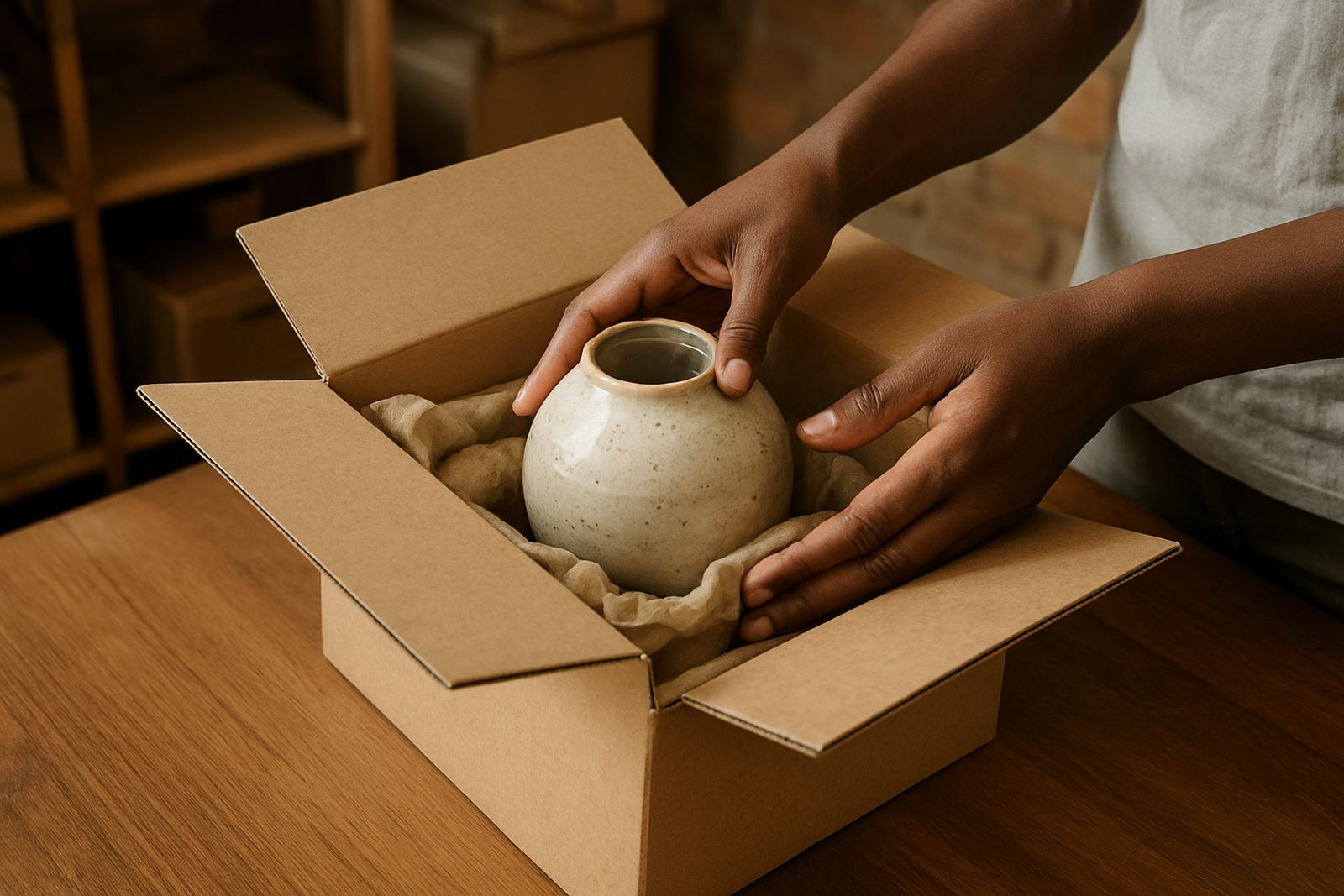
For fragile ceramics, the aim is not just cushioning. It is to stop movement in all directions. That means top, bottom and side support, with no hollow spaces left where the item can slide.
Internal bracing keeps the parcel steady
Internal bracing is the part that many shippers skip, yet it makes the biggest difference. A parcel should hold the item in place so the outer carton takes the handling, while the ceramic stays still inside. Double boxing helps with this because the inner box can be fixed in place with padding on all sides, leaving a buffer between the product and the courier carton.
For a mixed order with ceramics and textile items, do not let soft goods act as the only buffer. Fabric can compress in transit, which leaves the ceramic exposed. Use foam sheets, kraft paper, cardboard dividers or moulded inserts to keep the load firm. If a box is large, fill voids properly so there is no empty pocket for movement. A parcel that feels solid in your hands is usually safer on the road.
- Use a snug inner carton for the item itself.
- Pack the inner carton inside a stronger outer carton.
- Block movement with paper, foam or folded board, not loose scraps.
- Shake test the box gently before sealing. If it moves, repack it.
Labelling that helps couriers handle the box properly
Careful labelling will not prevent every incident, but it does improve the odds of correct handling. The carton should show which side must stay up, where the opening edge is, and whether the contents are fragile. Clear direction markers are especially useful when a box is moving between branches, depots and third party drivers who do not know what is inside.
For ceramics, simple labels work best. Too many stickers can be ignored, but a neat label set gives the receiver a fair chance of spotting problems before they open the parcel. Include the delivery address, collection details and any reference number required by the courier. If the parcel contains more than one ceramic item, mark the cartons in sequence so the receiver knows whether they have received the full order.
- Mark the top side clearly on at least two faces of the carton.
- Use a fragile notice on the outer box, but do not rely on it alone.
- Write the order number and item count on each parcel.
- Keep handwritten notes legible and sealed under clear tape where needed.
A local example from Maboneng to Cape Town
A common route out of Maboneng is a ceramic gift set heading to Cape Town for a hotel room refresh or a retail buyer. The journey may include collection in Johannesburg, sorting at a depot, road transfer to the Western Cape and then final drop-off in a building with security protocols. That is a lot of touchpoints for one box.
In that case, the safest method is to pack each cup or bowl individually, keep the set inside one rigid inner carton and then add a second layer of protection around it. If the parcel is going to a property in a busy CBD, the receiving point should be clear about access times, loading bay rules and who will sign for it. The box should be easy to identify and simple to inspect, because rushed handovers are where damage gets missed.
For coastal destinations such as Cape Town, Durban or Gqeberha, the outer pack should also protect against damp conditions. A plastic outer bag inside the carton can help in wet weather, especially when trucks are being loaded in rain or humidity. Moisture does not usually crack the ceramic, but it can weaken cardboard and labels if the box is left on a wet surface.
When export orders need a stricter packing plan
Export parcels need the same basic care, but with more attention to documentation and carton strength. International couriers often place heavier stacks on top of boxes, so the outer carton must be strong enough to hold its shape. Internal bracing becomes even more important because long transit times mean more loading cycles and more temperature change.
It helps to prepare export packing with these points in mind:
- Use double wall cartons for heavier or high value ceramics.
- Keep a moisture barrier inside the pack where needed.
- Use provenance cards and item notes so the receiver understands the contents.
- Confirm customs descriptions and quantity details before dispatch.
- Plan for replacement stock or spares if a set forms part of a commercial order.
Good export packing is calm and methodical. The goal is not to make the box look impressive, but to make it survive the full route from collection point to recipient with as little handling risk as possible.
The practical rule: box for movement, not for storage
Ceramics are safer when the carton is built for transport, not just for shelf presentation. A beautiful outer wrap can still fail if the item is not secured inside. Stable packing, internal bracing and careful labelling lower the risk of breakage because they address the real causes of damage: motion, pressure and confusion during handling.
For buyers in South Africa and abroad, that usually means a little more prep time before dispatch and a lot less trouble after delivery. If the order is going to Sandton, Pretoria, Midrand or Soweto, the method stays the same. If it is going across the country or into another country, the same rules still apply. The parcel must stay still, stay dry and stay clearly identified from start to finish.