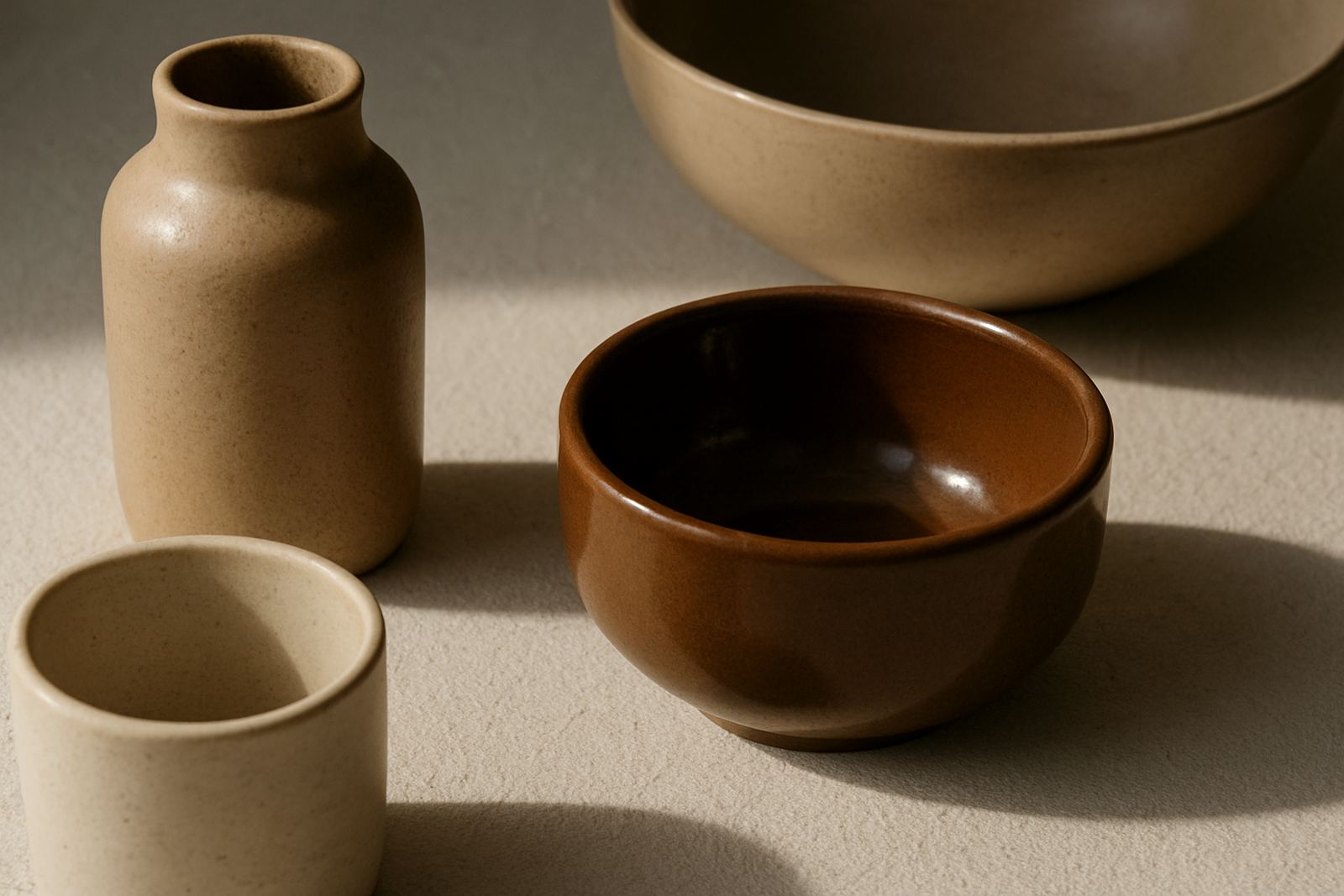
What the surface says before the pot does
When you pick up a ceramic bowl, mug or vase, the first clues are usually on the surface. A good maker leaves visible control, even when the work is handmade. You may see soft throwing lines, clean trimming marks, or a slightly uneven glaze edge. These are not flaws by default, they are signs of the making process.
In South African homes, especially where pieces move between open shelves, braai areas and kitchen counters, it helps to read ceramics with both the eye and the hand. A well made piece should feel balanced, sit steady on a flat surface and show enough restraint in the finish for daily use. If the walls are too thin, the foot ring uneven or the rim rough in a way that catches the finger, the piece may be more decorative than practical.
Look closely at where the clay body and glaze meet. Does the glaze pool in the lower parts as expected, or does it look rushed and patchy? Does the foot ring feel neat and considered? These small details often tell you more than a label ever will.
Glaze variation: accident, intention or bad control
Glaze is where many buyers get confused. Slight movement in colour, tiny specks and pooled edges can all be part of the appeal of handmade ceramics. In fact, controlled variation often shows that the maker understands firing conditions and surface chemistry. What you want to avoid is accidental inconsistency that looks like poor preparation or uneven kiln loading.
A little variation is normal because every kiln load behaves differently. In Johannesburg, where many makers work around load-shedding schedules, firings may be planned carefully and sometimes packed to make the best use of available power. That does not reduce quality. It does however mean buyers should know how to separate deliberate effect from a surface that has been under-fired, over-fired or left unbalanced.
- Intentional variation usually repeats in a considered way across a series.
- Bad control often shows as patchy coverage, crawling or sharp colour breaks that look unintended.
- Glossy glazes should still show depth, not just a plastic-like shine.
- Matte surfaces should feel soft but not chalky or dusty under the fingers.
If you are buying for hospitality, or for a home that gets heavy use, ask whether the finish is food-safe and suitable for washing by hand. A strong looking glaze is useful, but it must also cope with daily handling and hot water.
Reading form in mugs, bowls and serving pieces
Form matters just as much as colour. The profile of a mug affects how the handle sits in the hand. The depth of a bowl changes how the glaze settles and how comfortable it is to serve soup, salad or pap. Serving platters need a calm, stable shape so they do not rock on a table or buffet counter.
Good ceramic form is not only about appearance, it is about proportion. A wide bowl with a thick lip may look generous, but it can feel heavy after repeated use. A tall mug with a narrow base may be elegant yet awkward under a crowded office kettle or on a busy breakfast table. You want shapes that make sense for the way people actually eat and serve food.
- Check the balance point by lifting the piece with one hand.
- Set it on a flat counter to see whether it wobbles.
- Run a finger around the rim for chips, sharp spots or rough joins.
- Look at the base to see whether it has been trimmed neatly and cleaned properly.
In Cape Town homes, where sea air can affect storage and cabinets sometimes stay damp, a well finished ceramic piece is easier to care for if it dries quickly and has no hidden pockets that trap moisture. That same thinking applies in Durban, where humidity can make poorly finished ware feel clammy long after washing.
Surface marks that show skill, not shortcuts
Not every mark is a problem. In handmade ceramics, tool marks, slight ridges and brush traces can all be part of the maker’s voice. The question is whether the mark looks deliberate and well resolved. A skilled maker knows where to leave evidence of the hand and where to clean the surface back for comfort.
For example, a carved line on a serving bowl should be crisp and even, not fuzzy or torn. A brushed slip surface should have rhythm, not streaks that suggest the coat was too thin or applied unevenly. If there is texture, it should support the form and use of the piece. Texture on a water jug may help grip, while texture inside a plate may make cleaning harder than it should be.
Local buyers often ask how to tell the difference between handcrafted character and unfinished work. A practical rule is simple: if the mark adds meaning, grip or visual balance it is probably intentional. If it distracts from use or feels rough in the wrong place, it may point to haste.
What to check before ordering for homes, gifts or hospitality
When you are buying one piece or placing a larger order, the surface should be checked alongside the practical details. This matters for gift packing, sample loans and retail wholesale orders because the same piece may need to travel from Maboneng to Pretoria, then on to Cape Town or Gqeberha. Good packing can protect ceramics, but it cannot fix weak workmanship.
Ask for clear photographs of each side, including the base and rim. If the order is for a lodge, restaurant or guesthouse, request a mix of views so you can see whether the range is consistent. Small differences are normal in handmade work, but the proportions should still feel related. A batch of bowls should sit together as a family, not look like separate experiments.
- Confirm whether the pieces are food-safe and suitable for serving hot food.
- Ask if the glaze varies from batch to batch, especially for repeated orders.
- Check dimensions in metres or centimetres where relevant for shelving and styling plans.
- Request export packing if the order is leaving South Africa, because fragile ceramics need tighter wrapping and clearer labelling.
For collection consultations in Johannesburg, it helps to see the pieces in natural light. A glaze that looks flat under indoor LEDs may show better depth near a window, while a pale clay body can shift slightly in tone beside timber, linen or dark metal shelving.
A Maboneng example: reading a bowl with purpose
Imagine a shallow serving bowl selected for a Maboneng townhouse and later packed for a client in Durban. The bowl has a speckled clay body, a satin glaze and a hand trimmed foot. At first glance it looks simple, but the surface tells a fuller story. The glaze pools slightly at the rim, which suggests the maker controlled thickness carefully. The foot is neat and lifted enough to keep the underside dry after washing. The rim is soft in the hand, so it will suit salad, fruit or bread service.
That same bowl also shows one slight variation in colour at the base, which is normal for a kiln fired piece. It is not a defect if the surface remains even and the form steady. In fact, those small shifts often make the piece more interesting in a real home, where ceramics live next to glass, wood and fabric rather than in a perfect display case. The key is whether the variation feels considered.
This is why surface reading matters. It helps buyers choose well, whether they are fitting out a restaurant in Sandton, putting together housewarming gifts in Soweto, or selecting statement pieces for an export parcel. The surface does not only decorate the object, it explains it.