
Why mudcloth still works in a modern room
Traditional mudcloth is bold by nature. The geometry has presence, yet the handmade irregularity keeps it human, which is exactly why it still feels relevant in contemporary interiors. In a room with plain plaster walls, smooth paint finishes and low profile furniture, mudcloth adds character without asking for a full makeover.
The trick is to treat it as an accent with structure. A single patterned throw, cushion cover or framed textile can do more than several competing prints. For South African homes where one space often needs to work hard as lounge, family room and entertaining area, that kind of restraint helps the room feel composed.
- Choose one main mudcloth piece per room, then let the rest of the scheme settle around it.
- Use quieter colours nearby, such as sand, charcoal, clay, olive or off-white.
- Keep the shapes around it simple, with straight lines and plain surfaces.
Pairing pattern with calmer forms and finishes
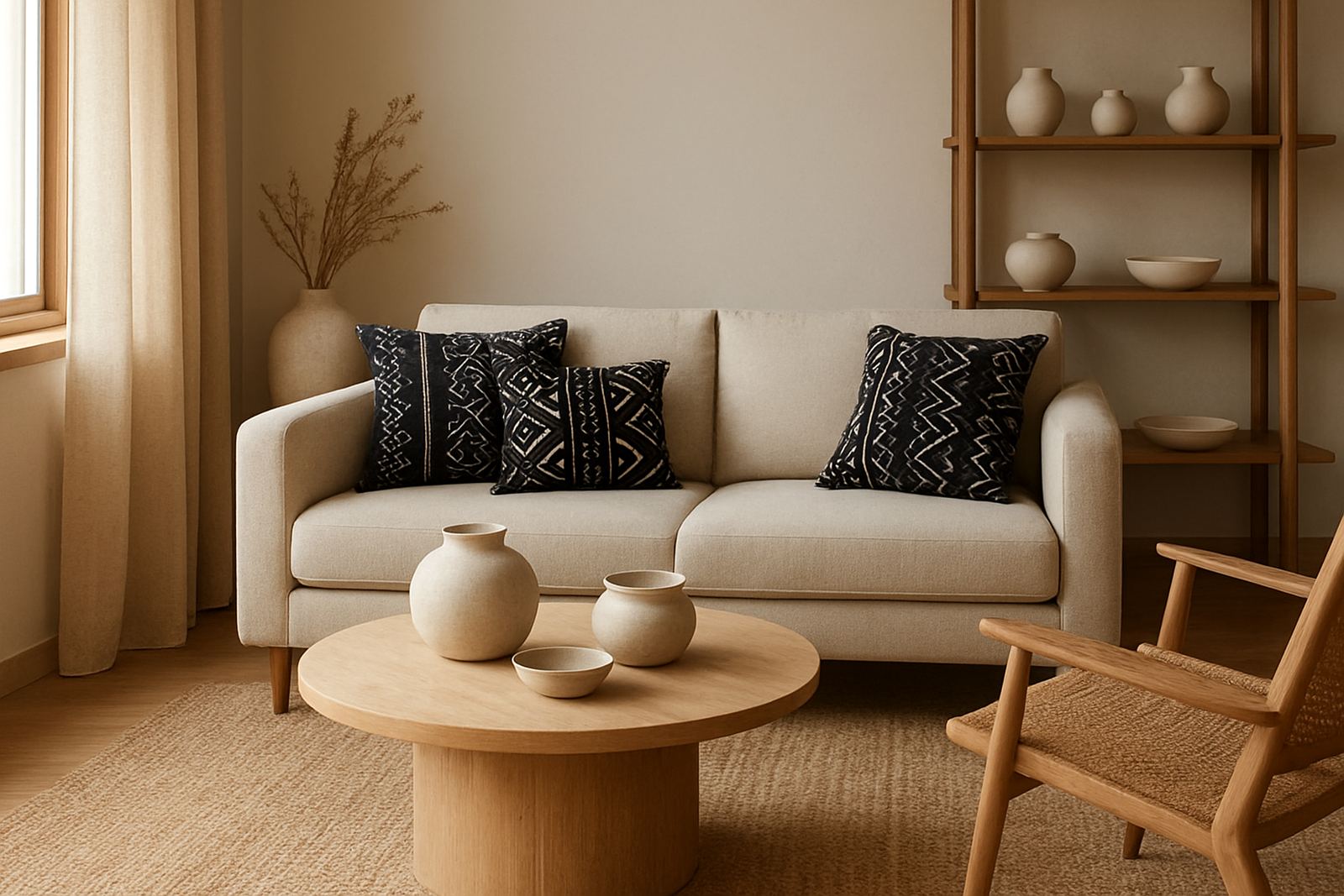
Graphic cloth reads best when the furniture around it has soft edges or clean detailing. Think plain linen cushions beside a patterned lumbar cushion, or a low timber side table under a framed textile. If the room already has busy wallpaper, heavy scatter cushions and dark glossy furniture, mudcloth can become too much.
A better approach is to let texture do some of the work. Raw wood, matte ceramics, brushed metal and woven baskets all hold their own beside mudcloth. The result is a room that feels collected rather than staged, and that matters in homes where natural light changes through the day. In Johannesburg that light can be bright and dry, while coastal homes in Durban or Gqeberha often need softer textiles to stop a room feeling flat.
- Match bold pattern with matte rather than shiny finishes.
- Use timber, cane, jute or stone to soften the geometry.
- If your flooring is already patterned, keep the textile choice more restrained.
Colour choices that suit South African homes
Mudcloth does not need to be black and white to feel modern. Earth tones can work very well, especially in homes where there is already a lot of warm sunlight. Deep indigo, rust, tobacco, ochre and muted terracotta can be easier to live with than stark contrast, particularly in open plan rooms that connect to kitchens and dining areas.
For apartments in Maboneng or compact homes in Pretoria, a smaller textile in a strong but limited palette can anchor the room without making it feel cramped. In larger homes, a bigger piece or a pair of matching cushions can create a clear visual point. If the room gets harsh afternoon sun, consider where the cloth will sit so the colour does not fade unevenly over time.
- Use one dominant shade, then repeat it in a smaller object such as a vase or lamp shade.
- In coastal areas, favour muted tones that sit well with lighter walls and breezier fabrics.
- In warmer inland homes, deeper colours can help ground pale furniture and painted floors.
Where mudcloth belongs in the room
Mudcloth works best where the eye naturally rests. A sofa, headboard wall, reading chair or hallway bench can all carry the pattern well. As a wall hanging, it adds scale without needing framing. As a cushion, it adds rhythm to an otherwise plain sofa. As a table runner or shelf layer, it can bring pattern into smaller corners that need a lift.
The important part is to keep the placement deliberate. One well chosen textile looks considered. Three different mudcloth items in one view can start to feel cluttered. In homes where there is already artwork, books and family objects on display, a single strong textile helps the room breathe.
- Use mudcloth on one focal surface at a time, not every soft furnishing in the room.
- Place it where there is enough plain wall or plain upholstery around it.
- Keep busy decorative objects away from the same sightline.
Practical care for everyday living
Because mudcloth is often handmade, it deserves a bit of care. Gentle handling keeps the cloth looking good for longer, especially if it is used in a family home or hospitality setting. If the piece is decorative only, rotate it now and then so sunlight does not affect one section more than the rest. For homes dealing with dust from open windows or load shedding routines that mean candles and extra handling, a simple care routine helps protect the fabric.
For hospitality spaces or retail interiors, it is worth thinking about how often the textile will be touched. A framed textile may be better than an uncovered cushion in a high traffic lounge. If you are using mudcloth in a guest room, keep one spare cushion cover or throw on hand for quick swaps between bookings. That makes the room easier to maintain and less likely to show wear too soon.
- Store textiles flat or loosely folded, away from damp areas.
- Keep them out of direct sunlight where possible.
- For shared spaces, choose placements that are easy to clean and simple to replace.
A local example from a Maboneng apartment
In a small Maboneng apartment, a young professional wanted the living area to feel warmer without adding clutter. The room already had a grey sofa, pale walls and a narrow timber coffee table. Instead of introducing several patterned pieces, the scheme used one mudcloth cushion, a plain wool throw and two hand-thrown ceramic pieces on a shelf. The black geometry in the cushion gave the room a clear centre, while the rest of the elements stayed calm.
That same approach would suit a townhouse in Midrand, a family flat in Cape Town or a guest suite in Durban. The lesson is simple: mudcloth does not need to shout to be noticed. With the right balance of colour, shape and placement, it can feel current, grounded and easy to live with.