
Start with the job the basket must do
Before you compare colours or patterns, decide where the basket will be used. A bread basket for a guesthouse breakfast room has different needs from a laundry basket in a humid Cape Town flat or a retail display piece that will be lifted, packed and shipped every week. The first question is simple: must it be decorative, practical or both?
For everyday storage, look for a basket that can handle repeated lifting without sagging at the base. For gifting, the finish matters as much as the size because loose ends and uneven rims can make a present feel unfinished. For hospitality use, the basket should be easy to wipe down and stable on a table or shelf, especially where staff are moving quickly between rooms.
- Storage baskets need a firm base and strong side support.
- Display baskets need good shape and neat finishing on the rim.
- Gift baskets need enough space for wrapping, lining and packing.
- Transport baskets need handles or grips that sit well in the hand.
Check the fibre before you check the pattern
The fibre tells you a lot about how long a basket will last. Natural fibres vary in strength, flexibility and texture, so two baskets that look similar can perform very differently. A tighter, more resilient fibre will usually keep its shape better, while a softer fibre may suit lighter decorative use.
In South Africa, buyers often want baskets that can cope with indoor heat, coastal humidity and the stop-start of load-shedding routines. That means the fibre should not feel brittle, dusty or overly dry. If a basket creaks when gently bent, or sheds too much when handled, it may not be suited to regular use.
- Feel the surface for dryness, splitting or rough patches.
- Check whether the fibres are evenly spaced or show weak areas.
- Lift the basket with one hand to test how it flexes under weight.
- Smell it lightly, a strong damp odour can point to poor drying.
For export packing, fibre choice also matters because baskets may travel through changing temperatures. Well dried material and balanced weaving reduce the risk of warping in transit.
Weave density shows how hard the basket will work
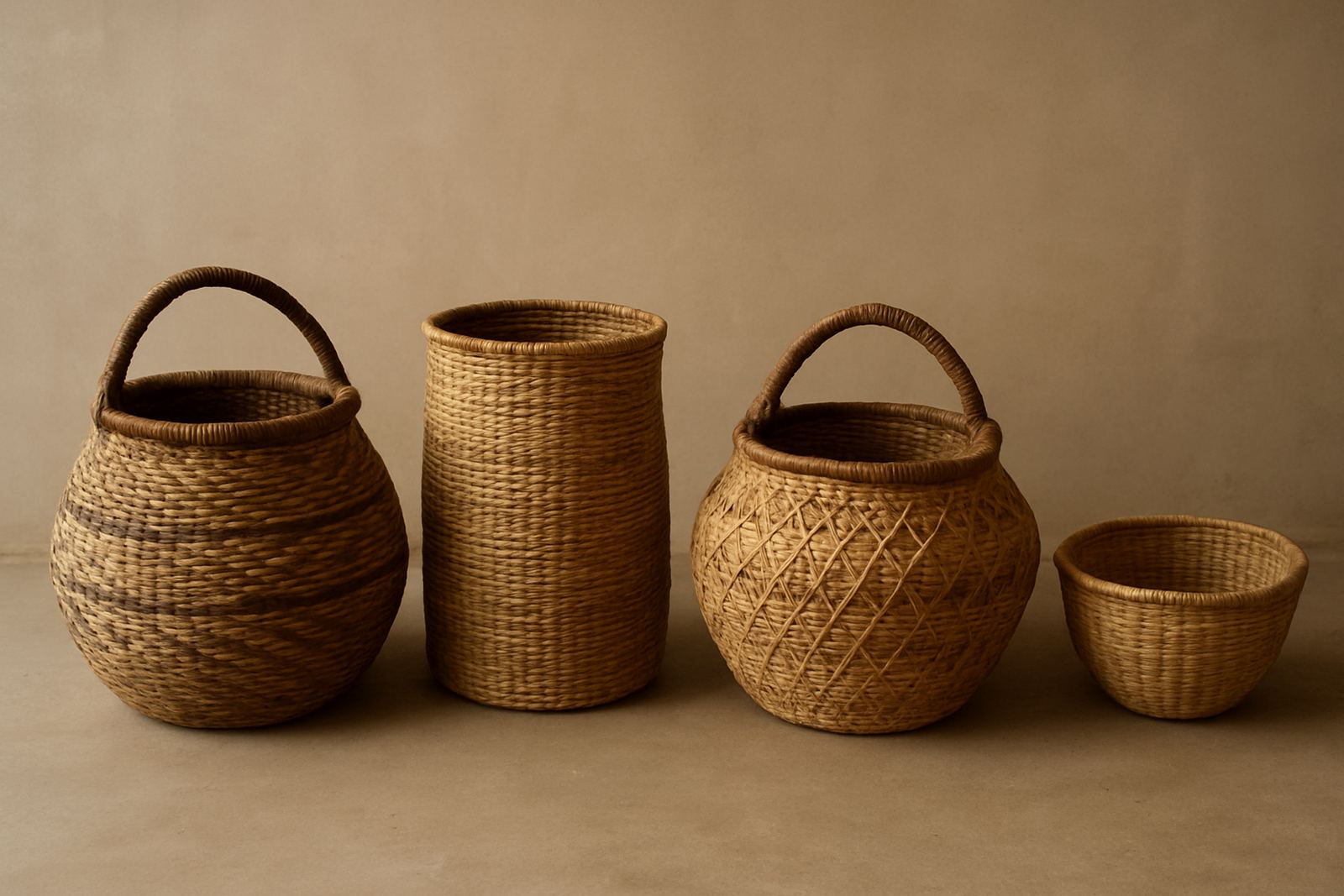
Weave density is one of the clearest signs of quality. A basket with dense, even weaving usually holds its form better and offers more support for contents. Loose weave can be useful for light decorative pieces or fruit, but if the gaps are too wide the basket may snag, lose shape or fail at the edges first.
Run your eye across the body of the basket. You want consistency from base to rim. Look for sections that suddenly become looser, flattened or twisted out of line, because those areas often wear out sooner. A basket that is well woven will feel balanced when you place it on a flat surface, not tilted or wobbly.
- Press the side gently to see if it springs back evenly.
- Inspect the bottom for flatness and symmetry.
- Look along the rim for gaps where threads or strips have loosened.
- Choose tighter weaving for heavier items such as towels or firewood.
Shape stability matters more than a pretty silhouette
A beautiful shape is no use if the basket slumps after a few weeks. Shape stability means the basket keeps its intended form while loaded, moved or stored. Round baskets should sit evenly, square baskets should not twist at the corners, and tall baskets should have enough body to stay upright without leaning.
This is where good making shows itself. The sides should rise evenly from the base and the rim should not dip or wave. If the basket has handles, they must be attached at the same height and feel secure in the hand. In a busy Johannesburg home or a boutique in Pretoria, that kind of balance makes a real difference to daily use.
For retailers and hospitality buyers, it also helps with stacking and shelf presentation. Baskets that hold their shape are easier to display in sets and simpler to re-pack after customer handling.
Finishing details tell you how much care went into it
Finishing is where many buyers either trust the basket or walk away. The ends of the weave should be secured neatly, not poking out in random directions. The rim should feel smooth to the touch, and any handles should be attached with care rather than tied on loosely. Small details matter because they affect comfort, safety and how the basket ages over time.
Check the lining area too if the basket comes with one. A good lining should sit neatly, not bunch up inside the base. If the basket is used for food service or hospitality styling, a tidy finish makes cleaning easier and keeps the overall look professional.
- Look for trimmed ends and covered joins.
- Feel inside the rim for sharp points or splinters.
- Check handle attachment points for even tension.
- Make sure decorative elements are fixed securely, not lightly glued.
A well finished basket usually takes a little more time to make and that shows in how it wears. It should still look tidy after handling, rather than fraying at the first sign of use.
A Johannesburg example: choosing baskets for a mixed-use space
Imagine a small guesthouse in Maboneng that needs baskets for bathrooms, reception styling and breakfast service. The owner wants something handmade, but also practical enough for staff to move every day. In that case, a dense weave and firm base are more important than a very delicate pattern. A medium-sized basket with stable sides can hold rolled towels, while a flatter basket works better for bread or napkins.
If the same guesthouse also sends gift packs to corporate clients in Sandton, the basket must travel well. That means a basket with secure handles, minimal loose fibre and a shape that will not collapse in courier bags. For coastal destinations like Durban or Gqeberha, we would also pay attention to drying and finishing so the basket can handle humidity better.
This is where clear sourcing helps. When you know the intended use, you can match the basket to the job instead of choosing by appearance alone. That saves money and avoids returns.
Ask the right questions before you place an order
Whether you are buying one piece or planning a retail run, a short checklist will help you judge quality. Good questions save time and make sure the basket fits the brief, especially when you are ordering for a hospitality space, a gift programme or export packing.
- What fibre was used, and how was it dried?
- Is the basket intended for storage, display or light use only?
- Can the shape hold weight without sagging?
- Are the handles, rim and base reinforced?
- Will the finish cope with travel and regular handling?
At Creation Africa Foundry, basket selection often sits alongside artisan sourcing, custom curation and courier coordination, because the best choice depends on how the item will be used. A well chosen woven basket should carry its purpose clearly, not just its contents.