
Start with how the room is used, not just the colour
Before choosing a throw, think about the room itself. A family lounge in Midrand where people sit every evening needs a different throw from a spare room in Cape Town used only on weekends. If the throw will be pulled over legs during load-shedding, or used by children on the floor, practicality matters as much as the look.
For a high-use room, choose a medium-weight throw that can handle frequent folding, regular washing and a fair bit of handling. In a quieter formal lounge, you can go lighter and more decorative. The point is to match the throw to the rhythm of the room, not to buy a piece that only works when nobody is actually using it.
- Busy family room: easy-care, medium weight, quick to shake out
- Formal sitting room: lighter weave, neater drape, less daily handling
- Guest room: warm enough for winter, simple enough to launder between stays
- Outdoor stoep or covered patio: colourfast fabric and stronger weave
Warmth depends on fibre, weight and weave
Warmth is not only about thickness. A loosely woven throw can feel cooler than it looks, while a tightly woven cotton or wool blend may hold heat better without adding bulk. For Johannesburg winters, a denser throw is useful in the evenings when rooms cool down fast. In Durban, where humidity stays high for much of the year, lighter layers are often more comfortable and less clammy.
Wool gives proper warmth and a softer, heavier feel, but it needs more care. Cotton is easier to wash and suits everyday use, especially if the throw will be shared by children or pets. Blended fibres can offer a good middle ground if you want warmth without too much weight.
- Lightweight cotton: good for layering and mild weather
- Wool or wool blend: better for cold nights and cooler inland homes
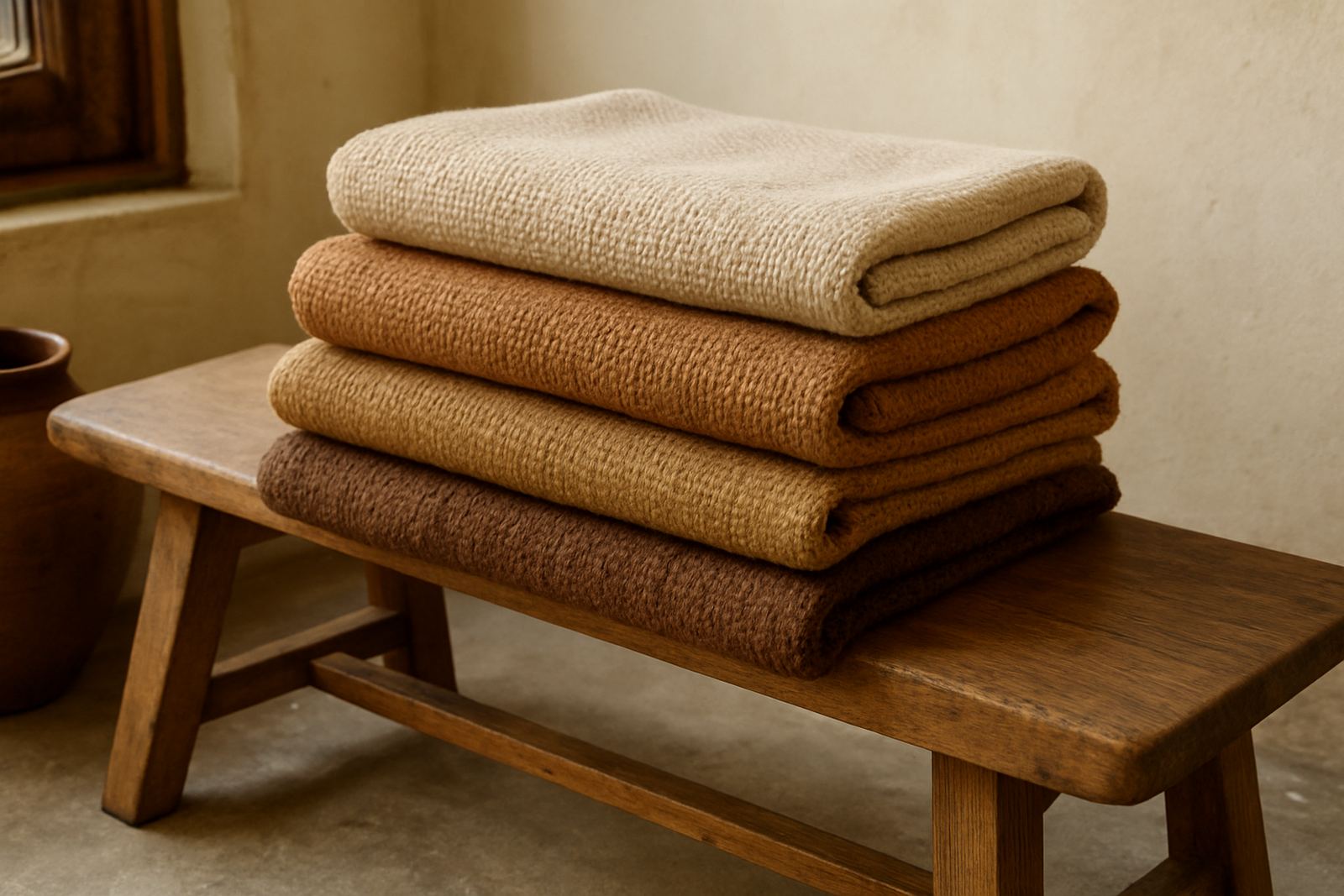
- Textured weave: adds grip and visual interest, but may catch more lint
- Dense knit: warmer and softer, though it can feel heavy on smaller sofas
Drape changes the whole room
A throw with good drape sits naturally over the arm of a chair, the end of a bed, or the back of a sofa. If it folds too stiffly, it can make the room feel busy. If it is too limp, it may look untidy by the end of the day. The right drape gives structure without looking forced.
For a clean, tailored room, choose a throw with enough body to hang in a straight line and fall neatly at the edges. For a more relaxed space, a softer weave can be left with a gentle fold. In a compact apartment, a throw that drapes well also helps keep the room from feeling crowded because it looks orderly even when it is being used every day.
Length matters too. On a single chair, a shorter throw can look neat. On a queen bed, you may want a longer piece that reaches over the mattress and still leaves some overhang. If you are buying for retail display or hospitality styling, a consistent fold and finish makes the whole room feel considered.
Washability is worth more than a perfect first impression
Many people choose a throw for its colour, then discover it is awkward to clean. That is where trouble starts. A throw in a home with children, pets, or guests should be easy to wash and dry. In coastal areas, where moisture hangs around longer, fabric that dries slowly can keep a musty smell if it is not aired properly.
Always ask how the throw should be cleaned before you commit. If a throw needs specialist care, it may be fine for a display room but not for everyday use. For most South African homes, machine-washable options are the safest choice. It saves time, money and the headache of replacing a piece too soon.
- Check if the throw can be machine washed at home
- Ask whether it can air dry without losing shape
- Confirm if colour will run on the first wash
- Look for edges that are finished well so they do not fray early
Choose by room type and season
Throws work best when they change with the season. In winter, you may want something heavier on the main sofa and bed. In summer, a lighter layer is often enough, especially in Pretoria or Durban where the evenings stay warm. A seasonal approach also helps if your rooms get strong afternoon sun, since darker fabrics can fade over time.
Think about the light in the room too. In a north-facing room, textured natural fibres can soften bright light. In a darker room, a throw in a warm tone can make the space feel less cold. If the room is used for reading, napping or watching television, choose a throw that can be pulled around the shoulders without slipping off too easily.
For hospitality spaces, it helps to standardise sizes and colours across rooms. That makes replacement easier and keeps the setup tidy when turnovers are fast. For retail and wholesale planning, a small range of dependable shades often sells better than a wide mix of colours that only suit one kind of room.
A simple local example from a Johannesburg apartment
Take a two-bedroom apartment in Maboneng with a lounge that gets afternoon sun and a bedroom that stays cooler at night. The owner wants a throw for the couch and another for the bed. In the lounge, a medium cotton throw works well because it is light enough for daily use and easy to wash after a busy week. In the bedroom, a denser weave or wool blend gives better warmth without needing a heavy duvet every night.
That same home may also need throws that can be folded neatly for guests, then used again without fuss. If the apartment is rented out, the throw should cope with repeated washing and still keep its shape. Small details matter here: a throw that looks good for one photo but pills after two washes is not a good buy.
When selecting room throws for homes, guest houses or curated interiors, it helps to think in terms of use, not just style. The right piece should feel right in the hand, suit the room size and hold up to real life. That is the practical test, and it is the one that saves money in the end.