Start With What the Entryway Must Do
Before choosing décor, look at how the space is used. In many South African homes and guest spaces, the entryway has to cope with school bags, umbrellas, dog leads, parcels and the daily stop for keys. If that area is cluttered, the whole home feels unsettled. Good curation begins with function, then adds warmth.
The best entryways handle the real rhythm of life. A small apartment in Maboneng may only have a narrow wall and a tiled floor, while a family home in Pretoria might have a fuller foyer with more room for a bench or console. Either way, the same rule applies: give each item a place, and do not crowd the first view.
Choose One Strong Piece to Set the Tone
Every entryway benefits from one object that carries the room. That might be a woven wall hanging, a hand-thrown bowl for keys, a carved stool, or a ceramic vessel with a strong silhouette. One piece is enough when it has presence and good craftsmanship. Too many statement pieces cancel each other out.
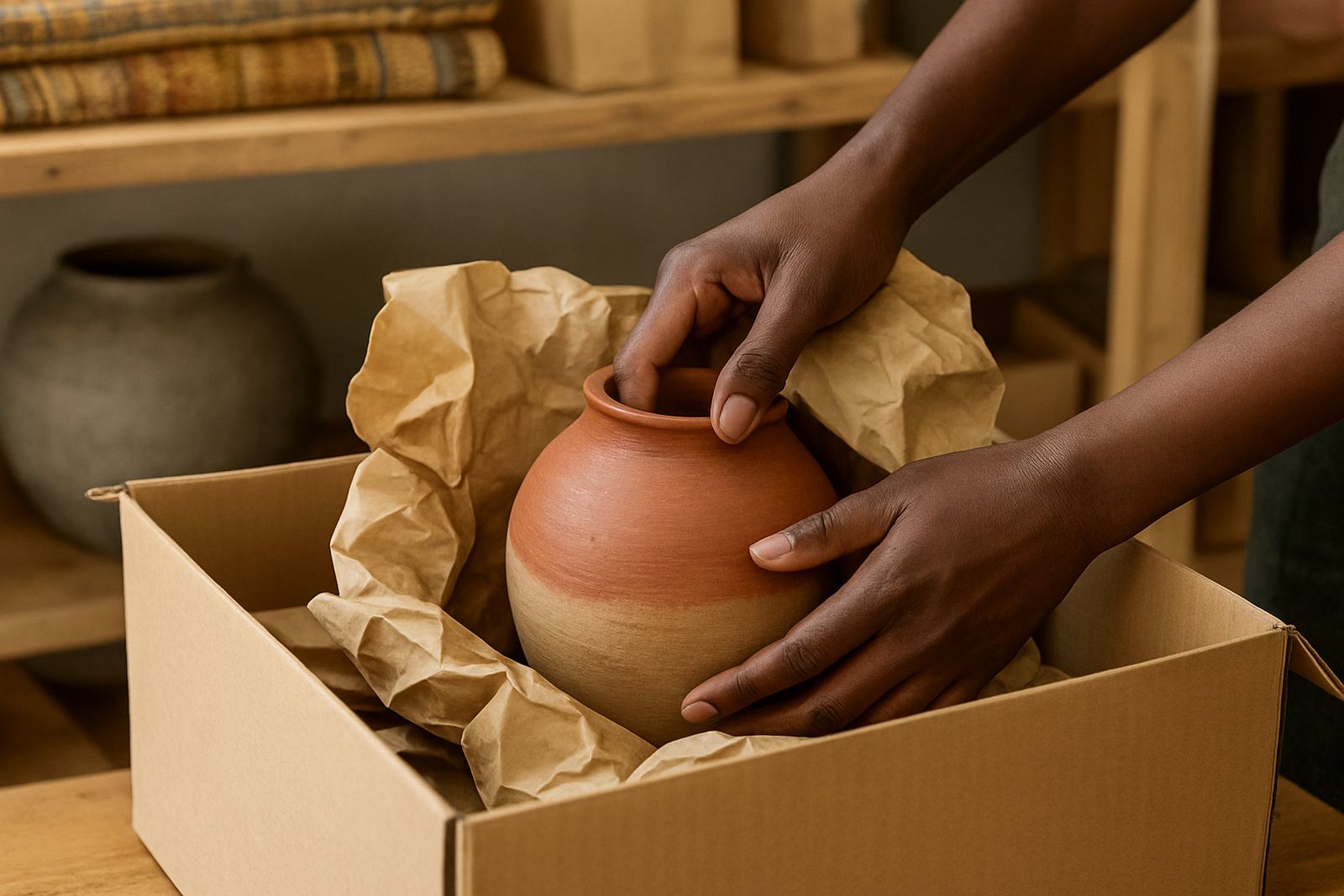
At our Maboneng base, we often see how a single handmade item can shift the mood of a space. A textured textile softens a hard passage, while a ceramic vase brings colour without making the area feel busy. If the floor is plain concrete or polished tile, the right object adds the human touch that makes the entry feel intentional, not improvised.
- Pick one focal piece and let it breathe
- Use shape, texture or colour, not all three at once
- Place it where it can be seen from the doorway
- Keep surrounding items low and simple
Storage Should Be Easy to Use Every Day
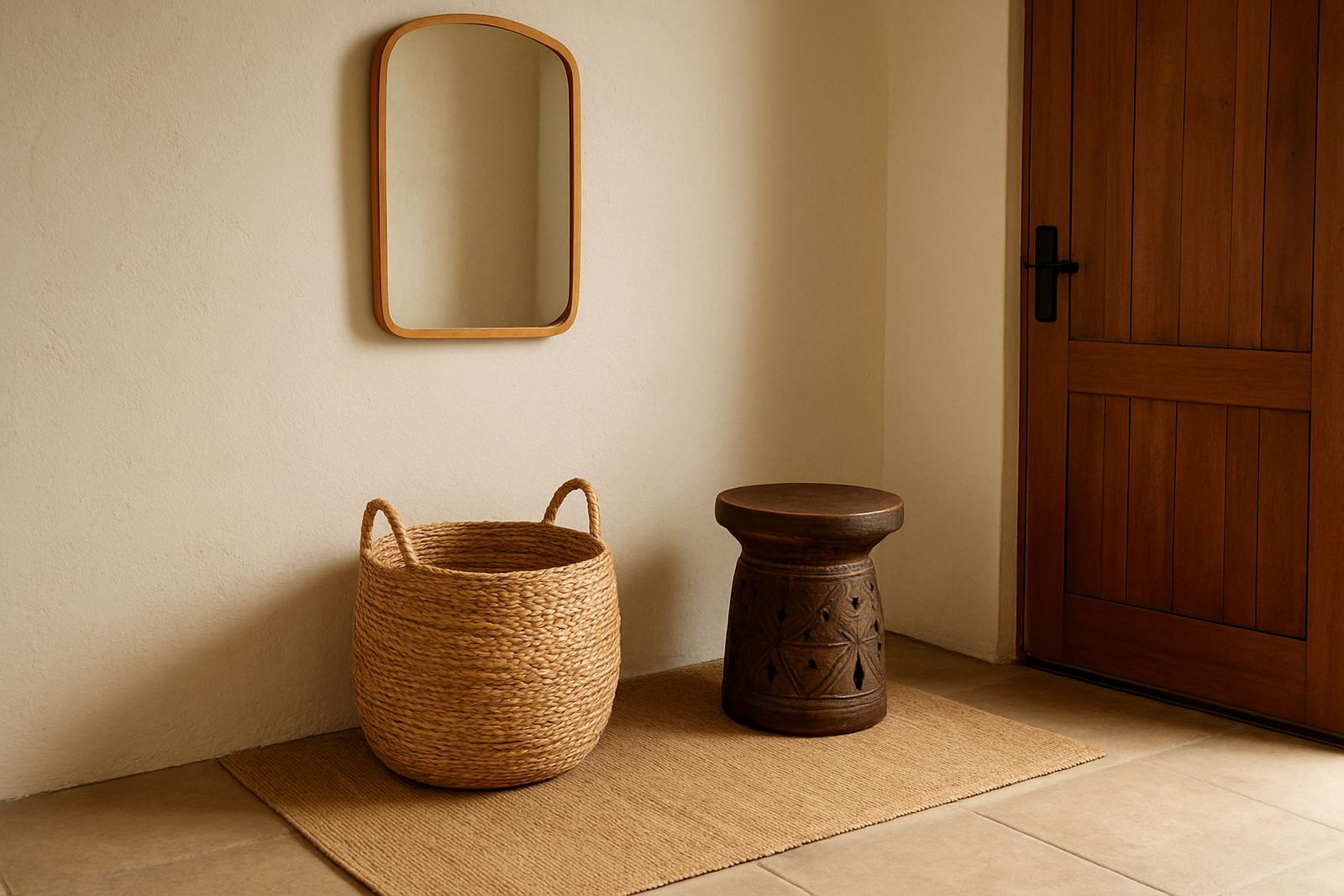
Entryway storage should work even when people are tired, in a rush, or carrying shopping bags. Open baskets, shallow trays and wall hooks are often better than bulky cabinets because they are simple to use. The trick is to make storage look calm without making it fussy.
In coastal homes from Durban to Gqeberha, moisture can affect natural materials, so choose finishes that are suitable for humid conditions and easy to wipe down. In busy inner-city flats, space matters more than anything else, so go vertical where you can. A slim shelf, a basket under a bench and a small tray for post can do more than a large storage unit that blocks movement.
- Use a tray for keys, coins and daily carry items
- Choose a basket for shoes or loose parcels
- Add hooks at a practical height for coats and bags
- Keep only the items that are used every day in the first zone
Light, Colour and Surface Need to Work Together
Entryways are often darker than the rest of a home, especially in apartments, passages and hospitality spaces. A small lamp, wall light or well placed mirror can improve the feel of the area straight away. If the space gets strong afternoon sun, as many homes do in Johannesburg, watch how colour behaves through the day before choosing a final piece.
Colour should support the welcome, not fight it. Warm earth tones, deep indigo, sand, clay and muted green are all useful because they sit well with natural fibres, timber and ceramic. A patterned textile can bring life to a plain wall, but in a narrow passage the pattern should be measured. One of our local clients in Sandton wanted a lobby that felt calm after the noise of the road, so we paired a framed textile panel with a plain bench and a single ceramic pot. The result was quiet, practical and easy to maintain.
Hospitality Entryways Need Clear Rules and Easy Care
For guesthouses, private homes used for short stays, and boutique hospitality spaces, the entryway has to set the standard quickly. It should show guests where to pause, where to put things and what kind of stay they can expect. That first moment matters. If the entrance is confusing, the whole experience starts off wrong.
Hospitality styling works best when it is simple to clean and easy to replace if needed. We often suggest pieces that can handle frequent handling, regular dusting and the occasional bump from luggage. For export or guest-facing use, provenance cards can also be included so visitors understand where the piece came from and who made it. That small detail adds value without making the space feel overdone.
- Keep walking paths clear for bags and foot traffic
- Use washable or wipeable surfaces where possible
- Choose décor that can be refreshed seasonally
- Include a short maker note for a more personal welcome
A Good Entryway Feels Ordered, Not Empty
Many people either overfill the entryway or leave it bare because they are unsure what belongs there. The answer is usually somewhere in between. A good entrance has a practical landing place, one strong object and enough breathing room for the eye to settle. That balance makes the whole home feel more composed.
For homes in Soweto, Midrand and Pretoria, the best results often come from combining everyday storage with one crafted item that reflects the owner’s taste. A basket, a bench and a textile panel can be enough. In Cape Town, where smaller entrances are common and light can be bright, a lighter palette with texture usually works well. The point is not to fill space, but to give it purpose and a sense of arrival.
When an entryway is curated well, it does more than look good. It helps people slow down, put things away and feel that they have arrived somewhere cared for. That is what a proper welcome should do.