
Start with one pattern that sets the pace
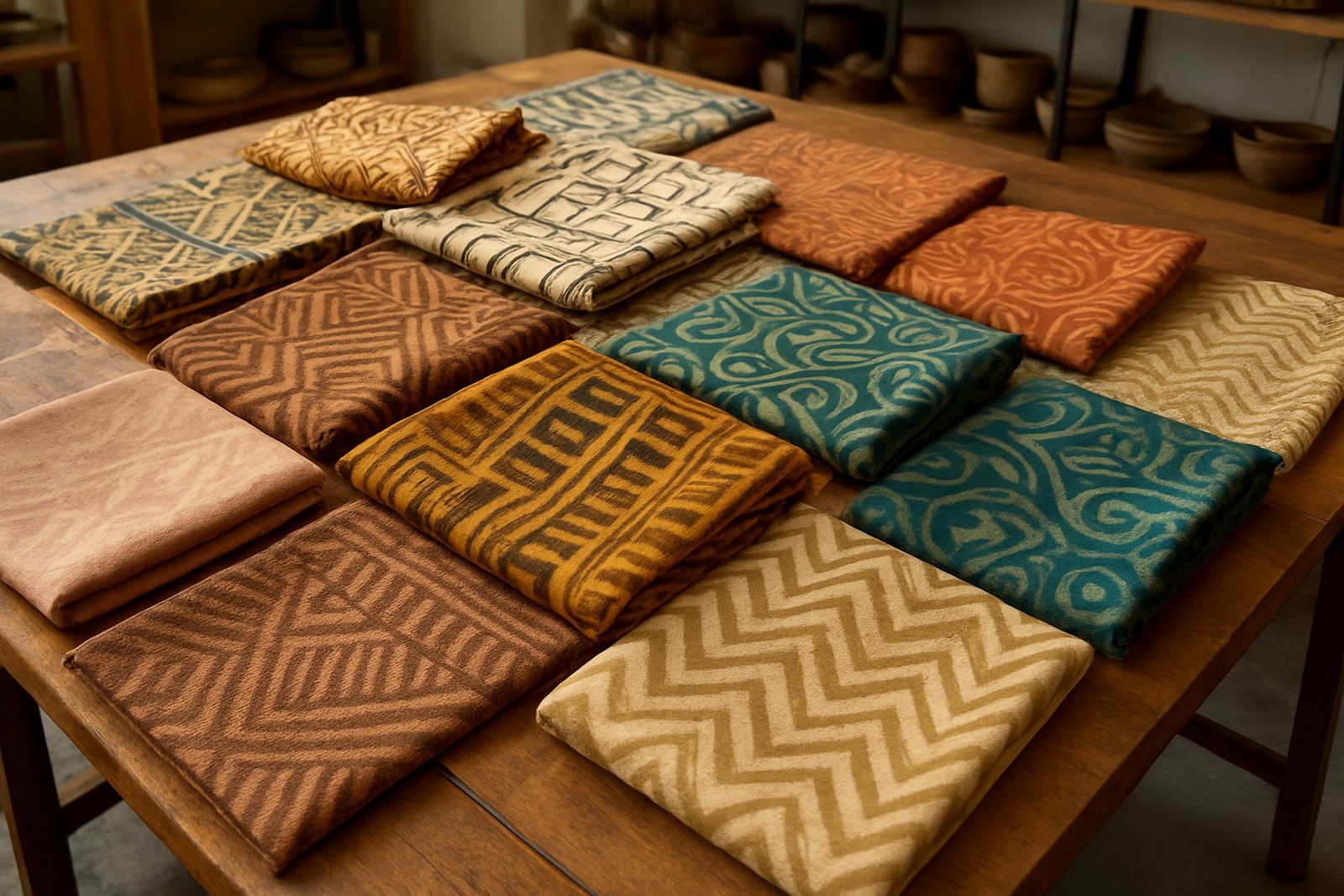
Good pattern mixing begins with a lead fabric or surface that gives the room its direction. This might be a bold geometric weave, a striped textile, or a printed ceramic accent, but it should do one job clearly: set the pace for everything else around it.
If you begin with too many busy pieces at once, the eye has no place to rest. Start with one main pattern and then choose supporting pieces that agree with it in mood, not in exact shape. A strong stripe can sit beside a small repeat, and a large motif can work with a fine check if the colour family stays controlled.
In homes and guest spaces across Johannesburg, we often see pattern work best where there is already some plain wall space or solid furniture in the room. That breathing room lets the fabrics and ceramics do their work without crowding the space.
Use scale to stop the room from feeling crowded
Scale is one of the simplest ways to make mixed patterns feel intentional. A large print needs a medium print and a small print nearby, even if the colours stay similar. When every pattern is the same size, the room can start to feel flat or fussy, and that is where many people lose confidence.
Think of scale as the rhythm of the room. Big shapes carry from a distance, medium shapes hold the middle ground, and small repeats fill the gaps. If you are styling a lounge in Maboneng or a guest suite in Sandton, this rhythm matters because the room has to work from both close up and from across the space.
- Pair one large motif with two quieter patterns in smaller repeats.
- Repeat the largest scale only once or twice in the room.
- Keep the smallest pattern for cushions, runners, or trimmed details.
A useful test is to step back three or four metres. If every piece competes at the same volume, reduce one pattern or switch it for a calmer textile.
Base colours are the quiet link between busy pieces
Before you match pattern to pattern, check the base colour underneath each one. Cream, indigo, rust, charcoal and clay can all act as bridges between different designs, even when the motifs themselves are not identical. This is especially useful when you are mixing handmade goods from different makers, because no two batches are exactly the same.
Base colour is also where practical matters come in. In Durban's coastal humidity, richer dyes and tightly woven fabrics often hold their look better when they are not constantly in direct sunlight. In Pretoria or Midrand, where rooms can be brighter and drier, lighter bases may suit the heat better and feel fresher in the afternoon.
The aim is not to make everything match. The aim is to make the mix feel related. If three patterned pieces all carry a note of blue, earth or black, the room reads as a considered collection instead of a random pile of good things.
- Choose one base colour to repeat at least three times in the room.
- Let one accent colour appear only once or twice so it has impact.
- Check that the background tone of each pattern works in the same light.
Repeat one detail so the mix feels deliberate
Repetition gives pattern mixing its structure. It can be a colour repeated across textiles, a line thickness repeated in ceramics, or a shape repeated in artwork and cushions. Without some repetition, mixed patterns can feel like unrelated samples rather than a finished space.
For example, a room might use a striped runner, a dotted scatter cushion and a patterned ceramic bowl, but if all three carry a warm terracotta note, the eye connects them at once. The same is true for black linework, indigo washes or a green thread running through several pieces.
When we curate collections for retail, hospitality or gifting, this is often the point that makes the whole selection come together. It is not about copying the same motif over and over. It is about giving the room one familiar thread to follow.
One small tip that helps more than people expect: repeat the most noticeable colour in at least two places, even if one of those places is tiny.
Mix textiles with ceramics and let each material do a different job
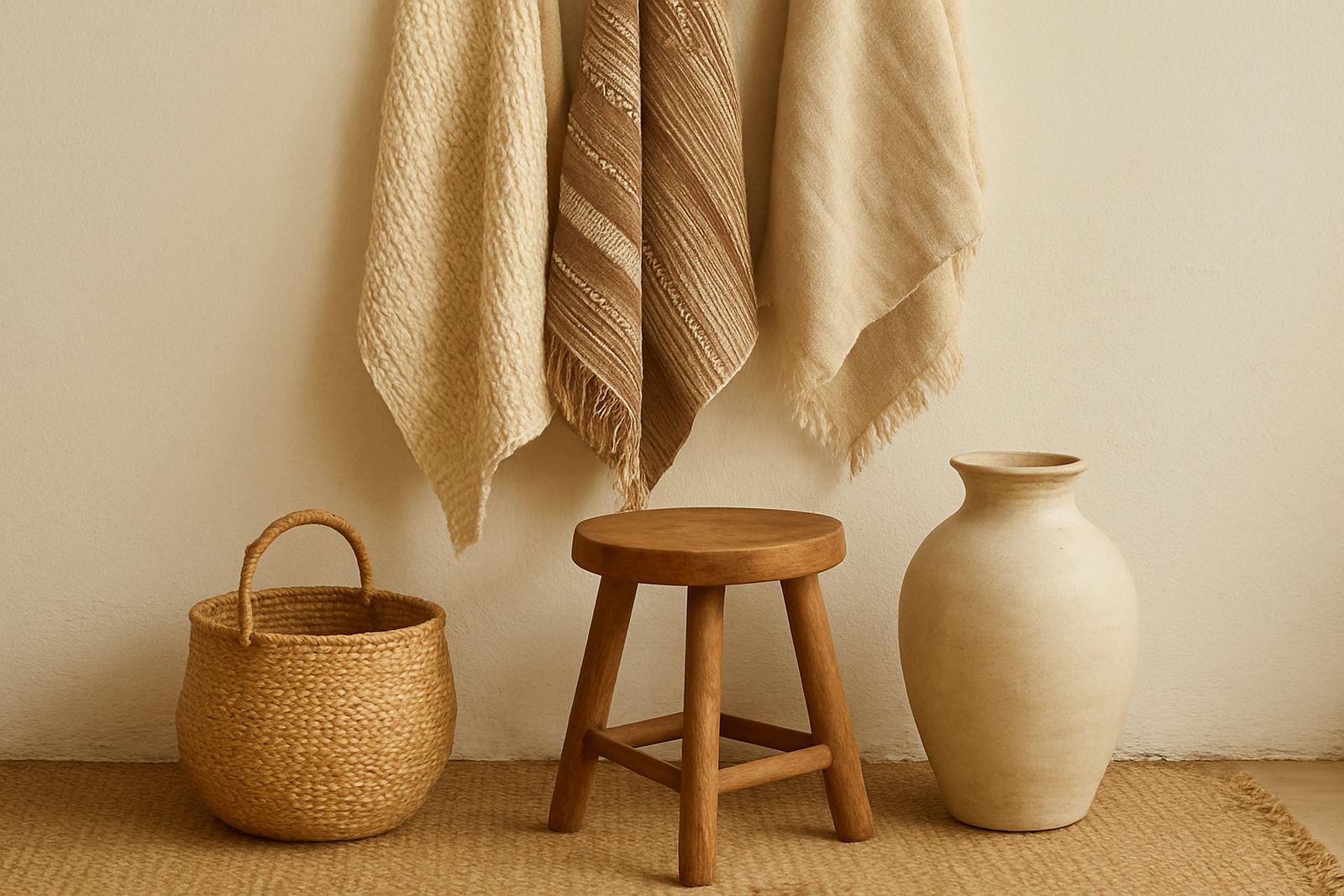
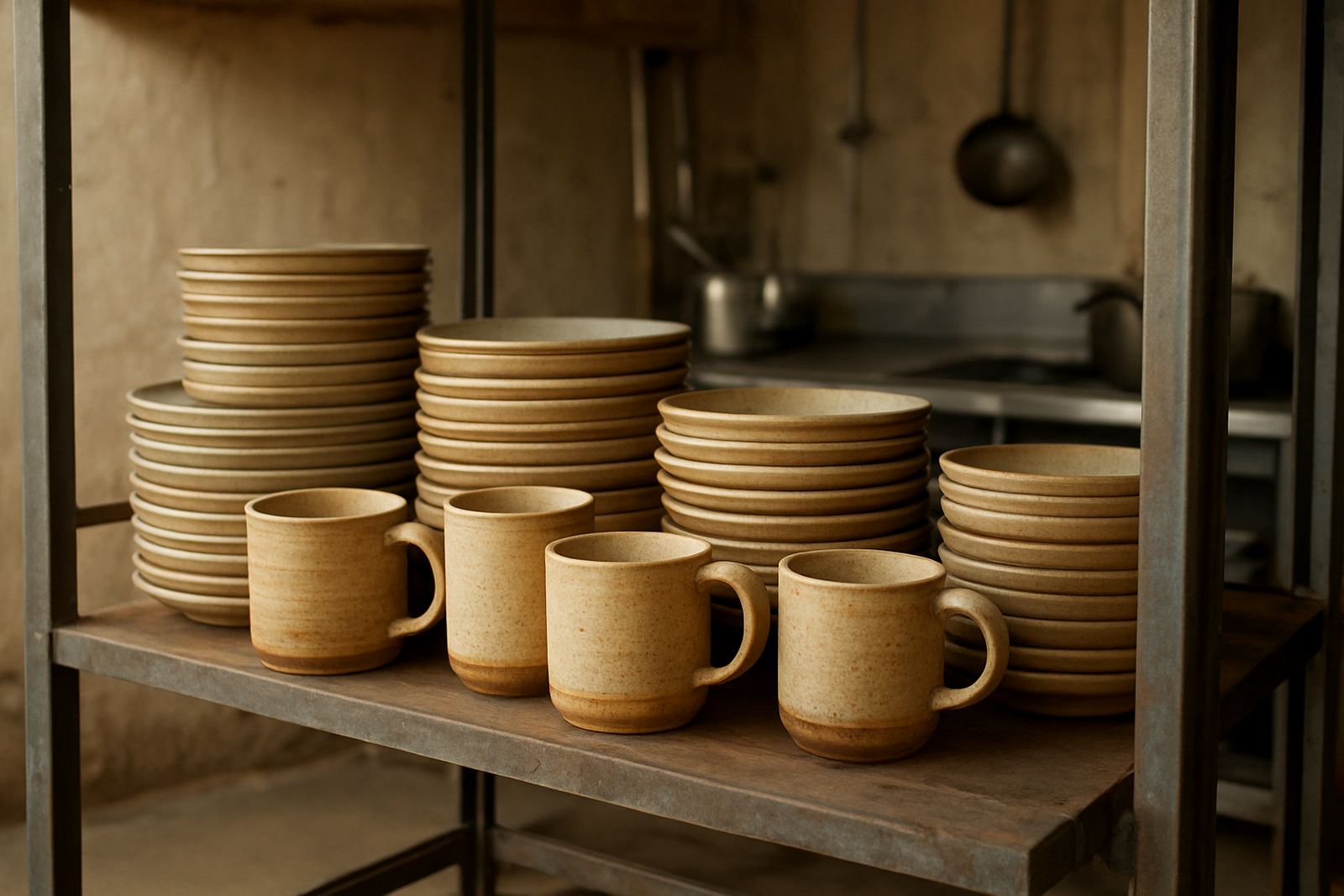
Pattern mixing is not limited to fabrics. Ceramics, trays, bowls and serving pieces can carry pattern too, and they help anchor the softer layers in a room. A patterned cushion can soften a chair, while a hand-finished ceramic piece gives the eye a harder shape to land on.
This is useful in hospitality settings where guest rooms, lounges and dining areas need variety without visual noise. A printed textile on a sofa can be paired with a ceramic vase on a sideboard, and both can share the same colour family without repeating the same design language.
- Use textiles for movement and softness.
- Use ceramics for weight, structure and resting points.
- Use one plain surface, like a table or wall, to keep the mix from becoming too busy.
In a restaurant or small guesthouse, this approach also helps with cleaning and day-to-day use. Pattern can hide light wear, but the room still needs pieces that are easy to move, store and refresh when stock changes.
A Johannesburg example: mixing for a Maboneng apartment
Picture a compact apartment in Maboneng with a neutral sofa, light walls and afternoon sun coming through the windows. The easiest way to build pattern here is to start with one large patterned throw, add two cushions in smaller repeats and finish with a ceramic accent on the coffee table. The room keeps its character, but it does not feel crowded.
If the apartment also needs to work for short lets or visiting guests, durability matters just as much as style. Choose textiles that can be rotated, stored and aired out. In load-shedding periods, natural light changes quickly, so the patterns should still look good in softer evening light and not depend on one bright lamp to carry the room.
For a local buyer, the practical sequence is often this: pick the biggest surface first, then the next biggest, then the small details. That order saves time and prevents overbuying. It also makes courier planning simpler if pieces are coming from different makers across the continent and need to arrive in one coordinated order, not in a rush.
When to stop adding more
The hardest part of pattern mixing is knowing when the room has enough. A space usually tips too far when every surface has a design and there is no plain ground left. If you feel the room getting noisy, remove one piece before adding another.
A mixed room should still have a clear focal point. That could be a sofa, a dining table, a bedhead or a display shelf. Once that point is clear, the patterns around it can support it rather than compete with it. That balance is what makes a collection feel finished, even when the pieces come from different places and makers.
For many South African homes and workspaces, pattern mixing is at its best when it feels lived in, not staged. A little restraint goes a long way, and the room usually benefits more from one well-chosen repeat than from five new ones.