
Start with the shelf job, not the shelf look
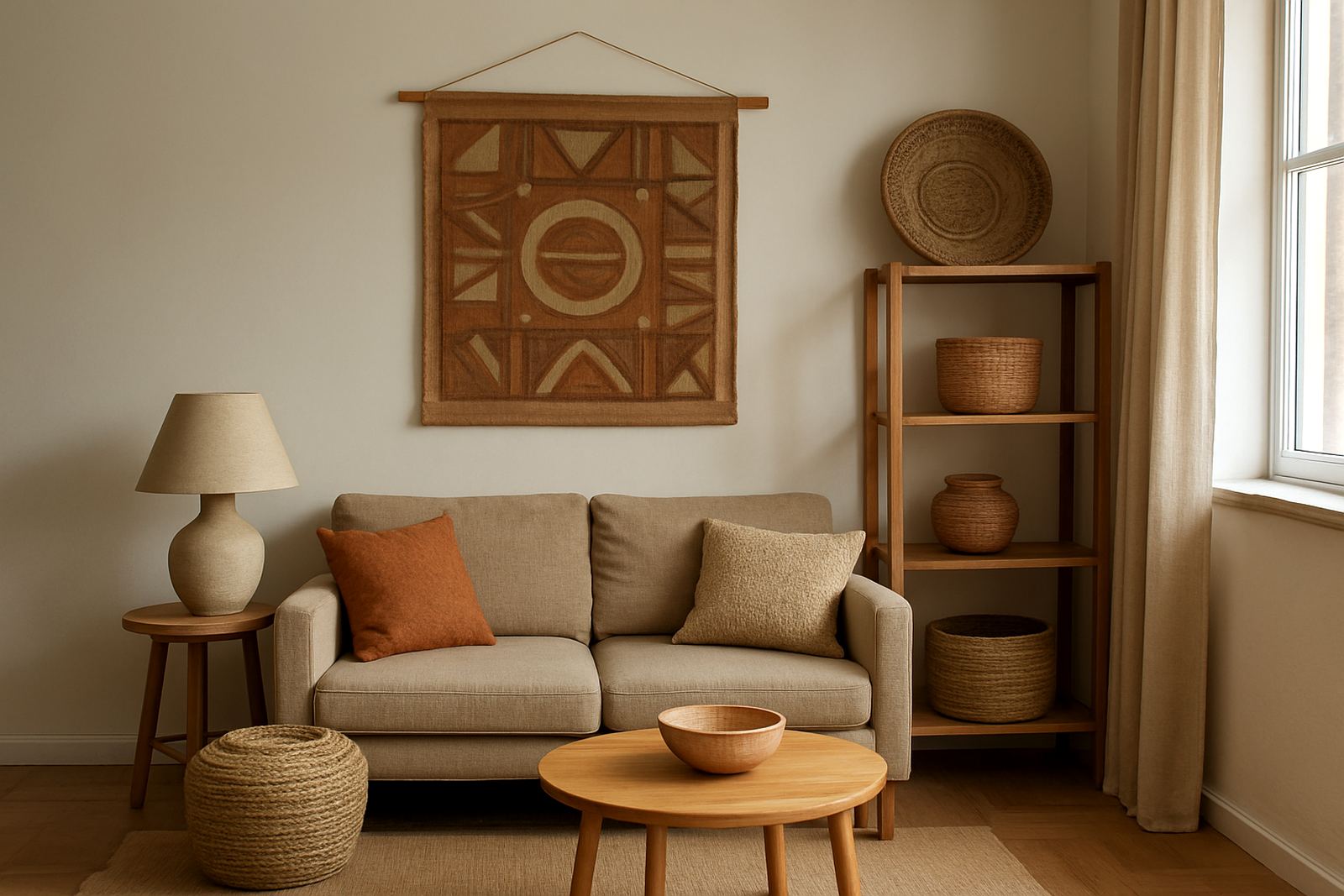
Before you place a single bowl or folded cloth, decide what the shelving must do. In a kitchen it should hold plates, glasses, olive oil and the things you use daily. In a lounge or entrance wall it may need to carry books, vases and objects that add character without crowding the room. When the function is clear, the styling becomes easier and the shelf stays practical.
In Johannesburg homes and apartments, open shelves often sit in compact spaces where every item must earn its place. That means keeping the working items close at hand and using the top or middle shelves for things that are quieter to look at. A good rule is simple: if the shelf is mostly decorative, leave space for movement and light. If it is mostly practical, make the useful items look considered rather than random.
Build a grounded base with the heavier pieces
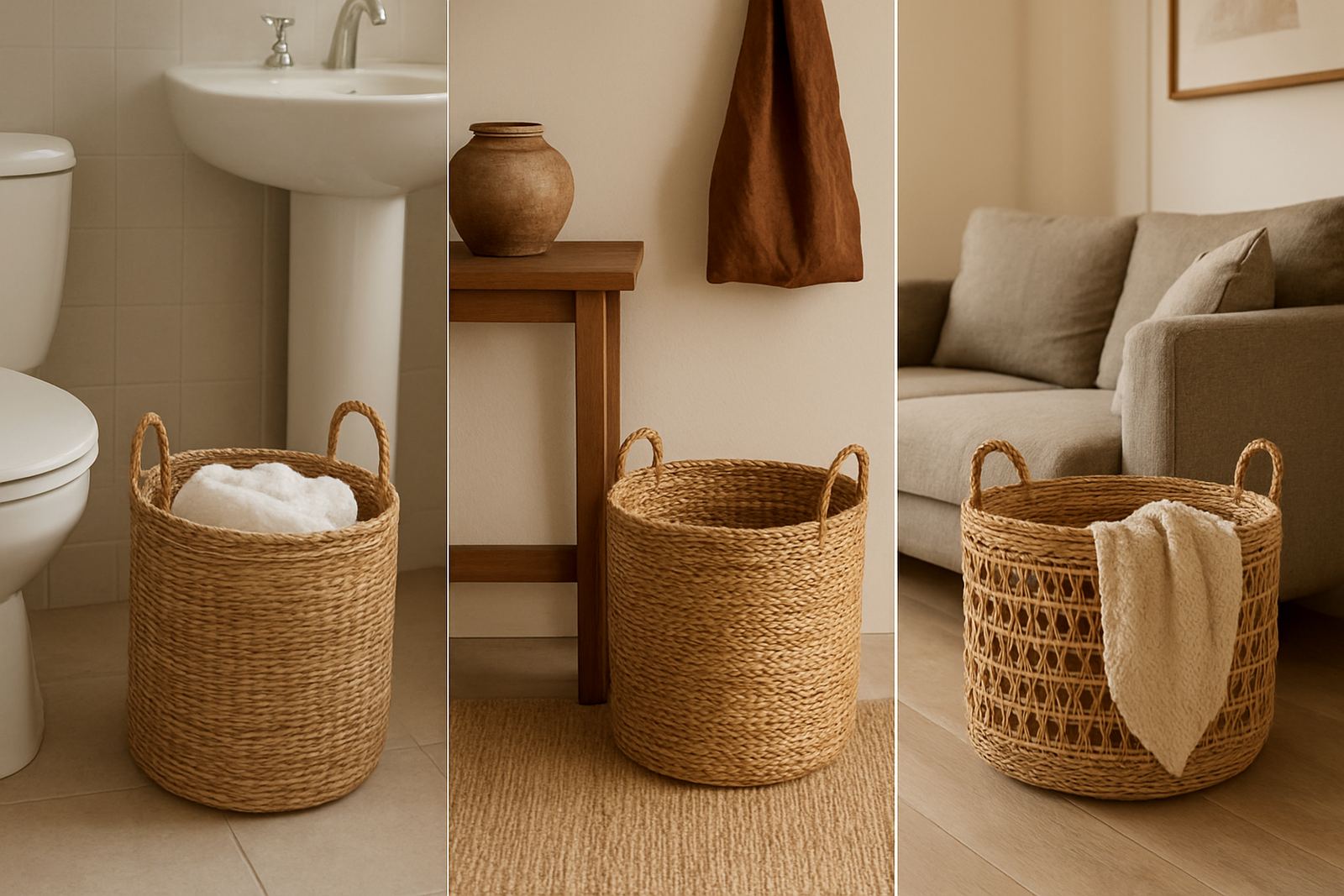
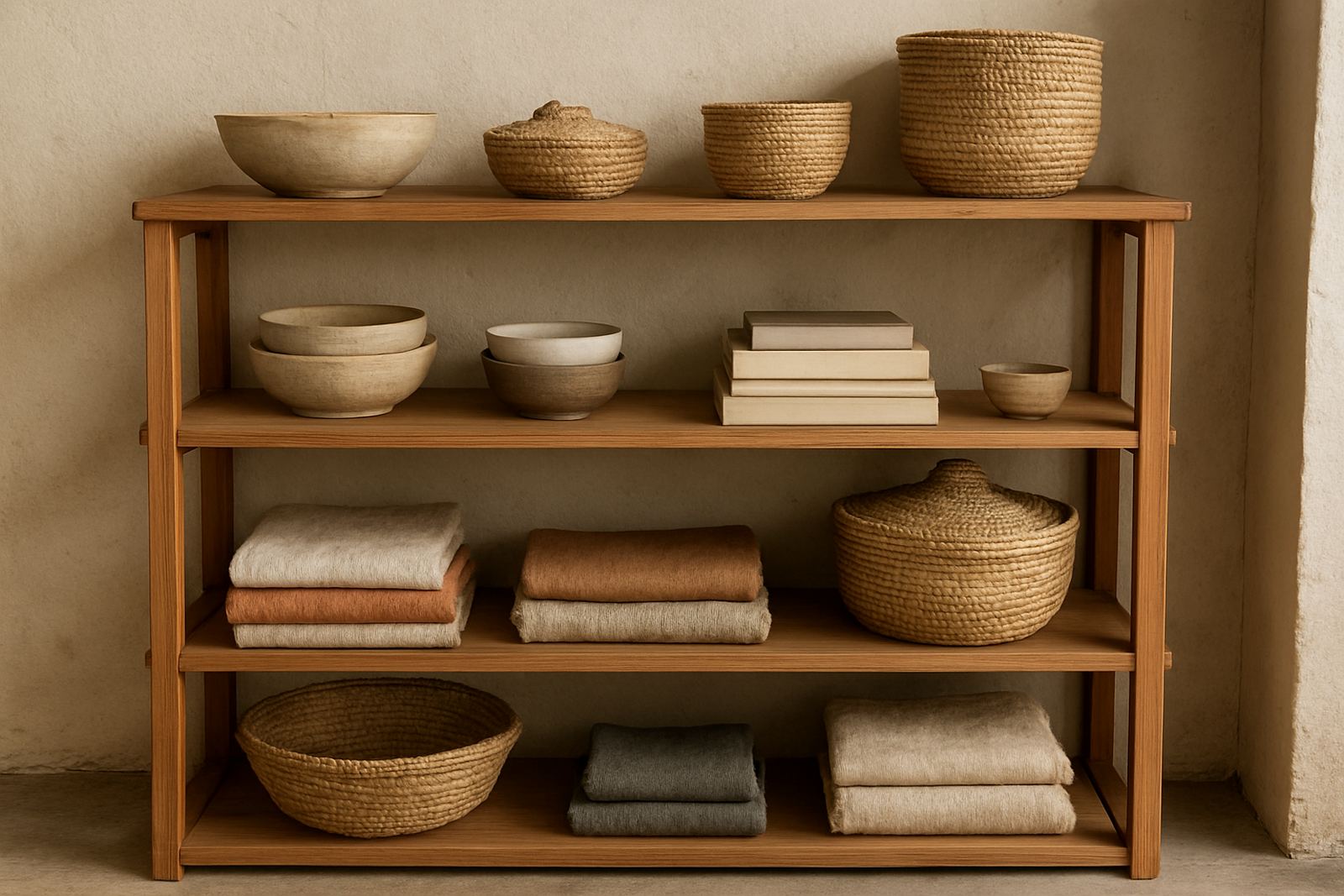
Always begin at the bottom and work upwards. Heavier ceramics, storage jars and folded textiles anchor the eye and stop the shelf from feeling top heavy. Low bowls, sturdy baskets and stacked plates create a base that looks settled, especially on narrow shelves where balance matters.
- Place the largest objects first, then work down in size.
- Group items in odd numbers where possible, such as three jars or five folded napkins.
- Mix matte and glazed finishes so the display does not feel flat.
- Keep one section less full than the others to give the shelf some breathing room.
With handmade ceramics, vary the height and shape rather than lining everything up in a row. A tall vessel beside a low dish and a folded textile gives the eye somewhere to move. That small variation makes the shelf feel arranged, not staged.
Use textiles to soften hard edges
Textiles are one of the easiest ways to warm open shelving. A folded runner, tablecloth or set of napkins can break up the hard lines of wood, metal or plaster and bring in colour without shouting. In homes with strong afternoon sun, especially in Cape Town or Durban, cloth also helps absorb some of the brightness so the display feels less harsh.
Try tucking a neatly folded textile behind a stack of bowls, or draping one short length over a lower shelf edge if the shelf is deep enough. Keep the folds clean and simple. Too much folding can make the shelf feel busy. The point is to create softness and texture, not to hide the shelf itself.
- Choose one main colour family and one accent colour.
- Repeat the accent in two or three places only.
- Use natural fibres where possible for a more relaxed finish.
- Rotate textiles seasonally so the shelf stays fresh.
Let ceramic pieces breathe
Ceramics work well on open shelves because they hold shape, colour and texture without needing much else around them. But the mistake many people make is packing too many pieces together. Handmade work needs room to be seen from the side as well as the front, especially if the glaze is uneven or the form has a strong profile.
Leave a gap beside a special bowl or vessel so its outline can stand on its own. Pair one statement piece with one quieter item, such as a plain plate or small cup, instead of competing patterns. If the shelf is in a hospitality space, this becomes even more useful because guests notice the objects at eye level first. A simple arrangement can feel more considered than a full shelf, and it is easier to dust too.
Style for South African conditions, not just photographs
Open shelves in South Africa need to handle dust, heat, humidity and power cuts. On the coast, humidity can affect paper labels, untreated timber and some natural fibres, so choose materials that can cope with a little moisture and keep fragile items away from direct sea air where possible. In the interior, dust from dry weather and open windows means shelf styling must be easy to clean.
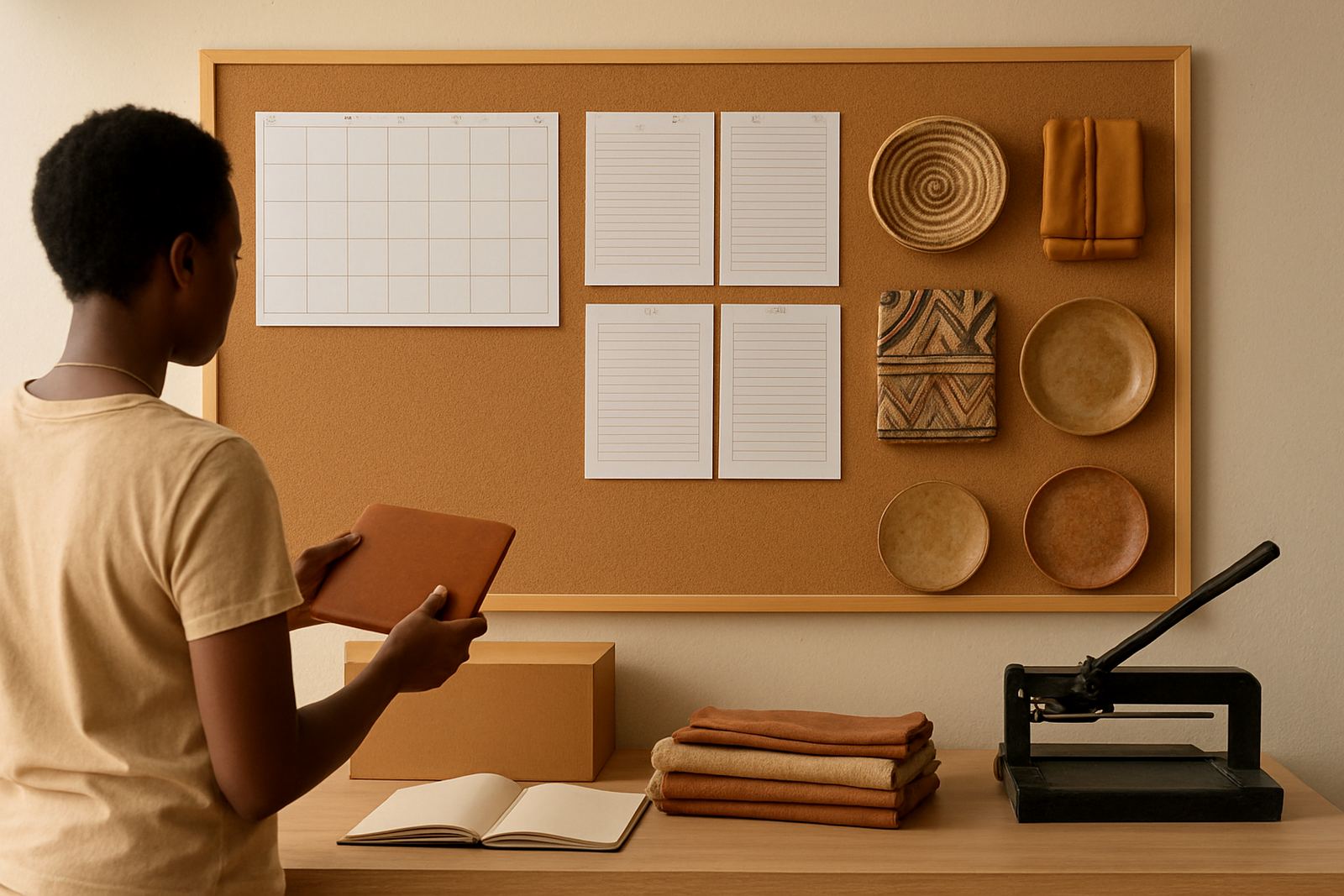
When load-shedding interrupts routine, a shelf that is overfilled becomes harder to manage because everything has to be moved just to wipe the surface. Keep the front row light and accessible. If you use provenance cards or small story labels, place them where they are visible but not in the way of daily cleaning. For hospitality spaces, this also helps staff reset the area quickly between services.
- Avoid very deep stacks that collect dust at the back.
- Keep glass, clay and cloth in separate zones if the shelf gets damp.
- Use closed storage below the shelf for backup stock.
- Choose objects that can be lifted easily for cleaning.
A Maboneng shelf with a clear local rhythm
A good local example is a Maboneng apartment with one long open shelf running across a kitchen wall. The homeowner wanted it to carry daily crockery, a few artisan pieces and enough warmth to suit a brick interior. The best result came from placing plain plates and glasses at one end, a hand-thrown serving bowl in the centre, and two folded textiles in muted earth tones on the other side. A small ceramic jar sat above the plates so the eye moved upward without losing balance.
That shelf worked because each item had a role. The practical pieces stayed within reach, the craft pieces stood out, and the colour palette stayed tight. Nothing felt forced. If the same shelf had been filled with too many items from the start, it would have looked busy and hard to use. Instead, it became part storage, part display and part conversation piece.
Keep editing the shelf as life changes
Open shelves should never be treated as finished once and for all. They need seasonal editing, a little movement and occasional restraint. Remove one item if the shelf begins to feel crowded. Bring in a new vessel if the colours start to flatten. Swap a textile or shift a stack of plates a few centimetres and the whole arrangement can feel new again.
For retailers, hospitality spaces and private homes, that ongoing editing is what keeps open shelving useful. It is not about filling every gap. It is about arranging beautiful, practical things so they can do their job and still look good doing it. That is where handmade textiles, ceramics and artisan goods work best, in a shelf that is used often and looked after properly.