
Why baskets earn their place in busy homes
Baskets work because they are simple. They hold what needs to be held, they move easily from room to room, and they do it without taking up much visual space. In a flat, townhouse or family home, that matters. One basket can stop a pile of shoes from spreading across the passage, while another keeps chargers, magazines and mail from ending up on every available surface.
They are also useful in homes that have to cope with load-shedding, visitors and changing routines. When the power goes off, a basket can keep torches, candles and spare batteries together in one spot. If children are doing homework on the floor, a basket can gather stationery and craft bits at the end of the day. It sounds minor, but those small fixes add up fast.
Laundry storage that actually gets used
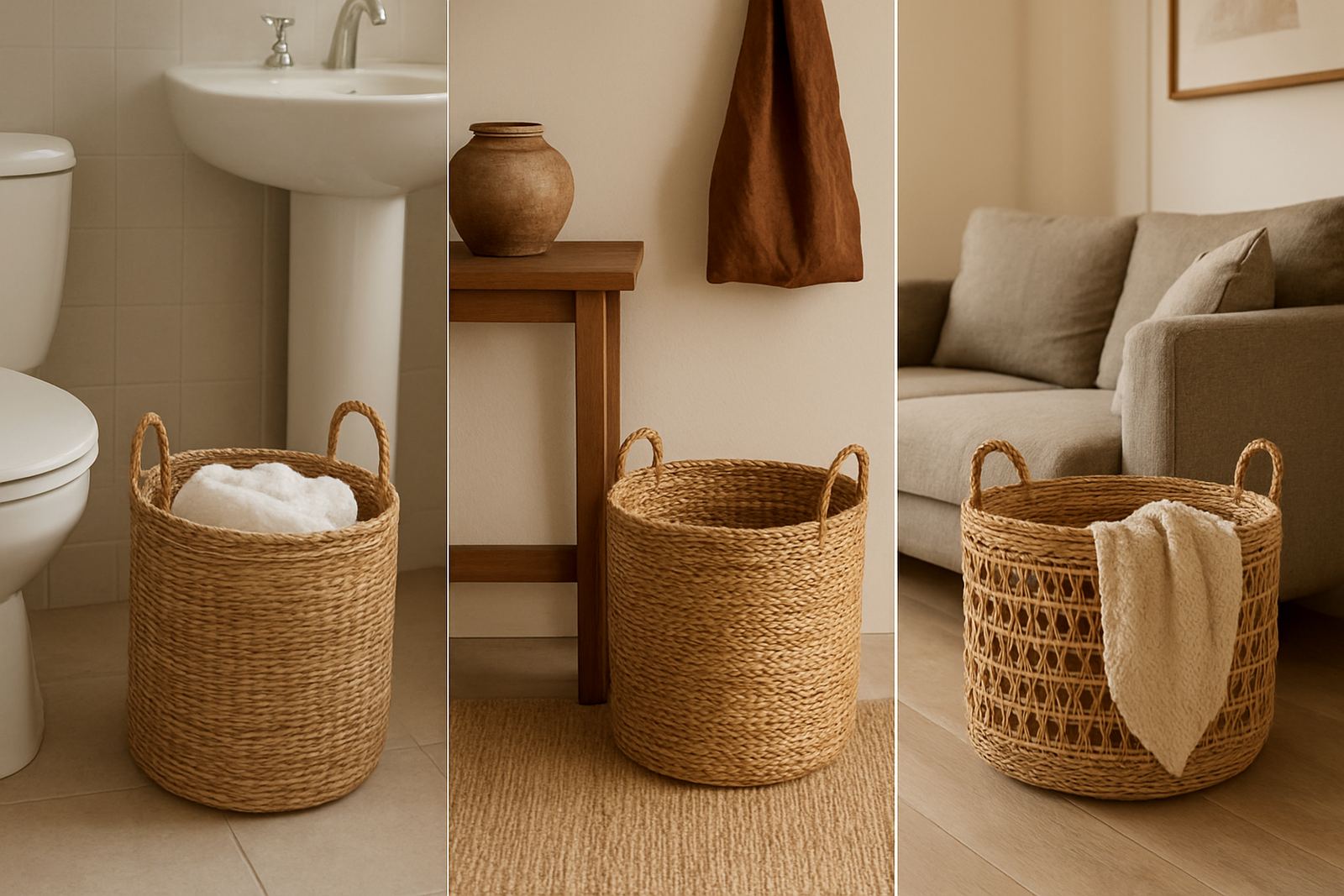
Laundry baskets are the most obvious use, but they are not all the same. A round, deep basket works well for a bedroom or bathroom. A taller basket with handles is easier to move from room to washing line. For a family home in Midrand or Soweto, it helps to have one basket for clean linen and another for dirty clothes, so everything does not mix together.
- Choose a size that fits the space. A basket that is too large can crowd a narrow bathroom.
- Use a lid if the basket sits in a visible area and you want a tidier look.
- Keep one basket for towels, one for everyday washing and one for delicate items.
- In coastal areas like Durban or Gqeberha, allow airflow so damp items do not sit too long.
Natural-fibre baskets can be a good choice for laundry because they feel warm and light, but they should be kept dry. If the room is humid, line the basket or place it in a breezy spot near a window. That little bit of care makes the basket last longer and keeps it smelling fresh, not musty.
Toy storage that does not fight the room
Children’s toys tend to spread. One minute they are in the lounge, the next they are under the dining table and in the bedroom too. A basket gives you a fast reset point. It is easier for children to use than a cupboard, and it can be moved without a struggle. For younger children, open baskets work best because they can see what is inside.
In homes where space is shared, baskets can also create simple zones. One basket for building blocks, one for soft toys, one for colouring books and puzzles. That makes pack-up time quicker and it teaches children where things belong. It also saves you from having to buy more storage than you actually need.
- Use soft-sided baskets in play areas so they are safer around small children.
- Label baskets clearly if older children are sharing the space.
- Keep fragile toys separate so they do not get crushed.
- Use a low basket for daily toys and store extras higher up.
Throws, cushions and the stuff that clutters a lounge
Throws and cushions are lovely until they end up in a heap on the sofa. A basket gives them a proper home. In a living room, one basket near the couch can hold extra blankets for winter evenings, while another can store scatter cushions when the room needs to feel more open. This is especially useful in smaller apartments where every item has to earn its place.
The same idea works for guest rooms and braai areas. When the weather changes, throws can be folded and placed in a basket near the door. If you use a basket with sturdy handles, it is easy to move from the lounge to the patio when you need extra warmth outside. It is a simple habit but it keeps the room looking cared for, not crowded.
Entryways, market stalls and the first impression
The entrance area of a home or small business is often the most overlooked space. A basket here can take on the things that tend to collect near the door: hats, keys, dog leads, umbrellas and post. In a shop or hospitality setting, baskets can also be used for menus, product samples or small gift items. They create order without making the space feel stiff.
For a local example, think of a Maboneng apartment with a narrow entryway. A shallow basket under a bench can hold shoes for the family, while a second basket catches scarves and commuter items. It keeps the passage clear and makes the home easier to clean, especially on rainy Johannesburg days when mud and dust come in together.
- Pick a basket with a flat base if it will sit on tiled floors.
- Use smaller baskets for keys, wallet items and mail.
- Choose darker tones or tightly woven styles for high-traffic entrances.
- If the basket is near a doorway, make sure it does not block the path.
How to choose baskets that suit South African conditions
When you are buying baskets, think about where they will live. Homes near the coast may need tighter weaves or finishes that handle moisture better. In inland areas, dust and strong sunlight are bigger concerns. A basket that sits near a window should not be left in harsh direct sun all day, as the fibres can dry out and lose shape over time.
Size matters too. A basket that looks fine in a showroom may be too big for a passage or too small for laundry. Measure the space first, then choose the basket to fit the job. If you are using baskets in retail, hospitality or gifting, it also helps to have a mixed set: one large piece for storage, a few smaller ones for display and one or two with handles for easy moving. That gives you more flexibility, and it looks considered without trying too hard.
At Creation Africa Foundry, baskets sit comfortably alongside textiles, ceramics and other handmade goods because they are practical first. They are useful, easy to style and easy to live with, which is why people keep finding new places for them. Once you start using baskets properly, you usually end up wanting one more for the next corner that needs sorting.