Start with the brief, not the product
Most custom orders begin when a client knows the feeling they want, but cannot find it in a standard selection. That may be a softer palette for a hospitality room, a set of gifts for a corporate visit, or ceramics that suit a shelf width exactly. In those cases, custom sourcing saves time later because the search is shaped around the real need from the start.
At Creation Africa Foundry, we work with makers across the continent and match the brief to the right materials, finish and lead time. A clear brief does not need to be long. It should cover where the items will go, how many are needed, any colour limits, whether they need to travel, and if they must arrive by a fixed date. Even one paragraph can help us identify the right maker direction.
- Room or use: home, hotel, office, retail, gifting or export
- Preferred colours, finishes and materials
- Dimensions or fit requirements
- Quantity and repeat order potential
- Deadline, delivery area and packing needs
Go custom when size matters more than style
Some projects are not difficult because the design is unusual, but because the measurements are tight. A runner for a long boardroom table, a woven piece for a narrow wall, or a ceramic set for a very specific shelf can be awkward if you try to force a standard item to fit. In these cases, custom sourcing is practical, not indulgent.
That is especially true for hospitality and retail fit-outs, where an item may need to sit neatly beside existing decor, signage or serving ware. In Johannesburg and Cape Town, we often see clients working around built-in joinery, odd alcoves and compact display tables. A custom approach allows for proper sizing instead of trimming or making do, which usually costs more in the end.
- Unusual wall lengths or table sizes
- Display shelves with fixed depth
- Gift boxes that must fit a set contents list
- Large spaces needing repeated pieces for visual balance
Colour matching is a good reason to source custom
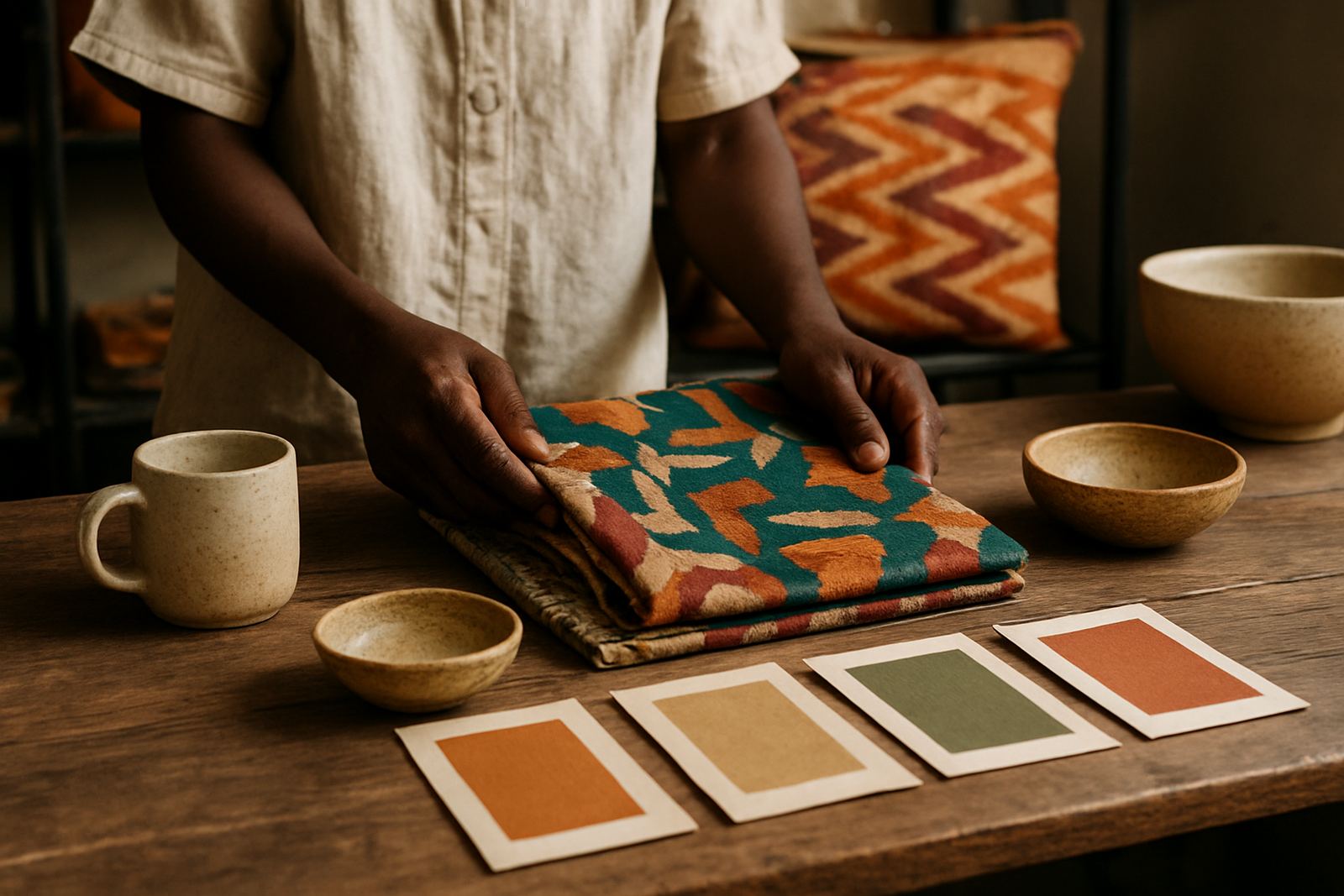
When a project depends on a specific palette, custom sourcing can help you avoid the mismatch that happens with mixed stock. This is common for brand refreshes, event decor, private collections and hospitality interiors where the room already has paint, upholstery or flooring in place. If the palette is warm earth tones, deep indigo, soft neutrals or a bright seasonal mix, it is better to work from the colour story than from what is currently on hand.
We also see this with gifting. A client may want a group of presents that all feel related without being identical. For example, a set of handwoven items in matching tones with different textures can feel considered and professional. That kind of consistency is harder to achieve if each item is chosen separately at the last minute.
- Corporate gifting aligned to a brand palette
- Hospitality rooms with set accent colours
- Seasonal windows or launch displays
- Event gifts that need a unified look
Custom is smart for gifting themes and special occasions
Custom sourcing makes sense when the gift needs to say something specific. It might be a conference welcome pack, a wedding favour, a year-end client thank-you or a visitor gift for international guests. The point is not just to give something handmade, but to give something that feels chosen for that moment.
For a local example, a Sandton law firm planning gifts for visiting delegates might need 40 ceramic pieces, each packed safely for international travel, with provenance cards and a theme tied to South African craft. A standard shelf purchase could never handle that combination cleanly. With custom sourcing, the presentation, packing and quantity can all be planned together, which keeps the order tidy and reduces last-minute changes.
- Wedding, engagement and family celebration gifts
- Conference packs and visitor hampers
- End-of-year client gifts
- Launch gifts for press, buyers or partners
Bulk orders need planning, not guesswork
Once a project goes beyond a handful of pieces, custom sourcing becomes less about choice and more about control. Quantities affect availability, timing, packing and courier costs. A small order can move quickly, but a large one needs a clear production plan so every unit arrives consistently and on time.
This matters for retailers, hotels and procurement teams that cannot afford uneven stock. If you need 25, 50 or 200 pieces, it is worth checking whether the makers can repeat the same material, dimensions and finish across the full order. Load-shedding, transport delays and regional courier cut-offs can all affect lead times, so it helps to build in a buffer rather than leaving the order until the last week.
- Retail stock refreshes with multiple units per line
- Hospitality projects needing room-by-room consistency
- Pop-up shops and market activations
- Export orders with packing and documentation needs
When custom is not the answer
Custom sourcing is useful, but it is not always the best route. If you need one or two items quickly and the brief is flexible, ready-made stock may be the better choice. The same is true when the budget is tight and the goal is simply to fill a space or test a concept. In those cases, a curated selection can give you a faster and more affordable result.
A good rule is this: go custom when a mismatch would cause a problem. If the colour, size, quantity or presentation really matters, then custom is usually worth it. If the item just needs to arrive soon and look pleasant, standard stock may be enough. It is better to decide that early than to force a custom order after the date has already been set.
How we handle custom orders from Maboneng to beyond
From our base in Maboneng, Johannesburg, we coordinate custom sourcing for clients in Pretoria, Durban, Cape Town, Gqeberha, Midrand, Soweto and further afield. The process usually starts with an enquiry form, followed by a discussion of quantity, finish, timing and destination. If needed, we can also help with gift packing, provenance cards, export packing and courier coordination.
For clients abroad, the extra detail matters. Handmade goods travel better when they are packed properly, measured accurately and described clearly for customs or freight handling. For South African deliveries, the same care helps with municipal delivery points, office receiving hours and weather exposure, especially in coastal humidity. The aim is simple: the order should arrive ready to use, not needing rescue.
- Custom sourcing aligned to your brief
- Collection consultations for larger or sensitive orders
- Sample loans where a decision needs physical comparison
- Retail wholesale and export support for repeat buying