Why Handmade Pieces Do Not All Match Exactly
When a textile, ceramic bowl, or woven basket is made by hand, the maker works with tools, materials, and conditions that naturally shift from one piece to the next. A clay pot may shrink a little more in the kiln. A woven runner may widen slightly if the yarn is softer on one day than the next. Even careful makers working to the same pattern will see small differences, and that is normal.
In many cases, a variation of a few millimetres or even a centimetre is not a fault. It is often the clearest sign that the item was not stamped out on a factory line. For customers, this means focusing less on exact repeat sizing and more on the usable size range, the overall finish, and how the item will sit in your space.
The Main Reasons Dimensions Shift From Piece to Piece
Different materials respond in different ways. Fibre can stretch, clay can contract, and natural dyes can also change the feel of a textile after washing or pressing. Humidity in coastal areas like Durban or Gqeberha can affect drying times, while Johannesburg’s dry air can change how yarn, leather, or plant fibre settles before final finishing. Load-shedding can also mean a maker pauses a process and returns to it later, which is part of real local production and not a sign of poor quality.
- Hand measuring by eye and tool can allow tiny differences between pieces.
- Natural materials may expand, contract, or settle after finishing.
- Firing, drying, pressing, and stitching all change the final dimensions.
- Edging, handles, hems, and trims can add or reduce size slightly.
- Batch differences are common when items are made over several days or by more than one hand.
For buyers in South Africa, the key is to read the product notes carefully and allow for small tolerance ranges when planning a shelf, table, or wall display.
How To Read A Product Measurement Properly
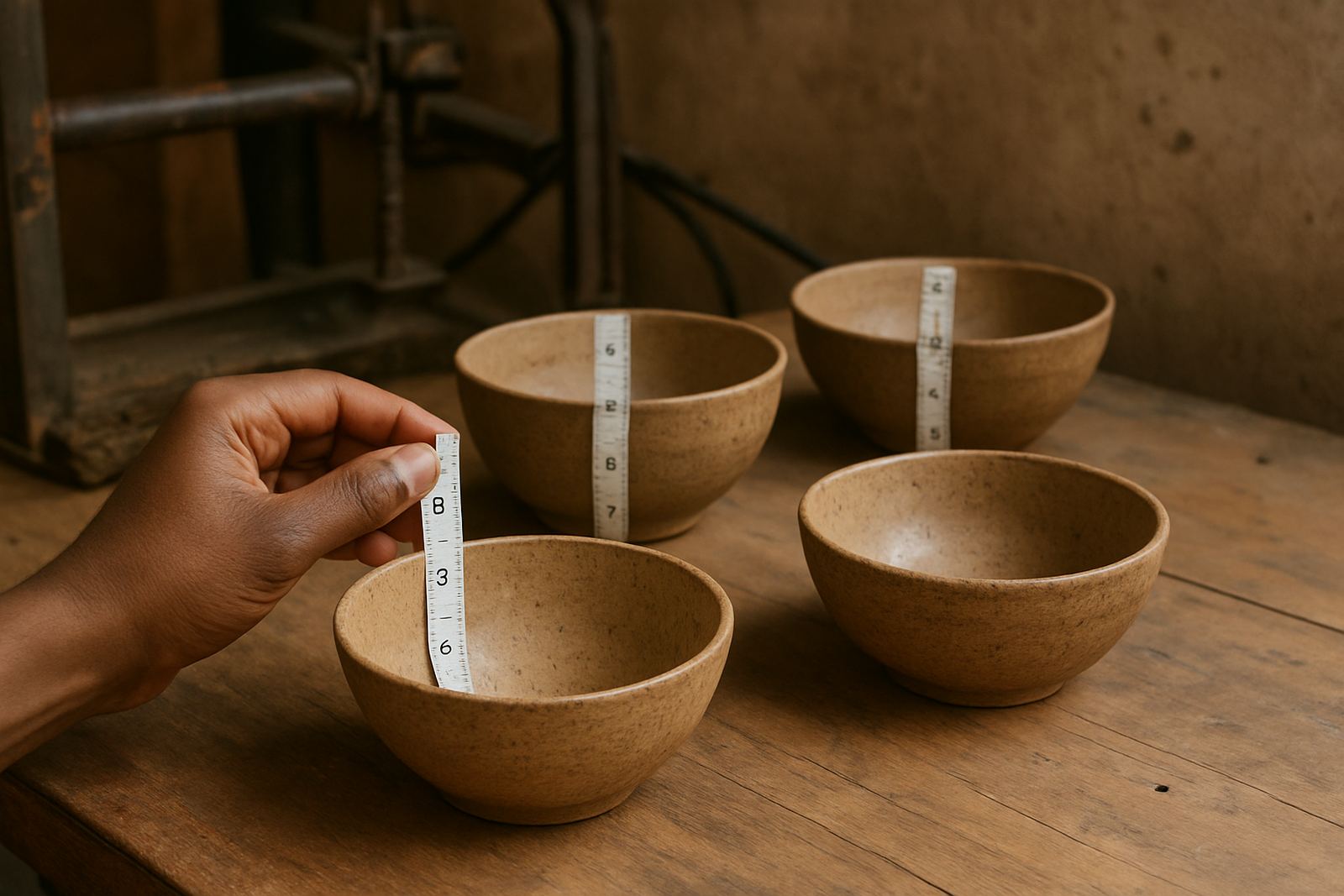
A listed size is usually a guide to the average finished piece, not an exact promise for every single item in the batch. If a product says 30 cm wide, it may arrive at 29 cm or 31 cm and still be fully within the expected handmade range. The same applies to ceramic rim diameters, textile lengths, and basket depth.
Look for whether the measurement is taken before or after finishing, and whether it includes fringe, handles, or folded edges. If you are buying for a fitted space, such as a hospitality table setting, retail shelf, or corporate gift hamper, allow extra room instead of cutting your margin too fine. A small allowance now can save a lot of time later, especially when stock needs to travel between Maboneng, Sandton, Pretoria, or further afield.
- Check whether the size refers to the outer edge or the usable inside space.
- Ask if the item was measured flat, folded, stretched, or stacked.
- Allow extra space for handmade lids, nesting bowls, or rounded forms.
- For textiles, confirm whether shrinkage has already been factored in.
What Size Variation Means For Styling, Gifting, And Trade
In retail and wholesale, a little variation is manageable if you plan for it early. A hospitality buyer may want matching table accents, but the better approach is often to select a range of similar sizes rather than expecting perfect duplicates. The result feels human, not clinical, and it usually gives a more natural look on a shelf or in a room.
For gifts, slight differences can actually add charm. A hand-thrown mug with a slightly different lip or a woven basket with a small change in height feels personal. That said, if you are ordering for a launch, event, or export consignment, it is wise to confirm the acceptable tolerance before you place a bulk order. Clear communication helps avoid surprises, and it keeps the packing team from having to rework cartons at the last minute.
- For corporate gifting, choose a style range that can be packed together neatly.
- For hospitality styling, test one or two samples before ordering the full set.
- For retail, display the range openly so customers understand the handmade nature.
A Johannesburg Example: What To Expect In Real Life
If a café in Maboneng orders ceramic serving bowls for breakfast service, the manager may receive pieces that are all the same colour and style but differ slightly in depth or lip width. That is fine, as long as the bowls stack properly, sit level on the table, and hold the expected portion size. The same principle applies to woven placemats or cotton runners for a guesthouse in Pretoria or a boutique hotel in Cape Town.
In practice, the smart move is to compare the size range against the job the item must do. If a bowl needs to fit a specific shelf, measure the shelf first. If a textile must cover a side table, add a few centimetres for drape and finish. This simple step avoids returns and gives the maker room to work naturally. It also makes bulk planning easier when you are coordinating courier deliveries or export packing across provinces.
How We Help Buyers Plan Around Handmade Tolerances
When you are choosing artisan goods, practical planning makes the difference between a smooth order and a stressful one. We help customers compare sizes, confirm finish notes, and match the right pieces to the right use, whether the order is for home styling, retail wholesale, or international courier. If a customer needs consistent presentation, we can help narrow the selection to the most suitable batch and explain what variation to expect.
That is especially useful for collections that include textiles, ceramics, and mixed artisan goods. A gift set may need one basket size for each pack, while a hospitality order may need repeatable table pieces. We can also assist with provenance cards, seasonal editing, and collection consultations so that the final order feels considered and works well in real use. Handcrafted does not mean careless. It means you plan with the material in mind.
- Share the exact use case before you order.
- Ask for the acceptable size range, not only the ideal size.
- Allow a little extra space for packing, stacking, and display.
- Choose handmade goods for the character they bring, not for machine-perfect repetition.