Scheme pieces for interior designers
When a room needs one more layer, designers usually do not need a full refit. They need the right cushion covers, tableware, vessels, wall pieces, throws or baskets that bring warmth and a clear point of view. We work with makers across the continent, so you can build a scheme with pieces that feel collected rather than standard issue.
For residential work, that often means a small run of textiles for a living room refresh, or a set of ceramics for a kitchen and dining area that need colour without heavy maintenance. For hospitality, it may be lobby styling, guest room accessories, or durable accent items that can handle regular use and quick turnover. In both cases, the key is consistency across sizes, colour families and finish.
- Residential dressing for show houses, private homes and apartments
- Hospitality styling for reception, rooms, suites and dining areas
- Layered finishing for corners, shelving, coffee tables and side boards
- One-off hero pieces or repeatable collections for multiple units
Typical pieces designers ask us to source
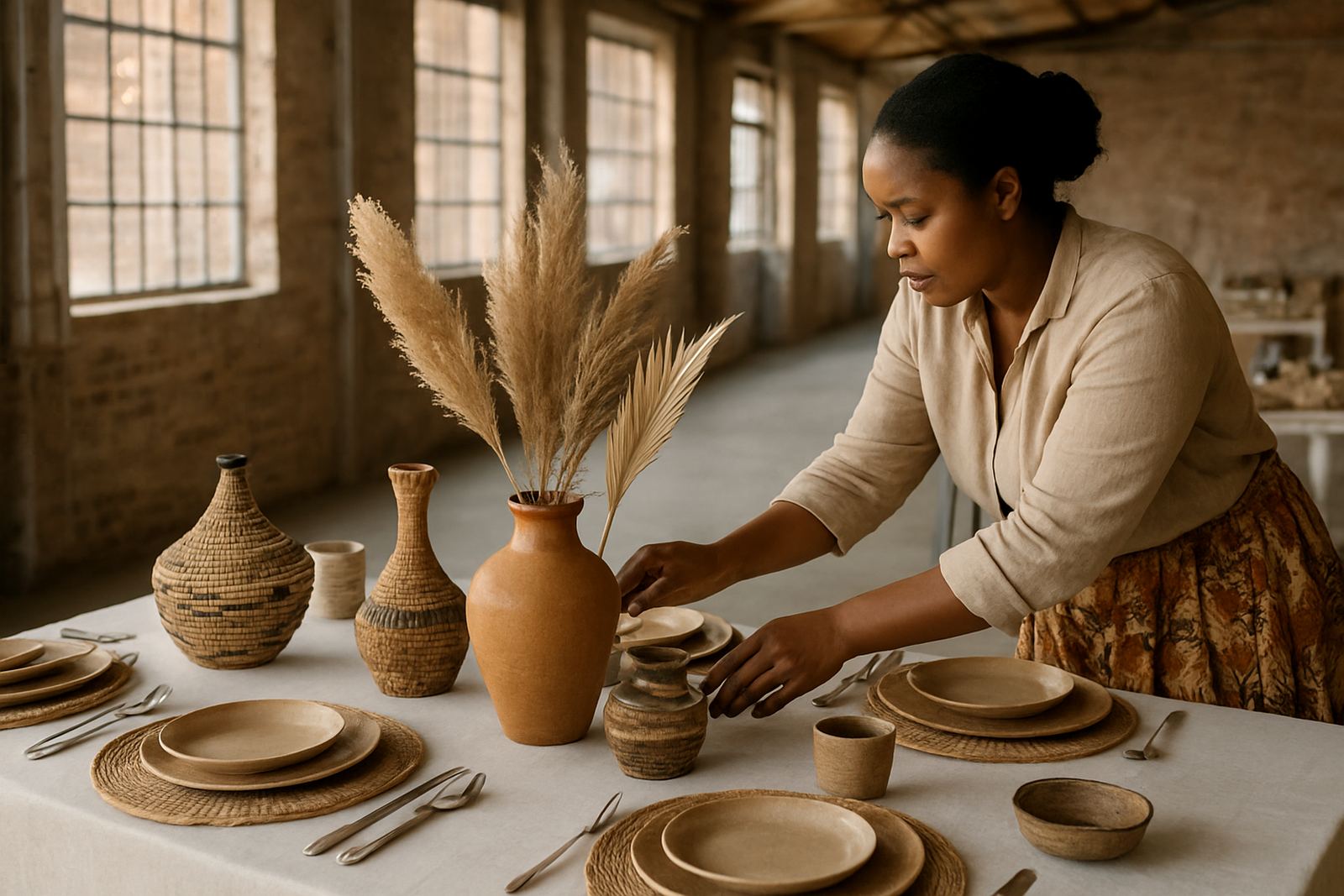
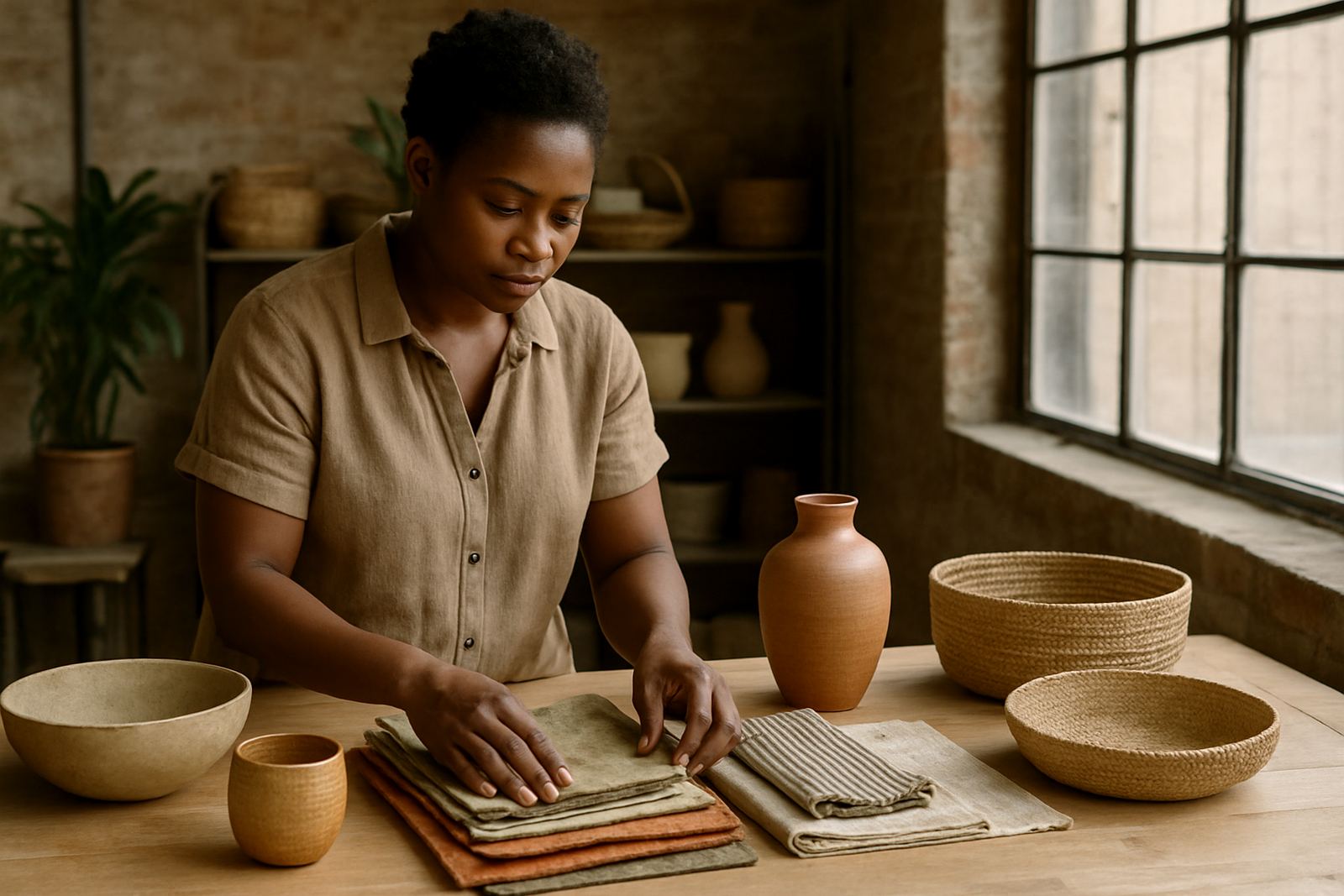
The most useful selection is usually simple and easy to place. Textiles bring scale and softness, ceramics add weight and texture, and artisan goods give the room a focal point without requiring built-in joinery or costly fabrication. We can help with a single space or with a full set of items across a project.
Designers often start with a mood board and a rough quantity list. From there, we assist with colour matching, size checks and pairing objects across a room so nothing feels accidental. If you need samples for client sign-off, we can discuss sample loans and collection consultations for Cape Town, Durban, Pretoria and Johannesburg.
- Throws, cushion covers and table runners in natural fibres or woven finishes
- Ceramic bowls, serving ware, vases and sculptural objects
- Wall hangings, baskets, trays and decorative storage
- Gift packing and provenance cards for client handover or installs
For hospitality, it helps to think in sets. A guest room may need two bedside objects, one statement vessel for the dresser and a textile layer at the foot of the bed. A restaurant may need repeated centrepieces, serving pieces and shelving objects that look good in day light and under warm evening lighting. Durability matters, especially in coastal sites where humidity can affect fibre and glaze over time.
Planning quantities and placement before ordering
Good sourcing starts with measurements. We always recommend a room-by-room list that includes surface sizes, shelf depth, table diameters and the number of suites or units involved. That avoids over-ordering and keeps transport costs under control, which is important when you are working to a fixed budget or a tight opening date.
For larger schemes, break the brief into zones. Reception, lounge, dining, guest rooms and circulation spaces should each have their own object count and colour balance. In load-shedding prone areas, designers also need to consider how materials read in low light, because dark ceramics and matte textiles can disappear if the room has little natural light after 5 pm.
- Confirm dimensions before placing any bespoke or limited-quantity order
- Keep a master count for each room type so replacement items are easy to track
- Group pieces by finish, tone and function to avoid a scattered look
- Allow time for courier transit, especially for Pretoria, Gqeberha and outlying towns
If you are styling a residential project, it helps to leave a little breathing room on shelves and surfaces. Too many objects make the room feel busy and harder to maintain. For hospitality, keep cleaning access in mind and avoid delicate placements where housekeeping needs speed. We can help you choose pieces that work with practical daily use, not only the first reveal.
Common mistakes we help designers avoid
A frequent mistake is choosing too many statement items at once. A strong woven throw, a large ceramic vessel and a busy patterned cushion can all work together, but only if the room has enough quiet space around them. Another common issue is mixing too many suppliers, which can lead to mismatched colour, inconsistent lead times and uneven finish quality.
We also see projects where the budget is set for the look but not for packing, delivery and replacement stock. That is a problem on hospitality jobs, where breakages and last minute changes are normal. Our team can assist with export packing, courier coordination and bulk order planning so your schedule stays manageable.
- Ordering before final measurements are confirmed
- Ignoring breakage risk on ceramic and fragile items
- Using too many different tones in one compact room
- Forgetting to budget for packing, delivery and spare stock
Designers working across South Africa also need to plan for site access. Apartments in Sandton, conversion buildings in Maboneng and older homes in Pretoria may all have different loading conditions, parking limits and lift access. If a delivery has to be split across floors or taken in smaller loads, that should be built into the plan early, not at the last minute.
Budget ranges that make sense in Rand
Budgets depend on quantity, finish and whether the order is for a single room or a full property. As a guide, a small residential styling order may start from about R3 500 to R8 000 for a few textiles and accent pieces. A mid-range room scheme with multiple layers and coordinated objects often lands between R12 000 and R35 000.
For hospitality projects, especially where repeat quantities are needed, budgets can move from R25 000 for a small section to well over R100 000 for a larger fit-out or phased rollout. Export packing, courier coordination and custom curation may add to the total, but they also help reduce damage and wasted spend. We can work to a clear brief and help you prioritise what matters most, whether that is durability, visual impact or simple speed.
When comparing options, think beyond unit price. A slightly dearer item that holds up better in a busy guest room can cost less over time than a cheaper piece that needs replacing after one season. That is especially relevant near the coast, where salt air and humidity can be hard on finishes.
How to brief us for a smoother order
The quickest way to get useful options is to send a clear project brief through the enquiry form on our contact page. Include the city, room type, quantity, budget range and the mood you want to create. If you already have a palette, floor plan or reference images, mention those too. We can then match makers and products to the project rather than sending you a long list of unrelated items.
Our team in Maboneng supports designers in Johannesburg, Pretoria, Sandton, Midrand, Soweto, Cape Town, Durban and Gqeberha, as well as international courier orders. For larger schemes, we can assist with seasonal editing, sample loans, retail wholesale, and collection consultations. That makes it easier to keep one source across a project, especially when the client wants African-made pieces with a clear back story.
- Project location and delivery timing
- Number of rooms or units
- Approximate budget in Rand
- Any size, colour or material limits
Good sourcing should save time, not create more work. If the brief is clear, we can help you narrow choices, plan quantities and keep the final installation tidy and on time, even when the project is moving fast.